Peter Walsh’s visit to Clarissa
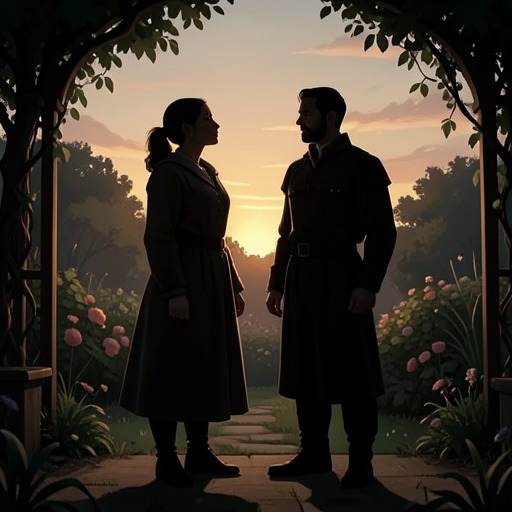
Mrs DallowayPeter Walsh’s visit to Clarissa Dalloway turns an ordinary morning of party preparations into a reunion charged with surprise, embarrassment, and the past they have never entirely left behind. Returning after five years in India, Peter arrives without warning; during their conversation he reveals that he loves a married woman, making the visit both an encounter between former intimates and a disclosure of the life he has built elsewhere.
Arrival and Interruption
Clarissa has said she will buy the flowers herself, and her household is already in motion: the party is approaching, the servants have work to do, and her torn green evening dress is waiting to be mended. Peter’s entrance interrupts that ordered morning. In the hall he insists that Clarissa will see him, repeating that she will do so after his five years in India. His confident urgency contrasts with the domestic schedule he is about to break into.
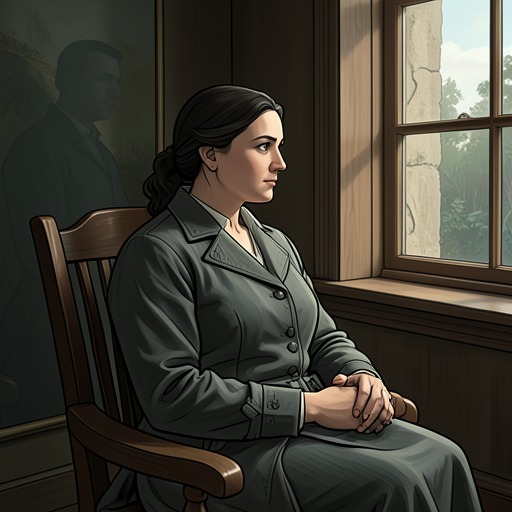
Clarissa hears someone on the stairs and, thinking first of the interruption, tries to hide her dress. When the door opens, she is so taken aback that for a second she cannot recall Peter’s name. Surprise gives way at once to gladness and shyness: she had not read his letter and had not expected to find him there. The scene makes their familiarity visible not as ease without change, but as recognition unsettled by the years between them.
The Reunion and Its Awkward Intimacy
Peter is trembling when he greets Clarissa, takes both her hands, and kisses them. As he sits down, he notices that she has grown older and decides not to tell her so; his tenderness is accompanied by embarrassment even after the gesture of intimacy. He takes a large pocket-knife from his pocket and half opens the blade, an action that gives his nervous arrival a concrete, restless accompaniment.
The room holds the tension between what the former friends can do and what they cannot say directly. Clarissa’s party preparations have not vanished, but Peter’s unexpected presence draws the past into the house and suspends, for a time, the morning’s practical business. Their reunion is therefore not a simple resumption: each sees the other across the distance of intervening years, with affection and self-consciousness occupying the same encounter.
Peter’s Disclosure
Peter announces that he is in love, first speaking as though addressing someone beyond Clarissa, then repeating the news to her. He explains that the woman is in India and is married to a major in the Indian Army. The disclosure gives Clarissa a definite account of the attachment that has brought Peter’s present life into the conversation, while his manner makes the announcement feel at once personal and staged: he presents the woman almost as an image to be placed before Clarissa, then leaves Clarissa to make what she will of it.
The news does not erase the emotional charge between the visitors. Peter speaks of another woman, yet he is speaking to Clarissa, whose surprise at his arrival and awareness of his gestures frame the confession. The scene keeps the new attachment and the old intimacy side by side rather than resolving one into the other.
Domestic Work and the Visit’s Wider Pattern
The visit takes place within a day organized by ordinary acts of arranging, mending, and bringing people together. Before Peter arrives, Clarissa chooses the green dress she intends to wear that night, discovers that its skirt has been torn, and prepares to mend it herself because her maids already have enough work. Lucy shyly offers to help; Clarissa thanks her warmly but declines, then sits with the dress across her knees, scissors and silks beside her. The small exchange shows the care and labor behind the social occasion Peter’s arrival interrupts.
That work belongs to Clarissa’s understanding of her place in the world. She regards her gathering of people as an offering: she senses lives scattered among London neighborhoods and tries to bring them together. The novel also figures the city’s inhabitants as separated by rooms, asking whether religion or love can bridge the distance. Against this larger pattern, Peter’s visit is one meeting made possible by an open door, but it cannot abolish the distance of elapsed time or settle the history between them. Its significance lies in bringing those distances briefly into view, within the very house where Clarissa is preparing to make a meeting place for others.