Sally Seton
Mrs DallowaySally Seton is Clarissa Dalloway’s vivid, unconventional friend from Bourton, whose influence opened Clarissa’s sheltered world to new ideas and whose kiss became one of the defining moments of Clarissa’s youth. Years later, Sally reappears at Clarissa’s party as Lady Rosseter, a married mother of five. Her return makes the distance between youthful possibility and adult life palpable without extinguishing the friendship that once joined her to Clarissa and Peter Walsh.
Identity and Life at Bourton
Clarissa first remembers Sally as a striking young woman sitting on the floor with her arms around her knees and smoking a cigarette. At a party, Sally’s dark, large-eyed beauty and apparent freedom held Clarissa’s attention. Sally described French ancestry and a family story of an ancestor connected with Marie Antoinette, whose ring she said had passed down to her great-grandfather. Her daring was not merely an appearance: after a quarrel at home, she arrived at Bourton with no money, having pawned a brooch to make the journey. She had rushed away in anger, and her unexpected arrival unsettled Clarissa’s aunt, who never forgave her.
The contrast Sally embodied exposed how protected Clarissa’s life at Bourton had been. Sally spoke with her about subjects that Clarissa had scarcely encountered, including sex and social problems. Their conversations continued late into the night in Clarissa’s bedroom at the top of the house. They imagined reforming the world and founding a society to abolish private property; Sally even had a letter written, though they never sent it. Sally’s ideas drew Clarissa into an expansive new intellectual life: Clarissa read Plato before breakfast, along with William Morris and Shelley. Sally’s force of personality made those plans and books feel like part of a shared undertaking.
Friendship, Ideas, and the Kiss
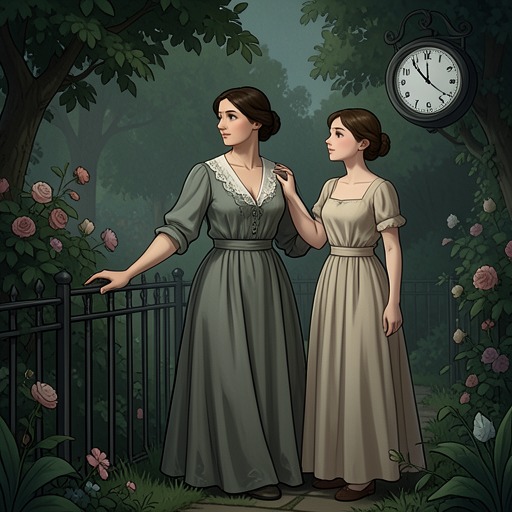
Sally’s presence could make the surrounding company seem incidental. At Bourton, she spoke with Clarissa’s father by the fireplace in a voice Clarissa remembered as especially beautiful. When Sally suggested that they should not remain indoors, the group went out onto the terrace. Peter Walsh and Joseph Breitkopf talked about Wagner while Clarissa and Sally fell a little behind. Passing a stone urn of flowers, Sally stopped, picked a flower, and kissed Clarissa on the lips.
Clarissa remembered the kiss as the most exquisite moment of her life. The others seemed to disappear from view, leaving the two women alone together; Clarissa understood the gesture as a precious gift and as a sudden revelation with a religious intensity. The memory later prompted her to ask herself whether her feeling for Sally had been love. The novel gives that question weight through the intimacy of the remembered scene and its lasting place in Clarissa’s inner life, while leaving the young women’s relationship defined by more than a single kiss: it also rests on their conversations, shared ideals, and the sense of a world opened between them.
The Years Between
Peter Walsh later recognizes how radically Sally’s life has diverged from what he would once have expected. A letter from her, prompted by seeing blue hydrangeas, recalls the old days; he is startled to learn that the daring, romantic Sally has married a rich man and lives in a large house near Manchester. For Peter, the change is a surprise precisely because her earlier character seemed so resistant to convention. Yet he also remembers her as perceptive and independent in judgment: Sally saw through Hugh Whitbread when Clarissa and others admired him, and Peter recalls her dismissive assessment of the Whitbreads as respectable tradespeople.
At the party, Sally’s own account fills in some of the past. She remembers having had no money and making the journey to Bourton with difficulty, and says that staying there mattered deeply because she had been so unhappy at home. She says that this period is now past. Her father, Mr. Parry, is dead, while Miss Helena Parry is still alive. Peter had believed Miss Parry dead, so Sally’s news gives their conversation a jolt of surprise as they compare what they remember and what has changed.
The Reunion at Clarissa’s Party
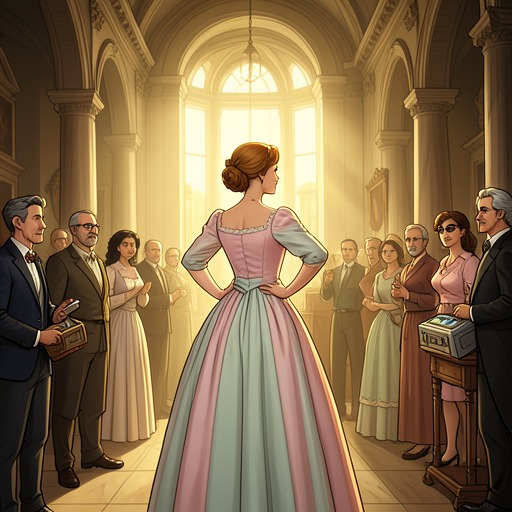
Sally enters the party without an invitation, explaining in the rush of their greeting that she is passing through London and heard of Clarissa through Clara Haydon. Clarissa recognizes her voice before the years resolve into the woman before her. Sally is older and happier, and Clarissa finds that the former lustre of her beauty has faded; still, the encounter is extraordinary. They kiss each cheek by the drawing-room door. Clarissa takes Sally’s hand and turns back toward the crowded rooms, with their voices, candlesticks, moving curtains, and Richard’s roses, carrying their private reunion into the social scene around them.
The encounter also reunites Sally with Peter. They fall into familiar talk and begin discussing the past, a subject Clarissa shares with them particularly fully. Their common store of memory includes Bourton’s garden and trees, Joseph Breitkopf’s singing, the drawing-room wallpaper, and the smell of the mats. Clarissa recognizes that Sally and Peter each remain part of her past, even as she leaves them to attend to other guests. The gathering does not restore their youth; it allows old intimacy to surface briefly amid the obligations of the present.
Marriage, Motherhood, and Continuing Affection
Clarissa remembers Sally as warm, energetic, and inclined to make herself the centre of a scene. At Bourton she was associated with painting and writing, and her opinions could provoke conflict: she accused Hugh Whitbread of kissing her in the smoking-room to punish her for supporting women’s votes. Clarissa remembers having to dissuade Sally from denouncing him at family prayers, an escalation consistent with Sally’s daring and melodramatic self-presentation. Clarissa had once imagined that such recklessness would end in tragedy or martyrdom. Instead, Sally married unexpectedly, to a bald man associated with cotton mills at Manchester, and had five boys.
Sally’s feelings about Clarissa at the reunion are affectionate and candid. She recalls Clarissa moving through Bourton in white with her hands full of flowers; even later, tobacco plants could bring Bourton back to mind. She considers Clarissa charming, but privately wonders how Clarissa could have married Richard Dalloway, whom Sally regards as a sportsman chiefly interested in dogs. Her frankness does not cancel her gratitude or attachment. She tells Peter that she and Clarissa had been friends, not merely acquaintances, and their renewed contact rests on a history that neither absence nor changed circumstance has erased. Sally’s return thus brings together the romantic intensity of Clarissa’s memory, the liveliness of their youthful friendship, and the more settled lives each woman has since made.