The unseen self and human connection
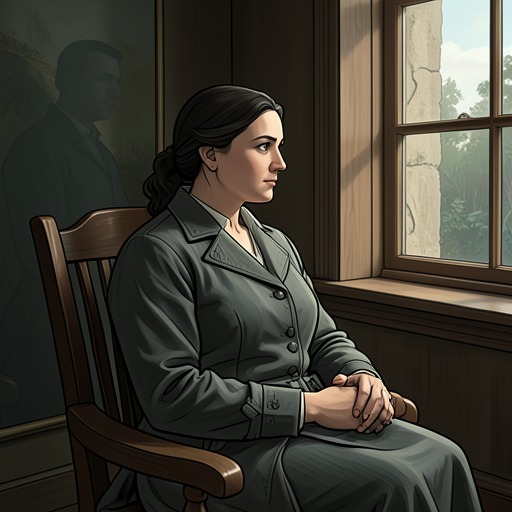
Mrs DallowayClarissa Dalloway’s theory of the unseen self and human connection proposes that a person is more than the passing figure visible in a particular moment. The self may extend through other people and places, and its unseen portion may persist beyond death. Recalled by Peter Walsh after a chance meeting with Clarissa has brought the past back into view, the theory gives form to a paradox: intimacy can remain incomplete in person yet continue to work powerfully through absence.
Origins in Shared Dissatisfaction
In their youth, Clarissa and Peter explored London together, sometimes returning with bags full of treasures from the Caledonian market. They shared many theories, and this one began with a dissatisfaction they both recognized: people met every day and then might not meet again for six months or years, leaving each unsure how little or how much they truly knew of the other. Their problem was not simply that meetings were brief; it was that the person present could not contain everything the other person was.
Clarissa illustrated the idea through a bus journey up Shaftesbury Avenue. She said she felt herself everywhere, rather than confined to a single here, and gestured beyond the back of the seat. Knowing someone, she reasoned, meant seeking the people who completed that person, and even the places connected to them. The self thus became relational and dispersed: understanding someone required looking beyond the individual encounter toward a wider field of affiliations and impressions.
That field could reach strangers and nonhuman surroundings as well as intimates. Clarissa described odd affinities with a woman in the street or a man behind a counter, although she had never spoken to them, and even with trees or barns. These connections do not depend on a fully explained relationship. Her theory instead allows a person to be touched by lives, places, and forms of life outside the boundaries of conversation or acquaintance.
The Visible and the Unseen
The idea developed into a theory about death. Despite her scepticism and her horror of death, Clarissa believed—or said she believed—that the part of a person that appears is momentary beside the unseen part, which spreads much more widely. Because that unseen self exceeds its temporary appearance, it might survive death, be recovered somehow, or remain attached to particular people and places as a haunting presence. The theory offers no firm account of how this survival works; its force lies in the possibility that what cannot be seen or held in one meeting is not therefore lost.
Clarissa’s own absence becomes a test of the idea for Peter. Looking back over their friendship of almost thirty years, he remembers that their actual meetings were brief, broken, and often painful, interrupted by his absences and by other claims on Clarissa’s attention. One such interruption comes when Elizabeth enters just as he has begun to speak with her. The face-to-face encounter can be sharp and uncomfortable, yet it does not measure the relationship’s influence.
Instead, the relationship returns to Peter in unexpected settings and through stray associations. He remembers Clarissa coming to mind on a ship and in the Himalayas; Sally Seton, seeing blue hydrangeas, had thought of him. Such moments show how attachment travels without planned contact. A person may reappear in memory through a place, an object, or another person’s association, making an interrupted friendship present again without repairing its gaps.
Memory, Place, and Continuing Influence
For Peter, the theory is borne out by the scale of Clarissa’s influence. The effect of their long friendship on his life has been immeasurable, even though its meetings were intermittent. Memory does not merely preserve a record of what happened between them. After years in which their connection seemed lost, it can flower again, bringing back the feel and understanding of the relationship in an unlikely place. Absence is therefore not the opposite of connection; it can be the condition in which the connection becomes newly legible.
The places Peter associates with Clarissa make the theory concrete. In memory he sees her most often in the country, in scene after scene at Bourton, although their shared explorations also took them through London. She returns in contrasting aspects—cook, lady-like and critical, or ravishing and romantic, with the recollection of an English harvest. These changing impressions resist the reduction of Clarissa to a single settled image. The remembered person is distributed across scenes and moods, and Peter’s continuing relation to her is assembled from those separate returns.
The theory also clarifies why proximity alone cannot guarantee knowledge. Peter and Clarissa had once agreed that people knew too little of one another, but their long separation does not erase what they shared. Their meetings could hurt, and their opportunities to speak could be interrupted, while the relationship continued to shape Peter in ways neither a single conversation nor a simple chronology could capture. Clarissa’s idea gives this unequal pattern—brief contact, extended absence, sudden recollection—a coherent account without pretending that it resolves their distance.
Narrative and Thematic Significance
The theory is presented through Peter’s recollection as he considers Clarissa and their history, not as an abstract doctrine detached from the story. It emerges from remembered gestures, places, interruptions, and associations: the bus seat Clarissa taps, the streets they explored, the blue hydrangeas that recall Peter to Sally, and Bourton as a recurring landscape of memory. The movement of narration itself reflects the theory, as a present encounter opens into distant scenes and those scenes make the absent Clarissa feel immediate again.
The account remains tentative. Clarissa’s belief is qualified by her scepticism, and the possibility that the unseen self survives is left as a possibility rather than proof. Yet the theory does not depend on certainty about an afterlife to explain its human consequences. Peter’s recollections show that a person can persist in another’s understanding and imagination, attached to particular places and carried forward through later moments. The unseen self names that continuing influence: not a complete possession of another person, but a connection that outlasts any one meeting and cannot be measured by visible presence alone.