World War I
Mrs DallowayWorld War I is both a concluded historical event and an ongoing force in the lives of the novel’s characters. On a June day in London, public relief that the fighting is over coexists with bereavement, damaged memory, and the treatment of a veteran whose distress does not end with the armistice. The war’s decisive significance lies in that gap: peace returns to the calendar, but not necessarily to the people who survived it.
Background and the Home Front
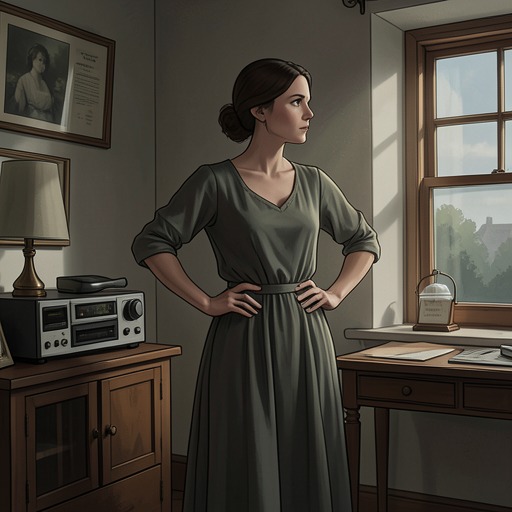
The action takes place after the war has ended. As Clarissa Dalloway crosses London, Big Ben’s warning and hour give public time its familiar, irrevocable shape; she associates the city’s movement and noise with the life she loves. The relief is explicit: the war is over, though not for everyone in the same way. Mrs. Foxcroft, for example, is grieving her son John, killed after he had been a favorite, while the King and Queen remain at the Palace. Public continuity and private loss occupy the same June morning.
The novel sets the conflict’s scale beside ordinary work and sociability rather than isolating it from civilian life. Clarissa goes out to buy flowers herself while her house prepares for an evening party. Later she mends a green dress, damaged at an earlier Embassy party, and appreciates the help of Lucy and the other servants as the household readies itself. These domestic tasks do not erase the war; they show how social life resumes amid its consequences, sustained by labor and repeated acts of preparation.
Septimus’s Service and Loss
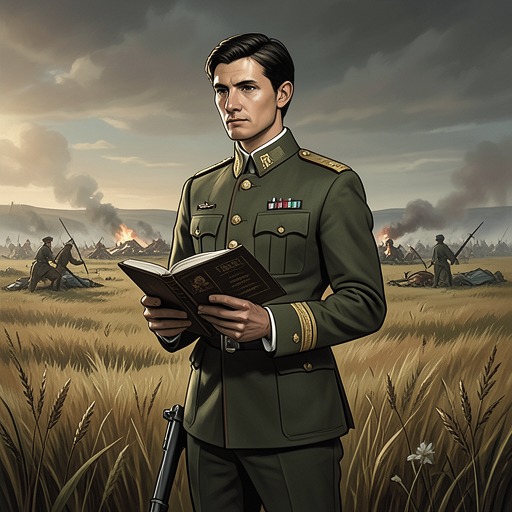
Septimus Warren Smith was among the first to volunteer. He went to France with an idealized sense of what he was defending, imagining England largely through Shakespeare and Isabel Pole in a green dress. The trenches changed him abruptly. Afterward he and the other soldiers had to live closely together, share, fight, and quarrel; this difficult intimacy forms the setting for his friendship with Evans.
Evans, whom Lucrezia had seen only once, was a quiet, sturdy, red-haired man who was undemonstrative around women. He was killed in Italy just before the Armistice. Septimus did not recognize the death as the end of a friendship or show the grief he might have expected from himself. Instead, he congratulated himself on feeling little and on responding reasonably. He regarded the war as a completed ordeal through which he had passed: he had gained promotion, remained under thirty, and believed himself bound to survive. His composure is not recovery. It is the numbness that makes him mistake an inability to feel for proof that the experience has left him untouched.
When peace came, Septimus was in Milan, billeted in an innkeeper’s house with a courtyard, flowers in tubs, and tables outside. There he became engaged to Lucrezia, the innkeeper’s younger daughter. The engagement arose during a panic in which he felt unable to feel. The contrast between the end of combat and the arrival of that fear is central to the novel’s account of wartime aftermath: danger may have passed, while its effects emerge belatedly in quiet surroundings.
Peace, Symptoms, and Medical Authority
After the truce was signed and the dead buried, Septimus experienced sudden attacks of fear, particularly in the evening. Lucrezia’s family’s millinery work offered him temporary refuge: he could watch the girls make hats, with buckram shapes, beads, feathers, ribbons, and scissors on the table, and find reassurance in their activity. Yet the refuge could not last through the night. He describes waking with the sensation of falling and longing for the familiar workroom. The everyday materials of hat-making become a fragile counterweight to the instability that remains after service.
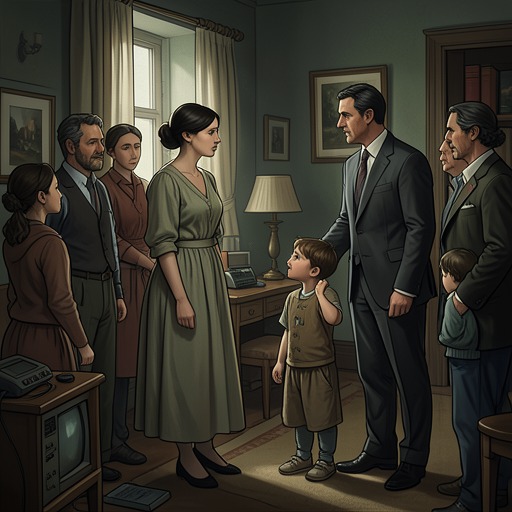
In London, when Septimus’s condition overwhelms him, Lucrezia puts him to bed and sends for Dr. Holmes, the doctor attending him through Mrs. Filmer. Holmes finds nothing wrong, interprets the problem as an ordinary need for diversion, and suggests bromide at bedtime. His reassurance offers Lucrezia temporary relief, but it also fails to account for the severity of Septimus’s distress. The gap between the veteran’s experience and the doctor’s explanation makes the war’s effects visible as a conflict over who gets to define suffering.
The Warren Smiths later attend an appointment with Sir William Bradshaw. After only a few minutes of questioning, Bradshaw judges Septimus to be in a grave state of complete physical and nervous breakdown. Septimus tries to say that he has committed a crime, while Lucrezia insists that he has done nothing wrong. Bradshaw asks whether he has threatened suicide; she confirms that he has, though she believes he did not mean it. Bradshaw proposes prolonged rest in a country home, away from Lucrezia, and presents this separation as necessary because people closest to the ill may not be good for them. He avoids the word madness and instead describes the problem as a lack of proportion. The proposed treatment therefore makes the veteran’s future a matter of medical authority and institutional control, while his wife’s concern is treated as a reason to remove him from her care.
Public Time and the War’s Afterlife
The novel’s clocks repeatedly place private experience inside a public schedule. Big Ben strikes while Clarissa walks through London, and St. Margaret’s answers at half past eleven with the voice of a hostess acknowledging that she is not late. At noon, Clarissa lays out her green dress as the Warren Smiths walk down Harley Street for their appointment with Bradshaw. The same hour contains domestic preparation and a medical decision with grave consequences; the striking clock links their separate paths without making their experiences equivalent.
Later, Big Ben strikes the half-hour as Clarissa watches an elderly neighbor withdraw from a window. The sound appears to draw the woman back into the ordinary movements of her room, just as clock time draws the novel’s interwoven scenes onward. For Septimus, however, the war’s chronology cannot be reduced to dates such as the Armistice or an appointment time. His delayed fear and emotional numbness persist within the postwar present, while the surrounding city proceeds through its routines.
That present also contains altered social time. During Peter Walsh’s return to London, he notices that Mr. Willett’s summer time has prolonged the evening since his last visit to England. The change gives young people more daylight after work and astonishes Peter with the beauty of the city at dusk. Its brightness offers a civilian image of renewal, but it belongs to the same postwar world in which grief and psychological injury endure. World War I is thus present not only in remembered military service but in the contrast between the public promise of a fresh, extended evening and the private damage that peace has not repaired.