the Armistice
Mrs DallowayThe Armistice is the turning point between the war’s declared end and its continuing presence in private life. Although fighting stops and the dead are buried, Septimus Warren Smith remains unable to feel secure or emotionally connected; the novel sets this aftermath against London’s measured hours and the renewed rhythms of civilian life.
The War and the Armistice
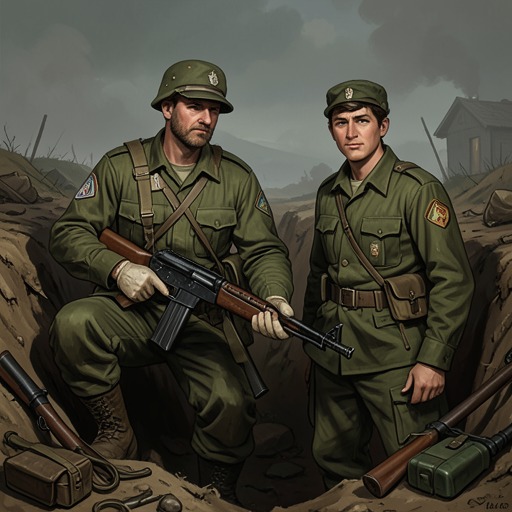
Septimus Warren Smith volunteers early and goes to France to defend an England he associates with Shakespeare and Miss Isabel Pole. In the trenches, the transformation his employer had hoped exercise might bring comes instead through war. When Evans is killed in Italy shortly before the Armistice, Septimus registers little emotion and congratulates himself on responding calmly. He regards survival, promotion, and his youth as proof that he will endure; the final shells miss him, and he watches them explode with indifference.
That apparent composure does not mean the war has left him untouched. The narrative places his self-congratulation beside the death of Evans, making the end of the friendship and the end of the fighting part of the same rupture. Septimus’s confidence that he has passed through the whole experience safely is exposed as precarious by what follows: peace brings episodes of fear and an inability to feel, rather than an uncomplicated return to ordinary life.
Peace and Delayed Trauma
After the truce is signed and the dead are buried, Septimus experiences sudden shocks of fear, especially in the evening. In Milan, the sight and sounds of Lucrezia Warren Smith and other young women making hats offer him temporary refuge. He is absorbed by their work with coloured beads, buckram shapes, feathers, spangles, silk, and ribbons, but cannot remain there all night. At other times he wakes with the sense of falling and longs for the reassuring scene of the hat-making room. When he asks Lucrezia to marry him, the proposal is tied to his fear that he cannot feel.
This sequence makes the Armistice a boundary in public time but not a cure for Septimus. The crisis emerges after the formal cessation of war, when the external danger has receded but the emotional consequences persist. His marriage to Lucrezia follows in this unsettled aftermath, connecting the war’s end to the relationship in which she will try to care for him.
Medical Authority and Its Limits
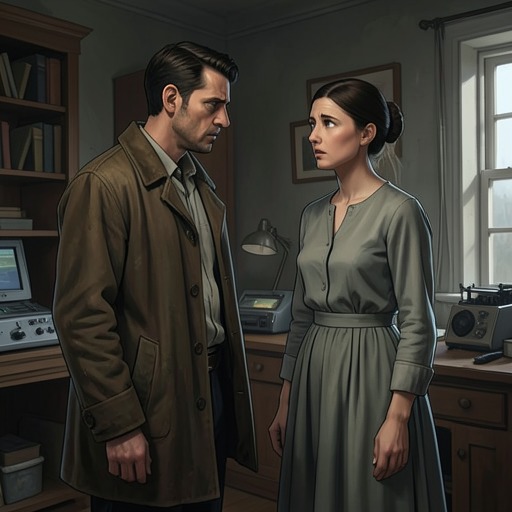
In London, Lucrezia sends for Dr. Holmes after Septimus gives in and she puts him to bed. Holmes tells her there is nothing whatever the matter and offers bromide as a practical remedy. His reassuring manner does not resolve the problem: Septimus’s experience is serious enough that Sir William Bradshaw soon diagnoses a complete physical and nervous breakdown.
Bradshaw treats Septimus’s suicidal threat as evidence that there is no alternative to a long rest in bed at a country home, apart from Lucrezia. He describes the problem not as madness but as a failure of a sense of proportion, and presents separation and rest as necessary. The contrast between the doctors’ confidence and Septimus’s distress shows how the aftermath of war is also a conflict over interpretation and care: his suffering is real, while the proposed response places authority and control in medical hands.
Public Time and Private Duration
The novel places this unsettled aftermath within a day ordered by public clocks. Big Ben’s warning and hour make time sound both musical and irrevocable; its strokes divide the day into shared, unmistakable moments. At half-past eleven, St. Margaret’s seems to announce the hour like a hostess arriving on time, while noon strikes as Clarissa Dalloway lays her green dress on the bed and the Warren Smiths walk down Harley Street for their appointment with Bradshaw.
Later, Big Ben marks another half-hour as Clarissa watches an elderly neighbour move away from her window. The sound seems to draw the woman back into ordinary activity, while Clarissa imagines the private life continuing beyond what can be seen. These recurrent chimes measure the city’s passage of time, but they do not make inward experience uniform: a clock can announce the hour without settling what the past means to any person living through it.
The Changed Civilian Day
A different kind of time marks Peter Walsh’s return to London. Since his previous visit, Mr. Willett’s summer time has prolonged the evening. Peter finds the change inspiring: young people leave work, enjoy their freedom, and move through the famous streets toward an evening at the pictures. The light and extended leisure make the city appear newly beautiful and offer a glimpse of civilian life continuing after the war.
Set beside Septimus’s delayed fear, this altered evening underscores the unevenness of the postwar present. London can take on new schedules and pleasures, and its clocks can carry the day toward social gatherings, while the war remains active in the mind of a returning soldier. The Armistice therefore signifies both a historical cessation and an incomplete personal transition: public life proceeds, but survival does not guarantee recovery.