
Margo’s Fight to Be Recognized
Mrs. FletcherMargo moves from the private wounds of rejection toward public self-assertion, while confronting the limits of an audience that wants to question her identity rather than hear her story.
increasing Bearing strength in each event
 decreasing
Bearing strength in each eventdecreasingA Mother’s Refusal
A Mother’s Refusal
A child’s hidden self
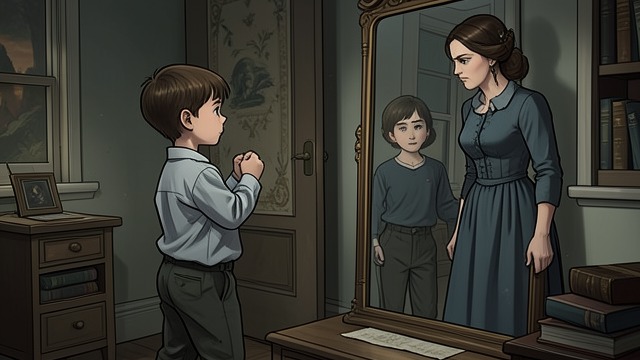
As a child, Margo, then known as Mark, secretly wears her mother’s blue ruffled swimsuit and experiences a rare moment of recognition in the mirror. When Donna Fairchild discovers her, she calls the act nonsense and orders her never to touch her clothes again.
Shame carried forward
The incident becomes part of a larger family silence. Margo grows up trying to inhabit a male identity that feels false, while her mother’s rejection teaches her to conceal what she knows about herself. That early conflict gives emotional weight to Margo’s later insistence that her life is not a whim or a performance.
The Cost of Coming Out

The Cost of Coming Out
A crisis forces the truth forward
Before the novel’s present, Margo attempts suicide during an episode of severe distress and substance misuse. After surviving, she tells others that she is a woman and begins the difficult work of living openly.
Recognition remains incomplete
Transition brings Margo closer to herself but does not restore the relationships she hoped would change. Her mother continues to reject her identity, including at the end of her life, and Margo carries the pain of never being fully known by the person she most wanted to understand her. Her new life is an achievement, not an erasure of what came before.
An Uneasy Public Invitation
An Uneasy Public Invitation
Hesitation about the audience
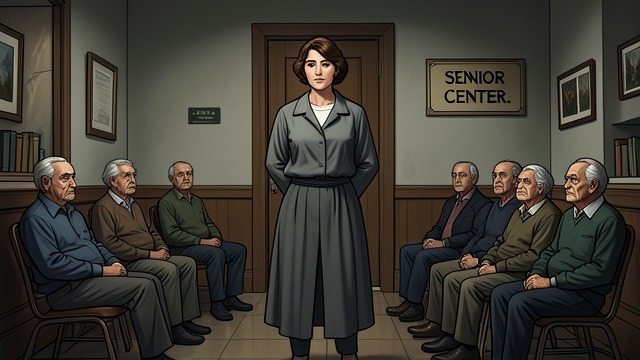
Margo initially resists speaking at the Senior Center, expecting older listeners to be unreceptive. Eve challenges her assumption that seniors should be written off, arguing that they too are vulnerable to exclusion and capable of listening.
Choosing to appear anyway
Margo accepts the invitation and prepares to tell her story to an audience she does not trust. Her decision sets the conflict between self-protection and public testimony: speaking may expose her to judgment, but refusing would let prejudice determine who gets to hear a transgender woman’s account.
A Story Meets Resistance
A Story Meets Resistance
Personal history made public
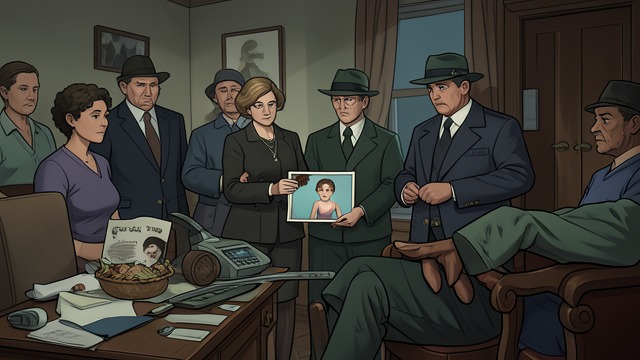
Margo presents photographs from childhood and adolescence, describing the alienation she felt while others praised her as a handsome boy. The images make the years of apparent confidence visible, but she explains that the outwardly successful life was a source of torment.
The audience refuses the invitation
Some listeners disrupt the presentation, and the question-and-answer session turns quickly to which restroom Margo uses. When former coach Al Huff recognizes her as Mark and asks why she did this to herself, Margo calmly answers that this is who she is and that she is happier than ever. Her personal testimony collides with an audience still invested in the person it remembers.
A Life Beyond the Lecture

A Life Beyond the Lecture
Rejection does not have the last word
The lecture leaves Margo shaken, but she is not alone: Dumell arrives, and their relationship continues to deepen. Their affection does not undo the hostility in the room; it gives Margo a source of mutual recognition outside the audience’s judgment.
Public belonging on her own terms
At Eve’s wedding, Margo appears with Dumell and her daughter, Millicent, as part of a circle of friends and family. Their presence suggests a life built through chosen bonds rather than approval from every older relative or former acquaintance. The conflict remains real, but Margo’s identity is no longer defined by the people who refuse to accept it.
Margo’s childhood and the years before transition
Several years before the novel’s main events
The weeks before Margo’s November lecture
During Margo’s November talk at the Senior Center
After the lecture, through Eve’s wedding
