Brendan Fletcher
Mrs. FletcherBrendan Fletcher’s departure for college is less a clean break than a test of the family ties and evasions he carries with him. He wants the freedom of adult life, but arrives at college homesick, uncertain, and poorly prepared for its demands. Across his first months away, his drinking, faltering coursework, strained friendships, and troubled romantic hopes sit alongside a growing willingness to reconsider old resentments and acknowledge what he has avoided.
Identity and Family Background
Brendan is Eve Fletcher’s son and Ted’s son from their marriage. The divorce reshaped his sense of home: as Eve reflects, he had spent eleven years in a family life that seemed solid before his parents’ separation replaced it with something less secure. She understands that the upheaval may have affected how he treats other people, and her guilt over the divorce makes her reluctant to hold him accountable. On the morning he leaves for college, that mixture of love and indulgence is already at work.
His relationship with Ted was distant in the years after the divorce. The custody arrangement provided Ted two weekends a month, but Brendan sometimes stayed home or chose time with friends instead. He was playing football, basketball, and lacrosse, and Ted often came to his games before taking him to Wild Willie’s or Haddington Burrito Works. Father and son talked about the game and acted as if their arrangement were ordinary. Brendan later recognizes that Ted, not Bethany, was responsible for his decision to leave the marriage. He recalls Ted taking him for ice cream and asking him not to blame Bethany, whom Ted described as an innocent bystander like Brendan himself. Brendan’s earlier hostility toward his stepmother thus gives way to a more adult understanding of responsibility.
Leaving Home and the First Weeks of College
Eve hopes to tell Brendan, before he leaves, how proud she is of the person he has become and how much she loves him. She also wants him to know she will begin a new life of her own. Instead, he oversleeps after a late night with friends, is too hungover to help pack, and leaves Eve—whose back is bad—to carry boxes and suitcases down the stairs in the August heat. He sits at the kitchen table in his underwear, struggling with a childproof cap on a bottle of ibuprofen. Eve suppresses her anger rather than spoil their last morning, and the conversation she had hoped for never takes place. Their parting is marked by tenderness that remains largely unspoken and by the practical imbalance she has chosen not to confront.
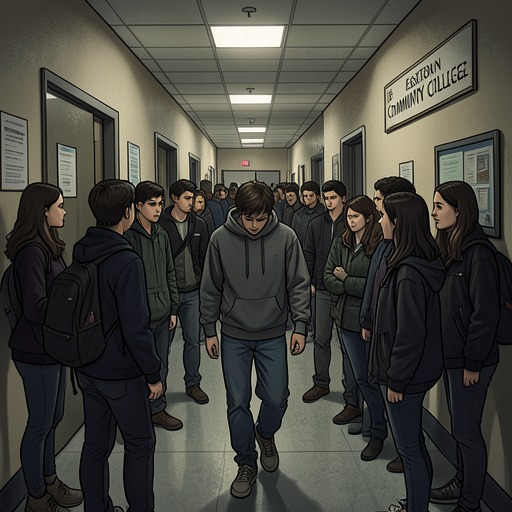
At college, Brendan experiences the long-anticipated transition as both exciting and disappointing. After a year of tours, tests, applications, interviews, graduation, and farewells, he is finally a student, but the unfamiliar buildings and faces leave him feeling exposed. He misses Haddington High, where he knew everyone, could start on a varsity team in almost any sport, and earned straight Bs without much effort. The freedom to do as he pleases is real, yet so is the sense that the crowded world around him has no particular place for him.
His roommate Zack offers an exuberant, sexually boastful picture of college life. On their walk to dinner, Zack loudly predicts that the year will involve drinking, parties, and sex; Brendan joins the joke, while Zack quickly assures two women walking ahead that the sexual boast is not about him. Their performance is funny and immature, and it captures the version of college masculinity Brendan initially inhabits: casual bravado among peers, with little thought for how it sounds to strangers. Back in the dorm, Eve’s energetic efforts to organize the room and advise him about laundry feel claustrophobic to Brendan. When she finally leaves in the elevator, he feels relief, then recognizes that this is not how he wants to feel toward his mother at such a moment.
Academic Trouble and Attempts at Self-Correction
Brendan’s early college routine does not match the confidence of his arrival. At an Orientation Week advising appointment, he calls Devin Torborg Professor; Torborg corrects him, explaining that he is an instructor rather than a professor and would rather be addressed by his first name. The small exchange introduces Brendan to an institution whose roles and expectations he does not yet understand. Torborg attempts to begin the familiar college pep talk about an exciting new beginning, but his sentence trails off before he can complete it.
Later, a public loss of control makes Brendan confront how badly he is managing. He knows he is drinking too much and failing to keep up in class: he has failed a Math unit test, received a D on a Comp assignment about white privilege, and struggled in Econ, where he cannot follow the professor’s heavy accent. Rather than distract himself with Facebook or text Wade, he writes a to-do list. It ranges from homework and paying attention to avoiding weekday drinking, calling Eve, doing laundry, reducing video games, making Becca a birthday card, replying to Ted’s email, spending time with people besides Zack, and deciding whether to break up with Becca. Even shaving and considering extracurricular activities make the list. Putting these troubles into separate tasks calms him; he starts with laundry, washing his clothes, sheets, and towels, although some white items come out pink. The modest, imperfect chore is an early attempt to replace a diffuse sense of doom with actions he can actually complete.
Relationships, Resentment, and Recognition
Brendan’s connection with Amber brings him to an October meeting of the Autism Awareness Network. He has been texting her to arrange coffee or pizza, and she has deferred meeting until the gathering. He wonders whether she sees him as a potential romantic interest or as a new recruit, but decides the meeting is worth attending. Amber greets him warmly and introduces him to her friends, which initially encourages his hope that the attraction may be mutual.
The meeting also prompts Brendan to recount his family’s experience with Jon-Jon, his younger half brother, who is autistic. Brendan did not grow up with him: Jon-Jon was born when Brendan was already in high school, during a period when Brendan was estranged from Ted and disliked Bethany. He remembers learning gradually that Jon-Jon was not speaking, ignored toys, avoided eye contact, and had severe tantrums. At a football stadium, Brendan once watched Jon-Jon rock, moan, clutch his head, and punch himself. Ted sat behind him on the grass and tried to restrain his arms as he thrashed and screamed; Jon-Jon struck Ted’s nose with the back of his head. Ted continued speaking gently and telling his son he loved him, while Bethany apologized to onlookers and handed them cards explaining the disturbance.
Brendan tells Amber that he felt sorry for Ted, Bethany, and Jon-Jon, and the sympathy is genuine. What he leaves unsaid is that he also felt jealous. Watching Ted hold Jon-Jon so tightly and refuse to let go recalled how little Brendan had felt held by his father. He knows Jon-Jon’s life is difficult and would not trade places with him, but the scene exposes an old wound: care given to his brother looks to Brendan like a kind of love he himself missed. The memory complicates his earlier tendency to cast Bethany as the cause of the family rupture and shows how compassion for his family can coexist with resentment and a desire for reassurance.
Estrangement, Longing, and the Limits of Change
Brendan’s friendships and romantic hopes remain unsettled. His planned visit from Becca is a bright point in an otherwise lonely college life: Zack has agreed to vacate their room, and Brendan imagines the visit as a chance to win her back. Yet he misses Zack, too. Although the roommates still get along, they no longer joke and laugh as they once did; Zack is often absorbed in texts and increasingly absent from the room. Brendan is annoyed by the distance even as his own relationship with Becca remains uncertain. His list of tasks had already included both making her a birthday card and considering a breakup, a small measure of how affection and doubt coexist for him.
By Thanksgiving, Brendan is eager to return home to his own bed, familiar food, and old routines with Troy and Wade, including smoking and drinking. He anticipates seeing Becca cheer at the last football game of her high-school career and hopes a sentimental mood might make her reconsider their relationship. His remembered joke about the red-and-white uniform—calling its H a sign that she was hot, then using a harsher version with his friends—reveals the crude, gendered banter he carries from his earlier social world. Home promises comfort and renewed intimacy, but his plans also rely on drinking and on the hope that Becca will give him another chance.
A later family dinner offers a different kind of return. Ted comes to Eve’s home for an emergency dinner, and the three of them sit around the kitchen table together for the first time in seven years. The gathering feels unexpectedly normal to Eve, but Ted also seems changed: calmer, slower in his manner, and no longer radiating the impatience she had associated with him. For Brendan, the episode belongs to a larger, unresolved movement between separation and connection. His first months away do not produce a complete transformation; they reveal instead a young man who is beginning to recognize the costs of his habits and the complexity of his family, while still longing for familiar comforts and struggling to act on what he understands.