Haddington Senior Center
Mrs. FletcherThe Haddington Senior Center is both a practical support system and a social home for older residents of Haddington. Its services range from subsidized meals and health care to exercise, transportation, and companionship; its importance is measured not only by the activities it offers but also by the difficult limits it must enforce. For Eve Fletcher, the Center is the clearest success in her working life, yet caring for its community sometimes means delivering news that care alone cannot soften.
Purpose and Services
The Center provides older residents with companionship, mental stimulation, and age-appropriate exercise. Its activities include chair yoga, memoir-writing workshops, and Thursday afternoon karaoke: a varied program that makes the place more than a service counter or a meal site. These gatherings give residents structured ways to spend time together, while the Center’s broader work addresses needs that can make independent life harder.
For low-income seniors, the Center offers a federally subsidized meal. A nurse checks blood pressure, and a podiatrist helps with problem toenails. The Center also runs a bus to Market Basket twice a week, making grocery shopping a regular, organized service rather than an individual errand residents must manage alone. In addition, it refers older people to trusted local handymen, landscapers, and home health aides. Taken together, these services connect daily social life with practical assistance, health care, food, and help at home.
Work and Community Life
Eve is the Center’s executive director and regards her job as the conspicuous bright spot in her life. She is proud of what the organization does and does not wonder whether her work matters. That conviction is grounded in the Center’s concrete usefulness: it provides a range of services to the town’s older residents, including people who need help with ordinary tasks as well as those seeking activity and company.
The Center’s everyday calendar also gives its community a public life. Amanda Olney organizes events and activities and produces the monthly newsletter, Haddington Happenings. One regular feature collects notable events in residents’ lives. In one issue, Amanda prepares items celebrating Eleanor Testa’s seventh grandchild, Lou LeGrande’s recovery from open-heart surgery, and Dick and Marilyn Hauser’s golden anniversary. She also notes Joy Maloney’s fifth-place finish in the Seventy-and-Over Division of a 5K Fun Run at Finley Park and Art Weber’s ten-pound bluefish caught on Cape Cod. These announcements make individual achievements and milestones part of a shared record, affirming that the Center’s community extends beyond its scheduled programs.
Limits of Care
The Center’s role has boundaries. Eve is responsible for explaining those boundaries when a resident’s needs can no longer be met in a community setting. She values the activities she associates with the job, but the work also requires her to handle situations involving residents who cannot control their bladders or bowels, lose track of their cars, or forget their home addresses. The contrast between cheerful programming and these harder responsibilities is part of the institution’s daily reality.
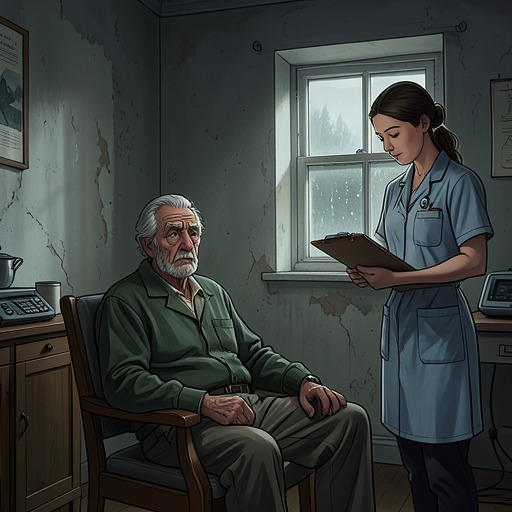
That limit becomes personal in the case of Roy Rafferty, an eighty-two-year-old resident with dementia. After an incident in the ladies’ room in which Roy exposed himself, Eve tells him and his son, George Rafferty, that he can no longer come to the Center and needs a nursing home. She explains that the Center cannot continue to accommodate him. George is shocked by the decision, while Eve tells Roy that staff members have enjoyed his company and that he has been kind and considerate to many people. Her words acknowledge his long-standing place in the community even as she carries out the exclusion.
The decision leaves Eve distressed. On a quiet Friday afternoon at the tail end of summer, after the Raffertys leave, she shuts her office door, turns off the light, and weeps at her desk. Her response shows the emotional cost of administering a necessary rule: she has responsibility for the community as a whole, but the person affected is not an abstraction to her. The Center’s work therefore involves both welcome and refusal, with no guarantee that the choice required of its director will feel humane in the moment.
Loss and Significance
Roy’s death soon afterward deepens that conflict. Eve does not believe she was wrong to exclude him, since she had no choice as an administrator, but she regrets that their last encounter involved a decision that humiliated someone she cared about. At Roy’s wake, she departs from her usual effort to attend funerals with businesslike detachment. The crowded viewing room and line of mourners testify to Roy’s ties to Haddington, his civic memberships, and his long career as a plumbing contractor, as well as the person he had been before dementia altered his behavior.
The Center stands at the point where public service meets intimate human loss. Its programs, referrals, and practical supports make it a vital part of residents’ lives; its limits expose the painful difference between helping someone remain in a community and being able to meet every need. Through Eve’s work, the institution is presented not as a cure for aging or isolation, but as a place where everyday companionship and care matter—and where the responsibility to protect that community can bring grief alongside pride.