
Leonato’s Orchard as Social Laboratory
Much Ado About NothingThis flow follows the orchard as a space where privacy, overhearing, performance, and transformation reshape relationships.
increasing Bearing strength in each event
 decreasing
Bearing strength in each eventdecreasingPrivate Refuge

Private Refuge
Seclusion
Benedick withdraws into Leonato’s orchard to reflect on Claudio’s conversion to love. The space offers distance from public conversation.
Significance
Privacy becomes the condition for self-questioning.
Friendly Ambush

Friendly Ambush
Engineered Hearing
Don Pedro, Claudio, and Leonato enter the orchard and arrange their talk for Benedick’s hidden ears. The supposedly private space becomes a stage.
Significance
The orchard converts solitude into social pressure.
New Self-Image
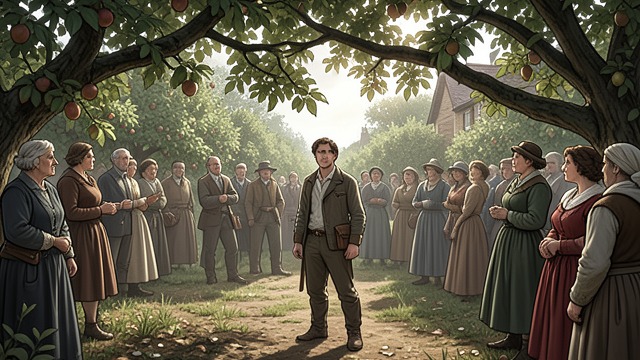
New Self-Image
Conversion
Benedick accepts the staged praise of Beatrice’s love and imagines himself worthy of her. His hidden position allows public fiction to become private belief.
Significance
The orchard produces a new identity through overhearing.
Dark Counterpart

Dark Counterpart
Villainous Orchard
Borachio later describes how Don Pedro and Claudio watched the staged window encounter in the orchard. The setting now supports deception rather than matchmaking.
Significance
The same natural space carries opposed uses of secrecy.
Memory of Hearing

Memory of Hearing
Reinterpreted Space
The orchard’s earlier tricks acquire new meaning after the criminal confession. Friendly and hostile overhearings are understood as parallel experiments in belief.
Significance
Place becomes a map of how perception shaped the plot.
Act II garden
Act II later evening
Act II same scene
Act III conspiracy night
Act V after the confession
