Claudio
Much Ado About NothingClaudio is a young Florentine nobleman and soldier whose reputation begins in triumph but becomes inseparable from the play’s crisis of trust, honor, and public judgment. Don Pedro’s Messenger presents him as a man who has exceeded the promise of his age, performing, in the figure of a lamb, the feats of a lion. The same figure that makes him admirable also hints at the instability of his public identity: he is celebrated as courageous and mature, yet his conduct in love will expose how quickly confidence can become credulity and how readily honor can be converted into accusation.
Identity and Introduction
Claudio first enters the narrative through reports of military achievement. Leonato takes particular pleasure in the return of a victorious company when it arrives with its full numbers, and he learns that Don Pedro has bestowed great honor on the young Florentine. The Messenger emphasizes that Claudio has surpassed expectation rather than merely fulfilled it, establishing him as a recently distinguished man whose age makes his success especially striking. His status is therefore founded on witnessed action and princely recognition before he is defined by private feeling.
His closest visible companion is Benedick, whose attachment to Claudio becomes a source of comic commentary. Beatrice describes Benedick as a disease that Claudio may have caught, reversing the ordinary expectation that military fellowship produces discipline: in her account, Claudio is the noble man endangered by Benedick’s influence. The association places Claudio inside a social world governed by wit, teasing, masculine loyalty, and public observation. Even before Claudio speaks at length about Hero, other characters understand him through his relationships and through the reputations that circulate around him.
Love and Courtship of Hero
Claudio’s decisive private revelation is his declaration that Hero is the sweetest lady he has ever looked upon. His judgment is sincere and direct, but it is also idealizing: Hero appears to him as an almost absolute sweetness, while Beatrice, in Benedick’s contrasting assessment, remains the more beautiful woman if she were not possessed by fury. Claudio’s love thus enters a field already shaped by comparison, verbal performance, and competing descriptions of women’s character.
Benedick quickly exposes the seriousness beneath Claudio’s romantic language. He identifies Claudio’s beloved as Hero, Leonato’s younger daughter, and treats the confession as a secret that can nevertheless be made legible through Claudio’s brief answer. Claudio’s love is not presented as a solitary discovery. It depends on mediation by friends, on the authority of Leonato’s household, and on the social mechanisms through which a private attachment becomes a marriage negotiation.
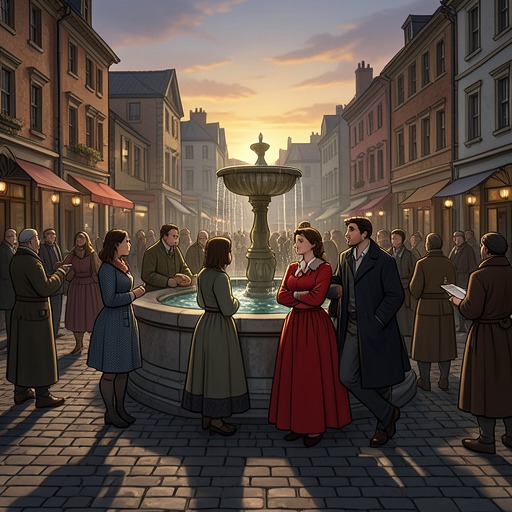
That negotiation succeeds through Don Pedro. Don Pedro tells Claudio that he has wooed Hero in Claudio’s name, spoken with her father, and obtained Leonato’s good will. Hero is declared won, and the remaining practical question is the marriage day. Leonato then offers his daughter together with his fortunes, allowing the match to be ratified by both family consent and princely authority. Claudio receives love as a public alliance, but the arrangement also makes the relationship vulnerable to public reputation: what is granted before witnesses can later be withdrawn before witnesses.
Suspicion, Accusation, and Reversal
The courtship’s promise is destroyed when Claudio accepts an apparent scene of sexual betrayal as proof of Hero’s dishonor. The evidence later supplied by Borachio reveals that Claudio was deceived: Don John incensed Borachio to slander Hero; Claudio and Don Pedro were brought into the orchard at night; and they saw Borachio courting Margaret while she wore Hero’s garments. The spectacle was manufactured precisely for Claudio’s eyes, and his error lies in treating what he sees as transparent truth.
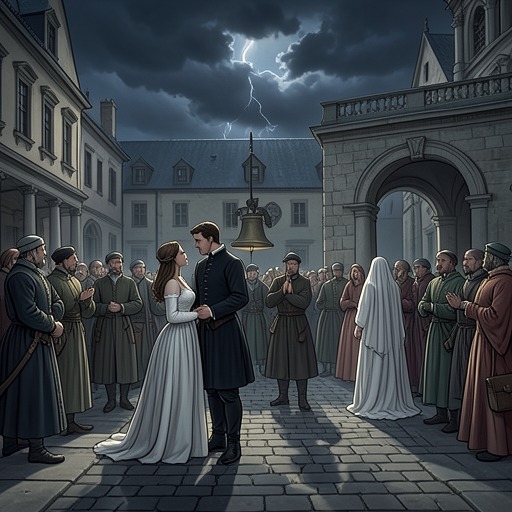
At the wedding, Claudio converts that mistaken perception into public punishment. He rejects Hero as a rotten orange and reduces her to the sign and semblance of honor rather than its reality. His language attacks not merely her private conduct but the visible meaning of her name, body, and family standing. The accusation therefore carries consequences beyond the lovers: it humiliates Leonato’s household, turns the marriage ceremony into a scene of exposure, and makes Claudio’s own honor dependent on the destruction of Hero’s.
Claudio’s reversal is intensified by the moral judgment of those around him. Don Pedro declares himself dishonored for having tried to link his dear friend to a common stale, showing that Claudio’s action has also contaminated the prince’s reputation and matchmaking authority. Claudio’s earlier distinction as the young soldier who exceeded expectation is now set against an equally conspicuous failure of discernment. The public setting does not correct his certainty; it amplifies its harm.
Recognition and Consequences
The concealed truth eventually breaks through Borachio’s confession. Borachio admits that he deceived even the princes’ eyes and that the shallow watchmen brought to light what superior wisdom could not discover. He identifies the whole mechanism of the plot: Don John’s instigation, the orchard meeting, Margaret’s disguise, the public disgrace of Hero, and Claudio’s role in the false accusation. He also confirms the apparent consequence in the starkest terms, saying that the lady is dead because of the false accusation made by him and his master.
The revelation changes Claudio’s position from judge to implicated survivor. Leonato bitterly thanks the princes for his daughter’s death and asks that the deed be recorded among their high and worthy actions, a ceremonially distorted acknowledgment that exposes the gap between their authority and their justice. Beatrice, meanwhile, identifies Claudio as a villain who has slandered, scorned, and dishonored her kinswoman; she imagines that she would eat his heart in the marketplace if she were a man. Claudio’s offense is thus treated as requiring not quiet regret but a response equal to the public violence of his accusation.
Claudio’s own language after the crisis shows that his judgment of Hero has been reversed. He addresses her not as the corrupt figure he had announced at the wedding but as the Hero she might have been if her outward graces had been placed around the thoughts and counsels of her heart. The formulation remains marked by the old separation between appearance and inward character, yet it also records his recognition that the outward signs he trusted were false. He is forced to understand that the visible scene in the orchard was not knowledge, and that his moral certainty helped produce the catastrophe.
Relationships, Repentance, and Ending
Claudio’s relationship with Don Pedro begins in mutual honor and fellowship. Don Pedro publicly celebrates Claudio’s military achievement, accompanies him in the courtship of Hero, and acts as the intermediary who secures the match. After the wedding disaster, however, Don Pedro’s alliance with Claudio becomes morally compromised: he stands dishonored by the role he played in joining his friend to a woman he now believes disgraced. The friendship survives the revelation, but it cannot remain untouched by the consequences of shared error.
Claudio’s relationship with Hero moves through idealization, rejection, mourning, and restoration. He first sees her as the sweetest woman he has ever looked upon, then publicly treats her as a rotten orange whose honor is only a sign, and finally returns to the marriage plot after learning that the accusation was false. The structure makes his love less a steady possession than a test of whether affection can survive the collapse of appearances and the admission of guilt.
The ending gives Claudio a form of restitution rather than an erasure of what happened. He is required to take Hero’s hand before Friar Francis and swear to marry her. Claudio then gives his hand and declares that he is her husband if she will accept him. The conditional wording matters: after having imposed a public judgment on Hero, he can no longer assume that reconciliation belongs to him by right. Marriage is restored only through her acceptance, a solemn witness, and the ritual transformation of his former rejection into a renewed commitment.
Claudio’s arc is consequently built on a sharp contrast between earned reputation and failed interpretation. His courage is reported through deeds performed in war, but his most consequential action is a failure to test appearances before condemning the woman he loves. The narrative does not make him a simple villain: he is capable of love, loyalty, and eventual recognition, yet his capacity for sudden idealization and sudden denunciation reveals a divided moral imagination. His final return to Hero provides closure, while the remembered death, Leonato’s bitterness, and the demand for public reparation preserve the cost of his error.