Hero
Much Ado About NothingHero is Leonato’s only child and heir, Claudio’s beloved and intended bride, and the central victim of a false accusation that transforms courtship into a public trial. Her significance lies in the contrast between the value assigned to her as daughter, heir, and prospective wife and the fragility of her voice when male witnesses claim to define her virtue. The plot repeatedly makes her identity a matter of inheritance, marriage, clothing, windows, and testimony before allowing her to answer for herself.
Identity and Introduction
Hero is introduced through her family position. When Leonato asks whom his niece means, she identifies the person as Signior Benedick of Padua, establishing Hero within a household where kinship and social recognition organize conversation. She is then named as Leonato’s only child and heir. That fact makes her more than a romantic object: her marriage carries the transfer of family fortune and succession, and her personal future is inseparable from the household’s material and dynastic interests.
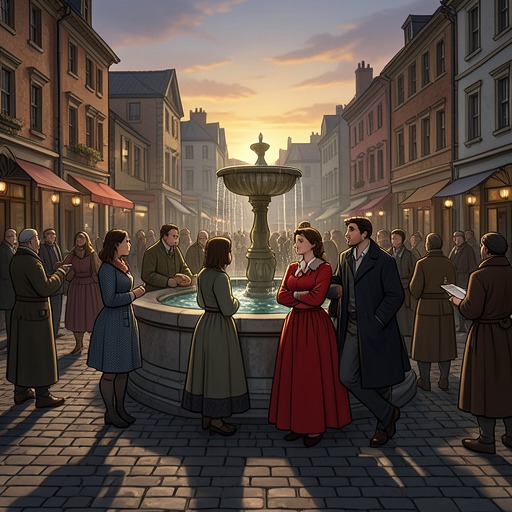
Her first major characterization also arrives through Claudio’s gaze. Claudio calls her the sweetest lady he has ever seen and says he would scarcely trust himself, despite having sworn the contrary, if Hero would become his wife. His language presents desire as a sudden alteration of his own judgment, while Hero herself remains largely represented through his perception. The contrast is sharpened by Benedick, who dismisses Claudio’s idealization and argues that Hero’s cousin surpasses her in beauty. Hero therefore enters the narrative as a woman whose value is loudly assessed by men before her own wishes receive comparable space.
Courtship, Inheritance, and Marriage Arrangement
Claudio’s attraction becomes a formal proposal through Don Pedro’s intervention. When Claudio asks whether Leonato has a son, Don Pedro answers that Hero is his only heir and then asks whether Claudio is affected by her. Don Pedro promises that, if Claudio loves fair Hero, he will speak with her and with her father so that Claudio may have her. The promise frames marriage as both emotional fulfillment and negotiated access to a household’s inheritance.
The arrangement is soon reported as accomplished. Don Pedro tells Claudio that he has wooed Hero in Claudio’s name, that fair Hero is won, and that he has obtained her father’s goodwill; he then urges the naming of the wedding day. Leonato responds by giving his daughter and his fortunes to the count, attributing the match to Don Pedro’s grace and blessing it. Hero’s marriage thus gathers several exchanges into one public settlement: Claudio receives a bride and an advantageous alliance, Leonato transfers his daughter and fortunes, and Don Pedro’s authority is converted into a successful match.
The Accusation and the Collapse of Honor
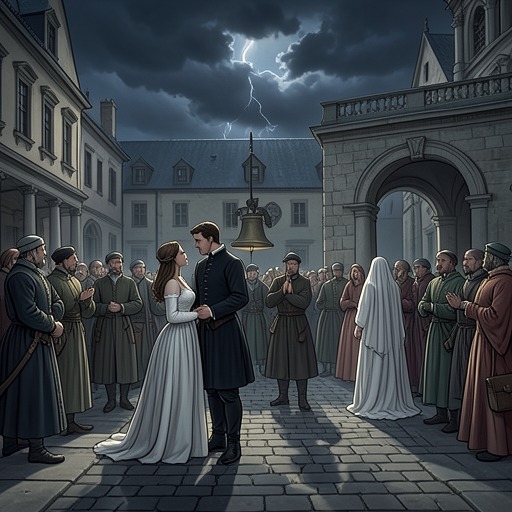
At the wedding confrontation, Claudio’s apparent tenderness is replaced by suspicion. He asks the friar to stand aside, addresses Leonato as father, and asks whether he may receive the maid as daughter. The formal language of marriage is immediately contaminated by an accusation concerning Hero’s sexual conduct. Claudio demands to know what man spoke with her at her window between twelve and one the previous night and insists that she answer if she is a maid.
Hero denies the alleged encounter, saying that she spoke with no man at that hour. Don Pedro then draws the devastating conclusion that she is therefore no maiden and tells Leonato that he is sorry he must hear the charge. The scene treats absence of corroboration not as uncertainty but as proof of guilt. Hero’s direct denial is overwhelmed by the confidence of male authority, and the marriage ceremony becomes an honor court in which her reputation is judged before her evidence is heard.
Leonato’s reaction shows the social cost of the accusation. He asks whether any man’s dagger has a point for him, and Hero swoons. The gesture links her alleged sexual fault to paternal shame, self-destructive violence, and the collapse of the family’s public standing. Her body becomes the visible site on which the disputed honor of the household is registered, while her fainting removes even the limited opportunity she has to speak.
Silence, Testimony, and the False Death
Friar Francis asks Hero what man she is accused of, but her answer emphasizes the distance between accusation and knowledge: those who accuse her know, while she knows none. She cannot identify the alleged offender because the charge is built from a scene she did not experience. Her response makes the epistemic structure of the crisis plain: the accusers possess a story, whereas Hero possesses only her own innocence, which the surrounding honor system refuses to treat as sufficient evidence.
The friar proposes a strategy based on concealment and delayed recognition. Leonato says he cannot simply command his daughter to live, because that is impossible, but he is asked to accept the possibility that the accusation has produced a false appearance of death. Hero’s public identity must temporarily disappear because the household cannot restore her name through ordinary argument. Her apparent death functions as both protection and punishment: it removes her from the scene of shame while exposing the cruelty of a social order that can treat a living woman as dead once her reputation has been pronounced ruined.
The hidden truth eventually comes through the Sexton’s account of what the watch overheard. Borachio confesses that Don John incensed him to slander Lady Hero, that Don Pedro and Claudio were brought into the orchard, and that they saw him court Margaret in Hero’s garments. The deception depended on substitution: Margaret’s clothing was made to signify Hero’s body, and a nighttime glimpse was promoted into certainty. Borachio acknowledges that the watch has brought to light what wiser men failed to discover, and he calls the recorded villainy a guilt he would rather seal with death than repeat to his shame.
Change and Ending
Hero’s restoration depends on recognition rather than on a simple refutation. The exposure of the plot reveals that the accusation was manufactured by Don John’s conspiracy and sustained by Claudio’s and Don Pedro’s misreading of the scene. Yet the damage cannot be undone merely by declaring the evidence false: Leonato’s daughter has been publicly disgraced, her wedding has collapsed, and the family has been forced to represent her as dead.
The final exchange returns Hero to the marriage structure that had been broken. Claudio offers his hand before the holy friar and says that he is her husband if she will accept him. Hero answers that, when she lived, she was his other wife, followed by the stage direction indicating unmasking. Her reappearance makes identity itself part of the reconciliation. The woman believed dead is revealed as the bride who survived the accusation, and the act of unmasking reverses the earlier deception in which another woman’s garments were mistaken for Hero’s identity.
Hero’s ending is therefore both restorative and qualified. She returns to Claudio and the marital order, but the route to that return has shown that her social existence can be suspended by rumor, male interpretation, and theatrical disguise. Her final presence confirms the household alliance, while the memory of her supposed death preserves the cost of the false judgment. Hero’s story is not simply that innocence triumphs; it is that innocence must pass through concealment, public loss, and delayed recognition before it can again become legible to the community.