Honor
Much Ado About NothingHonor governs the play’s social world as both an ethical ideal and a reputation held in the eyes of others. It appears in military praise, family standing, marriage negotiations, sworn duty, public accusation, and the demand for reparation. The same language that celebrates honorable virtue can also authorize humiliation: because honor is treated as publicly legible, a false appearance may outweigh a person’s actual conduct until witnesses and confession reverse the judgment.
Honor as Virtue and Public Recognition
The concept first appears as a vocabulary of character. The Messenger describes Claudio as a man filled with honorable virtues, while Beatrice turns the praise into a joke by calling him a “stuffed man,” separating the appearance of honor from whatever substance may be inside it. The exchange establishes a persistent tension: honor may name genuine moral quality, but it may also be a badge, an external filling, or a reputation certified by others.
That tension is visible in Don John’s self-description. He would rather be a canker in a hedge than a rose flourishing in Don Pedro’s favor, and he declares that being disdained by all suits his blood better than shaping his behavior to win affection. His grievance is not merely personal dislike. He understands himself as constrained by dependence on his brother, trusted with a muzzle and freed only with a clog, and therefore refuses the obedient performance that might restore him to favor. His deliberate embrace of villainy makes honor a contested relation between inward identity and public approval: he rejects the social economy of esteem even while his resentment remains organized by it.
Honor also appears as a duty owed through reconciliation. When Don John is welcomed after being reconciled to Don Pedro, he receives the welcome as a lord and answers that he is a man of few words who is nevertheless thankful. The exchange presents honor as ceremonial obligation: reconciliation creates a public duty before it creates intimacy. Courtesy can therefore coexist with hostility, and the formal acknowledgment of another person’s rank does not guarantee moral allegiance.
Marriage, Reputation, and the First Reversal
The marriage arrangement between Claudio and Hero initially gives honor a constructive form. Don Pedro announces that he has wooed Hero in Claudio’s name, obtained her father’s consent, and won Hero for Claudio; Leonato then offers his daughter together with his fortunes, presenting the match as an alliance ratified by rank, family, and divine blessing. Marriage is thus more than private affection. It is a public transfer of trust in which family honor, personal estimation, and social legitimacy are joined.
Don John’s plot attacks that structure by making the marriage appear dishonorable. Borachio instructs him to tell Don Pedro that Claudio has married not the renowned woman he esteems but a contaminated stale, and to present the match as an injury to the prince’s honor. The intended deception works by redirecting existing respect: Claudio’s good name is used as the standard against which Hero is degraded. A false charge gains force because it is framed as protection of a superior man’s reputation.
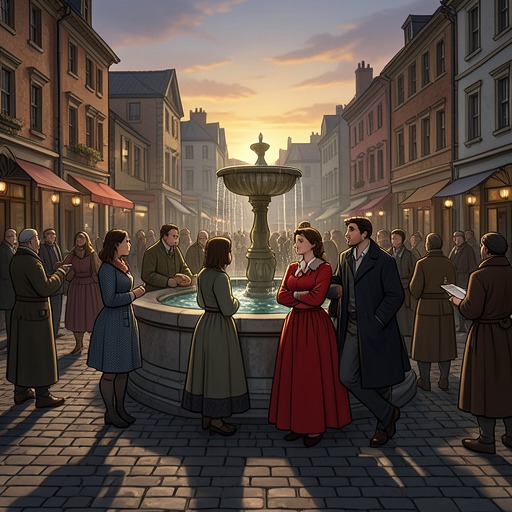
The wedding scene turns this logic into public punishment. Claudio returns Hero to Leonato as a rotten orange and declares that she possesses only the sign and semblance of honor. The language does not investigate her conduct; it treats visible reputation as the decisive evidence and converts the bride’s ceremonial place into an emblem of corruption. Don Pedro joins the condemnation by saying that he stands dishonored for having linked his friend to a common stale. His shame is derivative but politically powerful: the failed match damages not only Hero but also the authority of the man who arranged it.
Accusation as an Honor Tribunal
The accusation is conducted like a substitute court. Claudio demands that Leonato answer whether he will freely give him Hero, then uses the father’s consent as the threshold before overturning the ceremony. The public setting, the authority of male witnesses, and the language of honor allow suspicion to become judgment before any reliable proof is tested. Hero’s own denial is insufficient within this system. When she says that she spoke with no man at the stated hour, Don Pedro concludes that she is therefore no maiden, treating a narrow question and an asserted honor code as a complete verdict.
Claudio’s response shows the emotional and moral consequences of this verdict. He imagines what Hero might have been if her outward graces had been placed around her thoughts and counsels, then fuses purity and impiety into a single condemnation. He resolves to lock all the gates of love and to let conjecture turn every beauty into thoughts of harm. Honor here mutates into suspicion: once reputation has been destroyed by conjecture, the accuser’s future perception is also damaged, because every sign of beauty becomes evidence that deception may be hiding beneath it.
Leonato’s cry for a dagger and Hero’s swoon mark the immediate bodily cost of public dishonor. The abstract injury to a family name becomes a crisis of life, authority, and grief. The scene’s value shift is stark: a marriage publicly ratified as honorable becomes a spectacle of disgrace, and the men who claimed to defend honor become agents of devastating misjudgment.
Resistance, Evidence, and Exposure
Beatrice refuses to accept the accusation as a settled moral fact. She calls Claudio a villain for slandering, scorning, and dishonoring her kinswoman, and imagines a public punishment in which she would eat his heart in the marketplace. Her language answers public slander with public retaliation. The marketplace matters because honor has been wounded before a community; private forgiveness cannot adequately address an injury created through collective spectacle. Her repeated wish that she were a man also exposes the gendered distribution of honorable action: she possesses the moral outrage and courage to demand redress but sees forceful public intervention as a male privilege.
The correction comes through a different evidentiary process. The Sexton tells Dogberry that the constable is examining the prisoners improperly and must call forth the watch who accuse them. Even the comic machinery of local law distinguishes between assertion and testimony. The watch’s overhearing becomes decisive when Borachio is brought before Don Pedro and explains that he deceived the princes’ eyes, that Don John incensed him to slander Hero, and that the nighttime scene in the orchard was staged with Margaret wearing Hero’s garments. The false evidence is thereby reclassified as performance: what seemed to prove Hero’s dishonor was an arranged image witnessed under conditions designed to mislead.
Borachio accepts responsibility without softening the result. He says that the watch exposed what the princes’ wisdom could not discover and admits that his villainy is recorded. He also states that Hero is dead because of the false accusation by him and his master, preferring the reward of a villain to evasion of shame. His confession restores factual truth but cannot undo the damage. Honor proves reversible as reputation, yet irreversible in its immediate consequences: recognition comes after the dishonored woman has already been treated as dead.
Restoration and the Limits of Repair
Leonato’s reaction after the confession is deliberately bitter. He thanks the princes for his daughter’s death and asks that the deed be recorded among their high and worthy actions, calling it brave if they remember what they have done. The irony turns the language of honor against those who had claimed to defend it. A noble title, a public ceremony, and confidence in one’s own judgment do not make an act honorable; the record of the act may instead preserve the evidence of collective failure.
The play therefore presents honor as a chain linking esteem, shame, revenge, and attempted restoration. Don Pedro’s arrangement begins with honor as social credit; Don John weaponizes that credit by presenting marriage as an insult; Claudio and Don Pedro convert suspicion into public disgrace; Beatrice demands retaliation; the watch supplies overlooked testimony; and Borachio’s confession exposes the deception. The final movement does not make honor a private possession untouched by opinion. It shows that honor depends on how communities hear, judge, and remember, while also insisting that public recognition can be catastrophically wrong.
Honor’s deepest significance lies in this conflict between personal virtue and collective reputation. The language of honorable conduct can encourage loyalty, courtesy, and responsibility, but it can also become an instrument of exclusion when appearances are accepted as proof. The play’s governing irony is that those most concerned with guarding honor repeatedly endanger the persons whose dignity they claim to protect. Truth eventually re-enters the public sphere through testimony and confession, yet restoration remains morally incomplete because acknowledgment follows irreversible suffering.