
The Press and the Public Image
MunichNewspapers, broadcasts and staged receptions turn the crisis into competing public narratives of peace, strength and political triumph.
increasing Bearing strength in each event
 decreasing
Bearing strength in each eventdecreasingThe Times at the Ritz
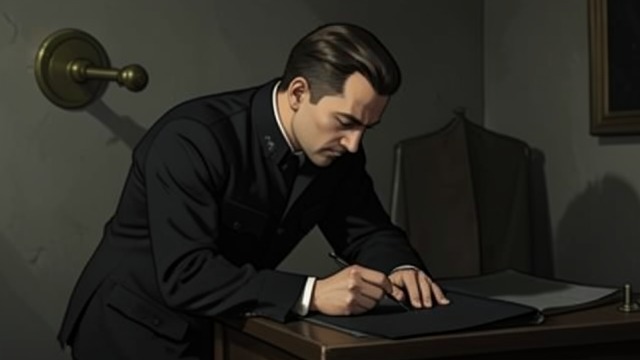
Reading Hitler’s Speech
Headlines and Claims
Legat studies the report of Hitler’s Berlin speech while waiting for Pamela.
Reading for Threat
His underlining identifies promises of peace that become central to the political debate.
The Radio Broadcast
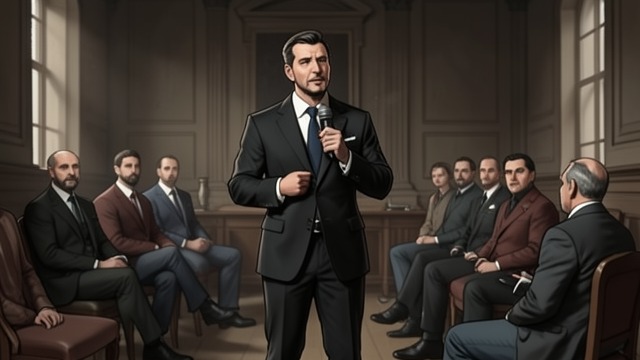
A Voice to the Empire
Public Address
Chamberlain speaks to Britain and listeners abroad from Downing Street.
A Message with Two Audiences
His restrained appeal is aimed both at fearful civilians and at Hitler, who is imagined listening from the shadows.
The Commons Acclaims Him
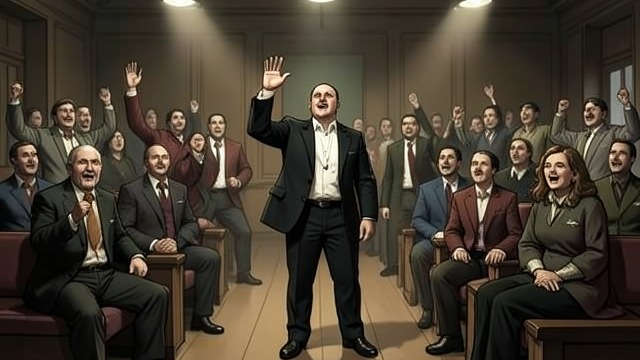
Relief in Parliament
News Reaches the House
Chamberlain announces that Hitler has invited the leaders to Munich.
A Roar of Approval
Members rise in relief, momentarily treating the conference as the rescue of peace.
Munich Crowds Cheer
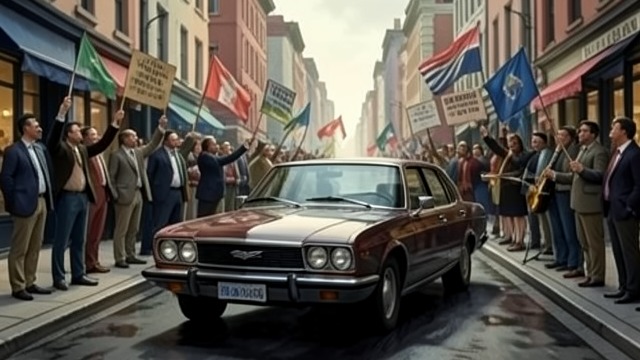
A Welcome Staged
The Motorcade
Chamberlain’s arrival in Munich is accompanied by crowds, music and official spectacle.
An Unusual Reception
The enthusiasm complicates Hitler’s own image and becomes a point of comparison in the press.
The Return Speech
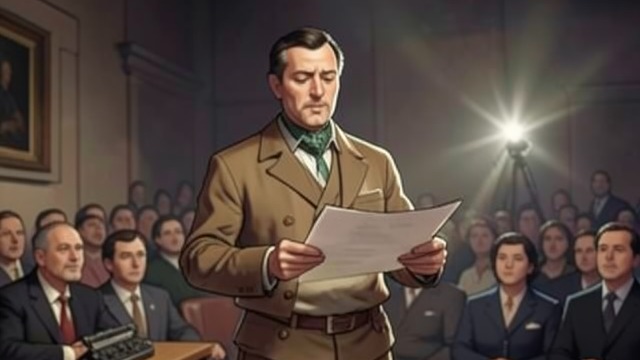
The Signed Paper Displayed
Chamberlain Addresses the Crowd
He thanks the public and reads the Anglo-German declaration aloud.
Hope Becomes a Headline
The dramatic image of the paper becomes a public symbol whose promise exceeds its enforceable power.
27 September 1938, before lunch
27 September 1938, 8 p.m.
28 September 1938, afternoon
29 September 1938, midday
30 September 1938, evening
