
Chamberlain’s Broadcast and the Cabinet
MunichThe Prime Minister’s public message and private deliberations reveal the tension between calming the nation and preparing it for war.
increasing Bearing strength in each event
 decreasing
Bearing strength in each eventdecreasingA Speech Drafted
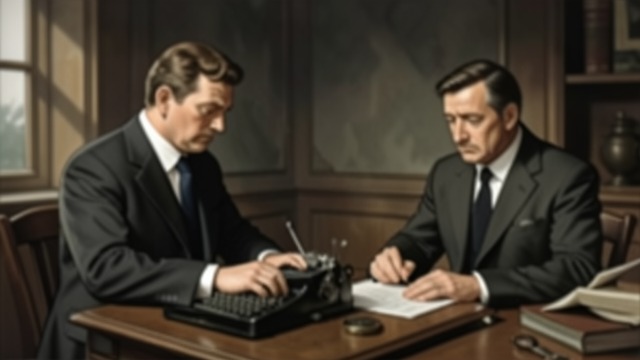
Words Prepared Under Pressure
Legat Types the Address
Legat helps turn Chamberlain’s handwritten draft into a radio speech.
A Disputed Phrase
He questions the dismissive description of a quarrel in a faraway country, sensing that its language may misrepresent the stakes.
The Address Goes Live

A Public Voice for Peace
Broadcast from the Cabinet Room
Chamberlain tells listeners that he will continue working for peace while describing precautionary measures.
Competing Signals
The speech both acknowledges danger and declines to commit Britain to war on Czechoslovakia’s behalf alone.
The Cabinet’s Disagreement
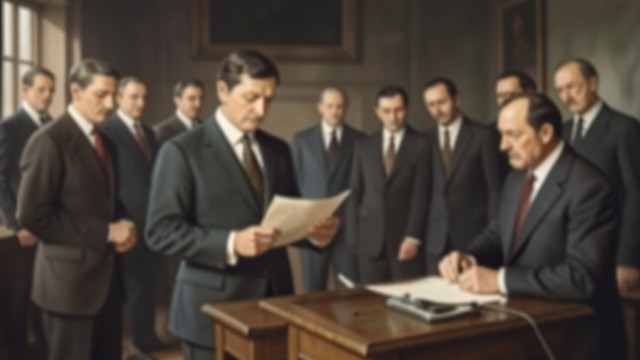
A Telegram Debated
Wilson’s Proposal
Ministers consider whether to pressure Prague into accepting immediate German occupation.
A Moral Limit
The proposal is rejected, leaving Britain without an easy route to avoid war or preserve its standing.
The Commons Statement
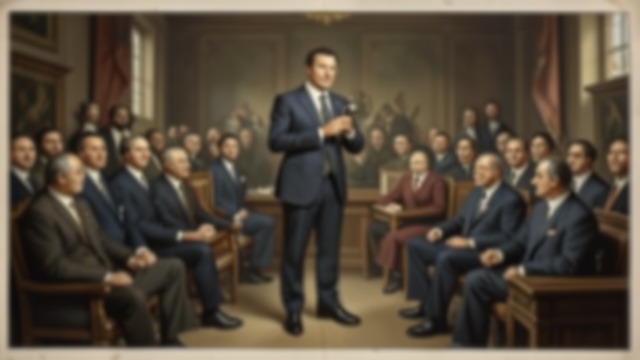
The Crisis Narrated to Parliament
A Detailed Account
Chamberlain recounts the events that led to the emergency and describes his efforts to meet Hitler.
The News Changes the Ending
The announcement of the Munich invitation turns the speech into a report of opportunity rather than imminent war.
A Statement to the Camera

Public Meaning Fixed
The Declaration Displayed
Chamberlain reads the signed Anglo-German statement to the waiting crowd.
The Promise Outruns the Proof
The public image of peace becomes powerful even as the story has already shown reasons for distrust.
27 September 1938, early evening
27 September 1938, 8 p.m.
27 September 1938, evening
28 September 1938, afternoon
30 September 1938, evening
