Edward Henry Masterman
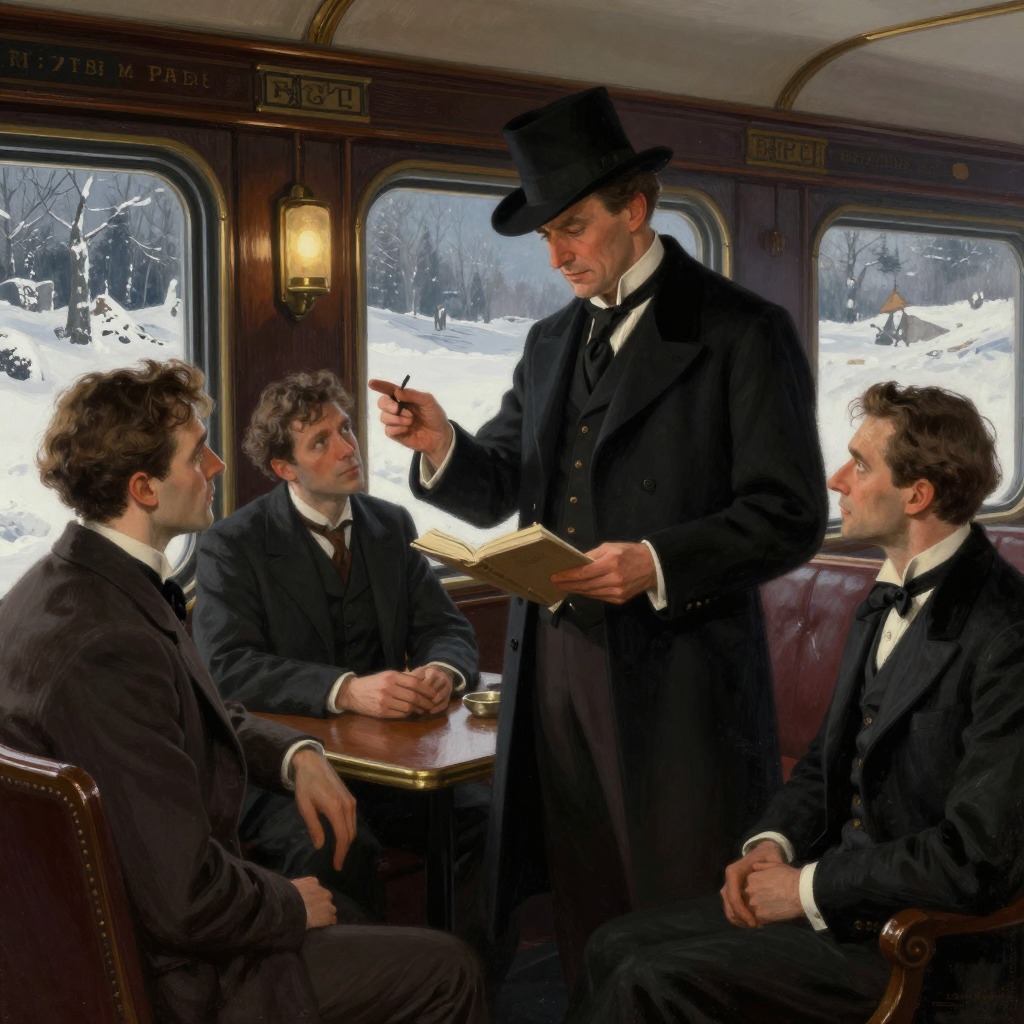
Murder on the Orient ExpressEdward Henry Masterman, a thirty-nine-year-old Englishman from 21 Friar Street, Clerkenwell, served as the valet to Samuel Edward Ratchett. He was a spare, neat man with an expressionless, disapproving face, the epitome of the well-trained servant. His manner was correct and unemotional, and he spoke with a quiet, precise diction. He had been in Ratchett's employ for just over nine months, having previously served Sir Henry Tomlinson in Grosvenor Square for several years. Masterman's true significance, however, lay not in his current position but in his past: he had been Colonel Armstrong's batman during the War and later his valet in New York. This connection to the Armstrong family, which he initially concealed, placed him at the heart of the conspiracy to avenge the kidnapping and murder of Daisy Armstrong.
Role in the Conspiracy
Masterman was one of the twelve individuals who had condemned Ratchett to death. His role in the plot was twofold: to gain access to Ratchett's household and to provide a crucial alibi for another conspirator. He successfully secured the position of Ratchett's valet, allowing him to be on the train and to administer the sleeping draught that rendered Ratchett helpless. On the night of the murder, Masterman poured the sleeping draught into a glass and placed it on the toilet table for Ratchett, ensuring the victim would be unconscious when the conspirators entered his compartment. His most critical function, however, was to provide an alibi for Antonio Foscarelli, the Armstrong family's former chauffeur. Masterman swore that Foscarelli never left their shared second-class compartment (Nos. 4 and 5) during the night, a statement that was essential to deflecting suspicion from the Italian.
Key Actions and Testimony
Masterman's testimony during the investigation was a model of careful deception. He stated that he last saw Ratchett at about nine o'clock, attending to his master's nightly routine. He claimed to have spent the rest of the evening in his compartment reading Love's Captive by Mrs. Arabella Richardson, and that he was kept awake by a toothache, which he treated with oil of cloves. He insisted he did not leave the compartment and that Foscarelli remained there as well. This alibi was a deliberate lie, designed to protect Foscarelli and to obscure the fact that Masterman himself was a key participant in the plot. His calm, unflappable demeanor made his false testimony all the more credible. He also claimed to have no knowledge of Ratchett's true identity as Cassetti, the mastermind of the Armstrong kidnapping, a statement that was later revealed to be false.
Relationships and Conflict
Masterman's relationship with his employer was one of professional distance and personal distaste. He admitted that he did not like Ratchett, though he framed this as a general dislike of Americans rather than a specific animus. He described Ratchett as a generous employer but one who was easily upset and prone to losing his temper. This cool, professional facade masked a deep-seated loyalty to the memory of Colonel Armstrong, for whom he had served as a batman. His participation in the murder was an act of vengeance for his former commander, a duty he undertook with the same quiet efficiency he brought to his valeting duties. His relationship with Foscarelli was one of convenience; he dismissed the Italian as unsympathetic and a fish, but he was willing to lie to protect him.
Change and Ending
Masterman's transformation from a loyal servant to a conspirator in a premeditated murder was a gradual process, driven by the collective trauma of the Armstrong case. He was one of the group that gathered in New York after the tragedy, where the plan for revenge was conceived. His role was not one of passion but of duty, a calculated decision to serve justice as he saw it. At the conclusion of the investigation, when Poirot revealed the truth, Masterman came forward voluntarily to confess his connection to the Armstrong family and to vouch for Foscarelli's innocence. He did so with the same unemotional, correct demeanor he had maintained throughout, a testament to his unwavering commitment to the cause. His final act was to ensure that the innocent Italian was not wrongly accused, a small but significant gesture of loyalty within the larger conspiracy.
Narrative Role and Significance
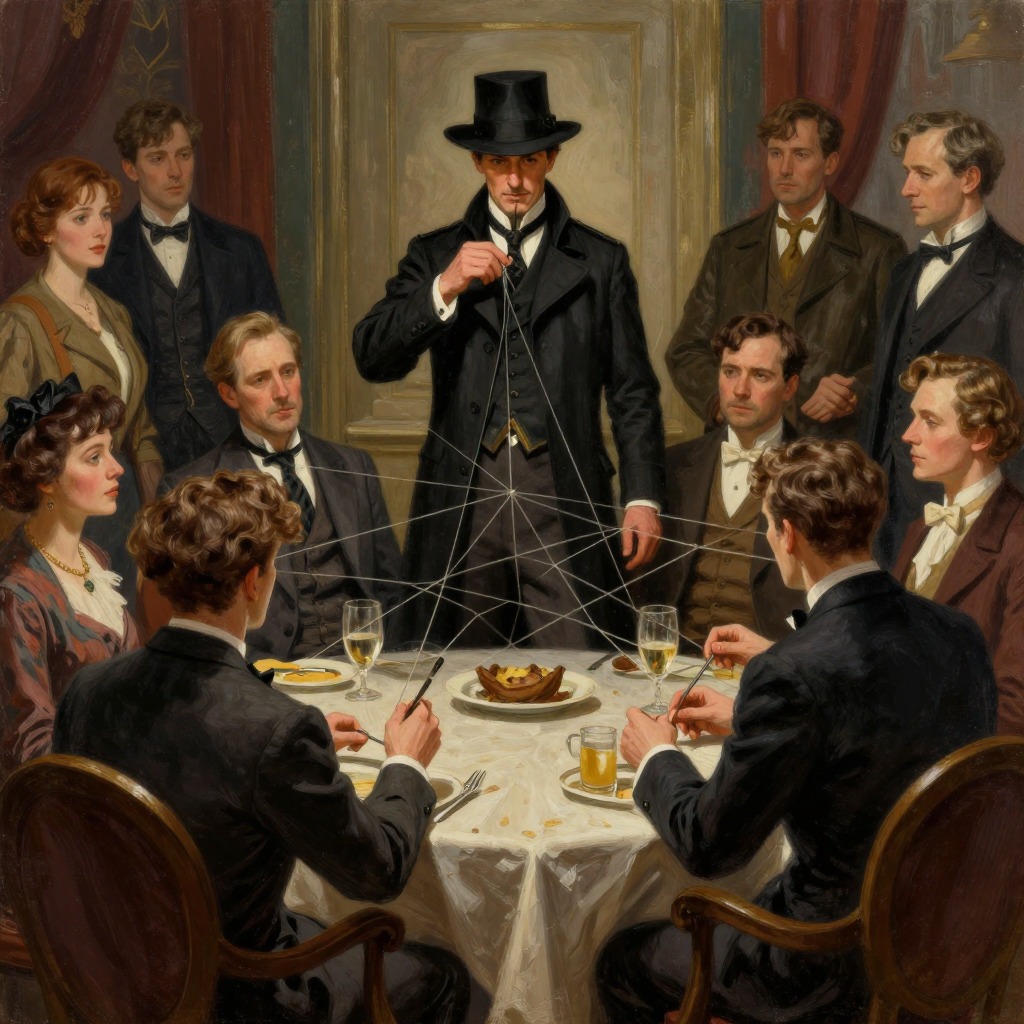
Masterman functions as a symbol of the quiet, unassuming individual who can be driven to extreme action by a sense of duty and loyalty. His character is a study in the power of suppressed emotion and the lengths to which a seemingly ordinary person will go to avenge a perceived injustice. He is a flat character in the sense that he is built around a single idea—loyalty to his former commander—but this loyalty is so profound that it transforms him into a willing participant in a brutal murder. His presence on the train, along with the other conspirators, underscores the novel's central theme: that justice, when denied by the legal system, can be taken up by a self-appointed jury of ordinary people. Masterman's quiet, unassuming nature makes him one of the most chillingly effective members of that jury.