Hector MacQueen
Murder on the Orient ExpressHector MacQueen, a young American, serves as the secretary and courier to Samuel Edward Ratchett, the murdered passenger on the Orient Express. He is a likeable, intelligent man who becomes a key figure in the investigation, initially appearing as a suspect but ultimately revealed as a central planner in the elaborate conspiracy to execute Ratchett for the kidnapping and murder of Daisy Armstrong.
Identity and Background
Hector Willard MacQueen is an American citizen from New York. He met Ratchett just over a year before the journey while in Persia, where he had gone to look into an oil concession. After a row with his previous secretary, Ratchett offered MacQueen the job, which he accepted as he was at a loose end. MacQueen acted more as a courier than a secretary, handling languages and travel arrangements for Ratchett, who knew no languages other than English. MacQueen's father was the district attorney who handled the Armstrong kidnapping case, giving him a personal connection to the tragedy. He had seen Mrs. Armstrong, describing her as a lovely woman, gentle and heartbroken.
Role in the Plot and Investigation
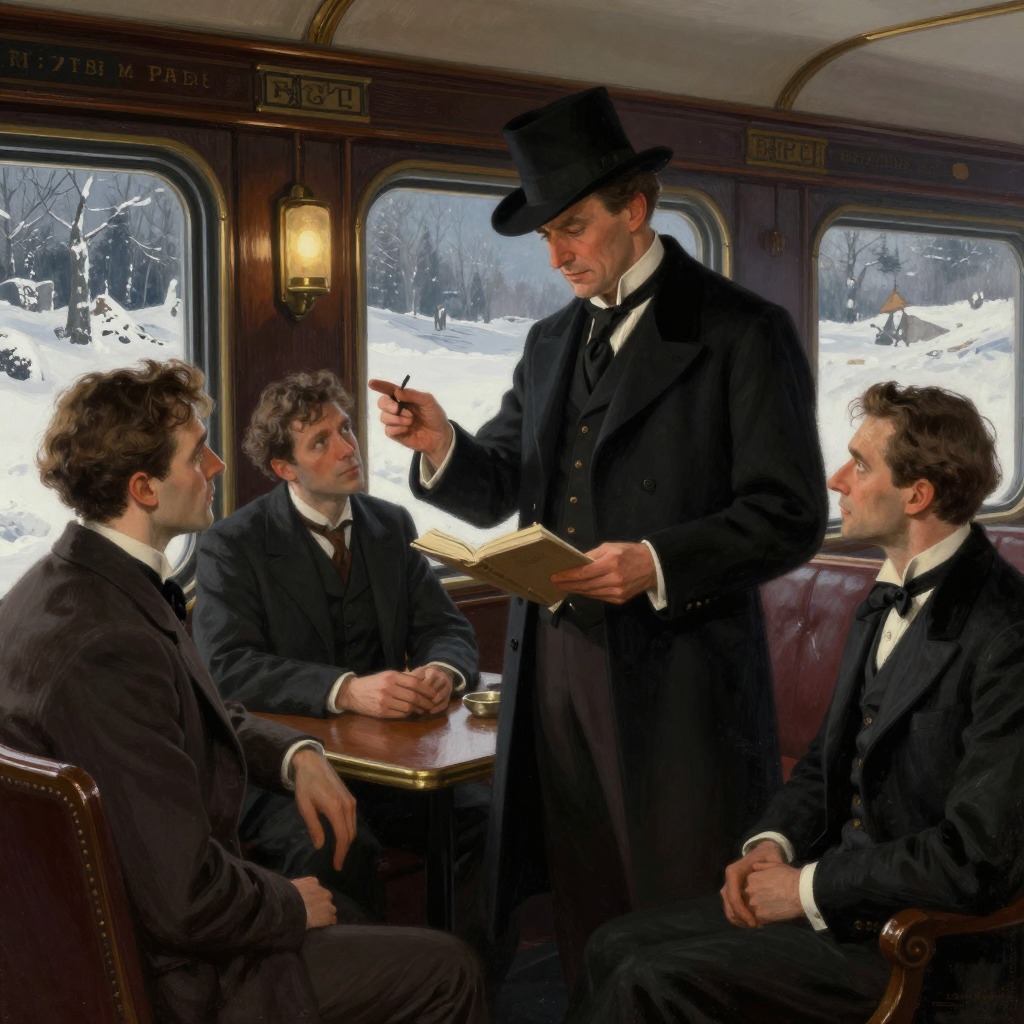
MacQueen is the last person known to have seen Ratchett alive, visiting him around ten o'clock to take down memoranda about some tiles and antique pottery. He provides the threatening letters to Poirot, which he claims Ratchett had been receiving. During the investigation, MacQueen is cooperative but makes a revealing slip. When Poirot describes finding a charred note mentioning the Armstrong case, MacQueen starts to say, "But surely—" before correcting himself to "that was rather careless of the old man." Poirot interprets this as MacQueen knowing the note had been burnt, implicating him in the crime. MacQueen also provides an alibi for Colonel Arbuthnot, and Arbuthnot provides one for him, a mutual alibi that Poirot later finds suspiciously convenient.
Relationships and Conflict
MacQueen openly admits to disliking and distrusting his employer, calling him a cruel and dangerous man. He expresses no sorrow at Ratchett's death, stating he is "rejoiced at his end" and that such a man "wasn't fit to live." He forms a friendship with Colonel Arbuthnot during the journey, discussing world politics and India. Poirot notes that MacQueen's relationship with Arbuthnot seems unusually intimate for two men who claim to have just met. MacQueen also has a connection to the Armstrong case through his father, the district attorney, and he admits to having adored Sonia Armstrong, Ratchett's victim's mother.
Change and Ending
MacQueen's role shifts from a suspect to a key conspirator. It is revealed that he was instrumental in planning the murder, working out the details with Mary Debenham. He explained to the others how Cassetti's money had managed to get him off. He also wangled it so that Ratchett selected the right day for travelling, when Pierre Michel would be on duty. In the final resolution, MacQueen is one of the twelve passengers who collectively stab Ratchett. Poirot's second solution, which is accepted by M. Bouc and Dr. Constantine, identifies MacQueen as a member of the self-appointed jury of twelve who carried out the execution.
Thematic Significance
MacQueen embodies the theme of personal vengeance versus legal justice. His personal connection to the Armstrong case, through his father and his admiration for Sonia Armstrong, transforms him from a mere employee into a passionate avenger. His role in the conspiracy highlights the novel's central moral question: whether a group of private citizens can legitimately execute a man who has escaped the legal system. MacQueen's intelligence and planning skills make him a key architect of the plot, demonstrating that the murder was not a crime of passion but a carefully orchestrated act of collective justice.