M. Bouc
Murder on the Orient ExpressM. Bouc is a Belgian director of the Compagnie Internationale des Wagons Lits, the company that operates the Orient Express. He is an old acquaintance of Hercule Poirot, dating back many years to the latter's career in the Belgian police force. When the two meet by chance at the Tokatlian Hotel in Constantinople, Bouc is delighted and insists that Poirot share his journey. He is a stout, elderly man with hair cut en brosse, and he speaks with a mixture of geniality, authority, and a touch of theatrical despair when events go wrong.
Role in the Investigation
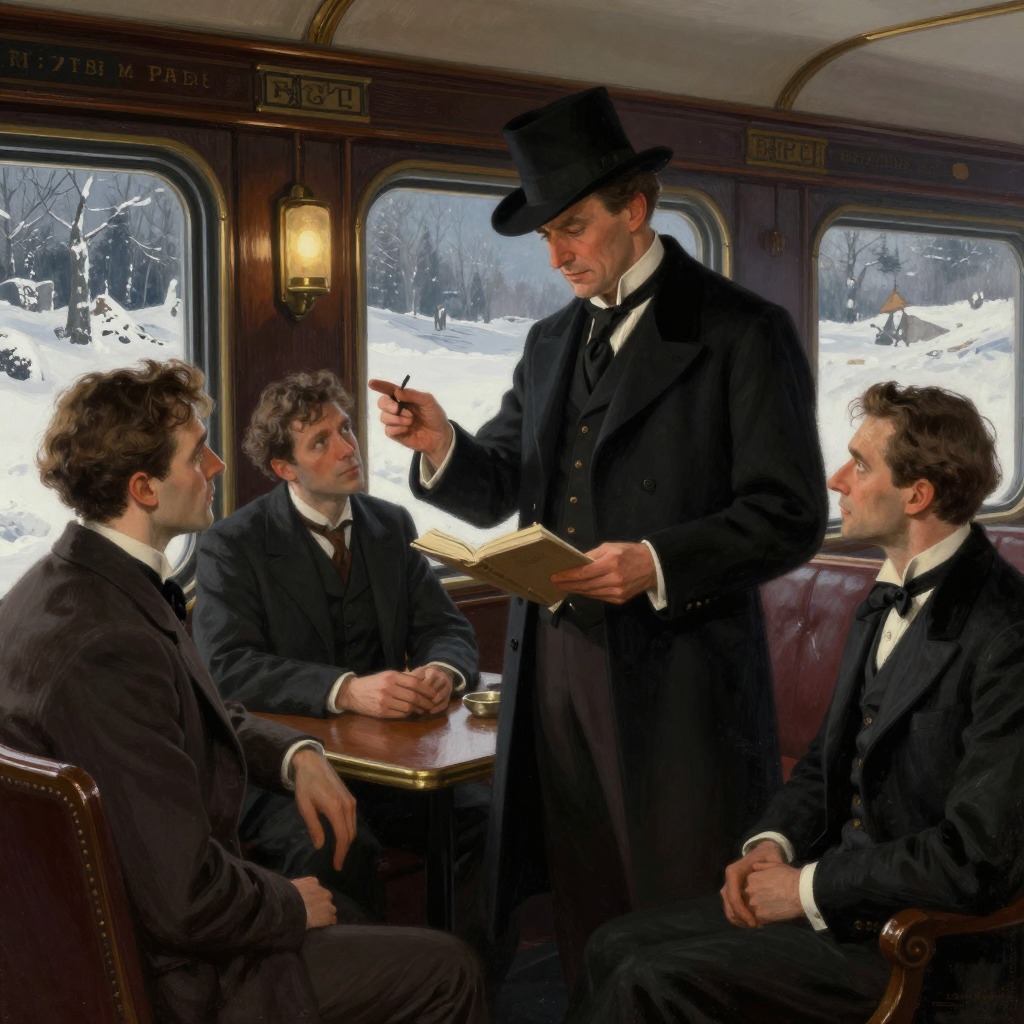
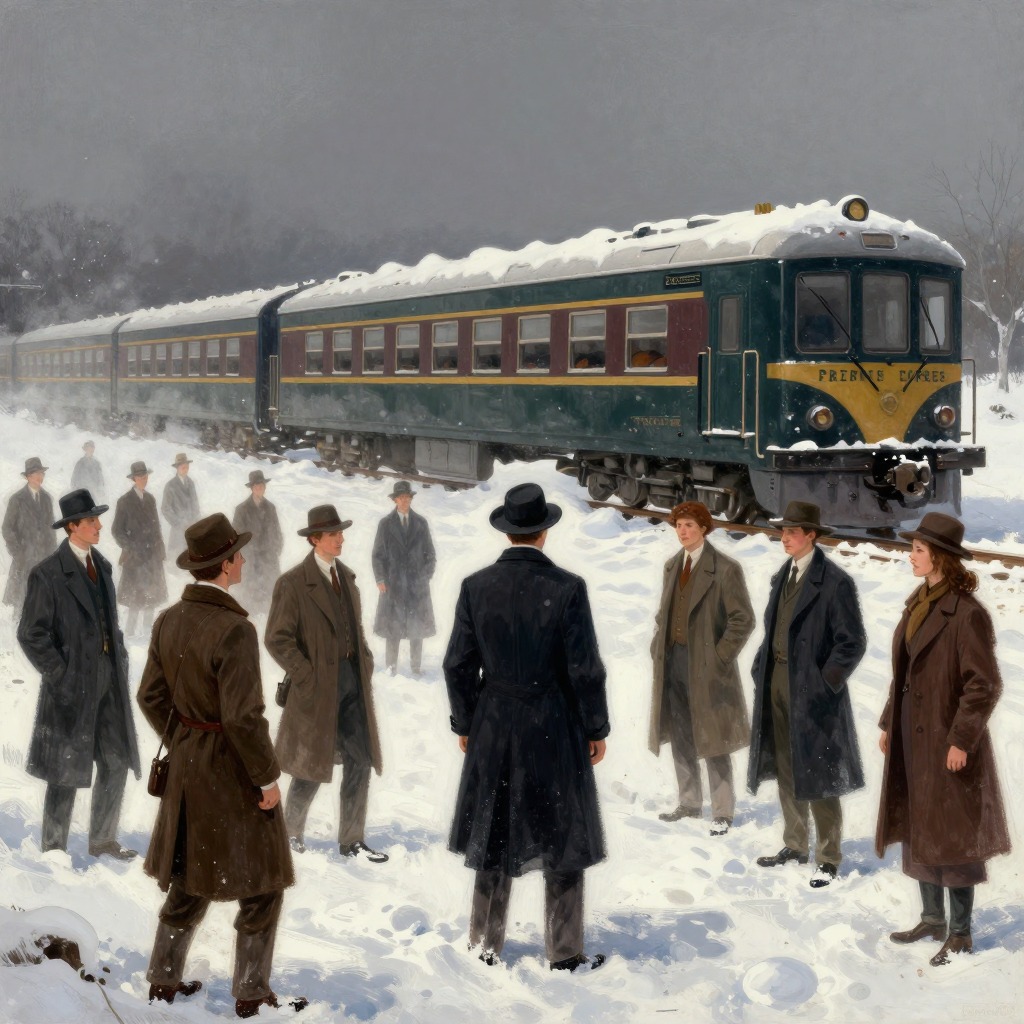
When Ratchett's body is discovered and the train is snowbound in Jugo-Slavia, Bouc immediately turns to Poirot. He formally places the matter in Poirot's hands, saying, "I know your powers. Take command of this investigation!" He argues that if they can present the Jugo-Slavian police with a solution, they will avoid endless delays and annoyances. Bouc provides Poirot with the resources of the company, including the passengers' passports and tickets, and arranges for the restaurant car to be cleared for interviews. Throughout the inquiry, Bouc sits beside Poirot, listening to evidence and offering his own theories—most persistently that the Italian Antonio Foscarelli is the murderer, because "Italians use the knife" and "they are great liars."
Reactions to the Evidence
Bouc is repeatedly baffled by the contradictions in the case. After hearing the passengers' testimony, he throws up his hands and declares, "But I understand nothing—but nothing, of all of this!" He finds the evidence of the Wagon Lit uniform button and the scarlet kimono especially confusing. When Poirot points out that the case seems "fantastically impossible," Bouc agrees wholeheartedly. He is also the one who first remarks, on the first day of the journey, that the dining car contains "people of all classes, of all nationalities, of all ages"—a comment Poirot later recalls as the seed of his solution. Bouc's frustration peaks when he learns that nearly every passenger has lied about their connection to the Armstrong family; he exclaims, "But does everybody on this train tell lies?"
Endorsement of the Official Solution
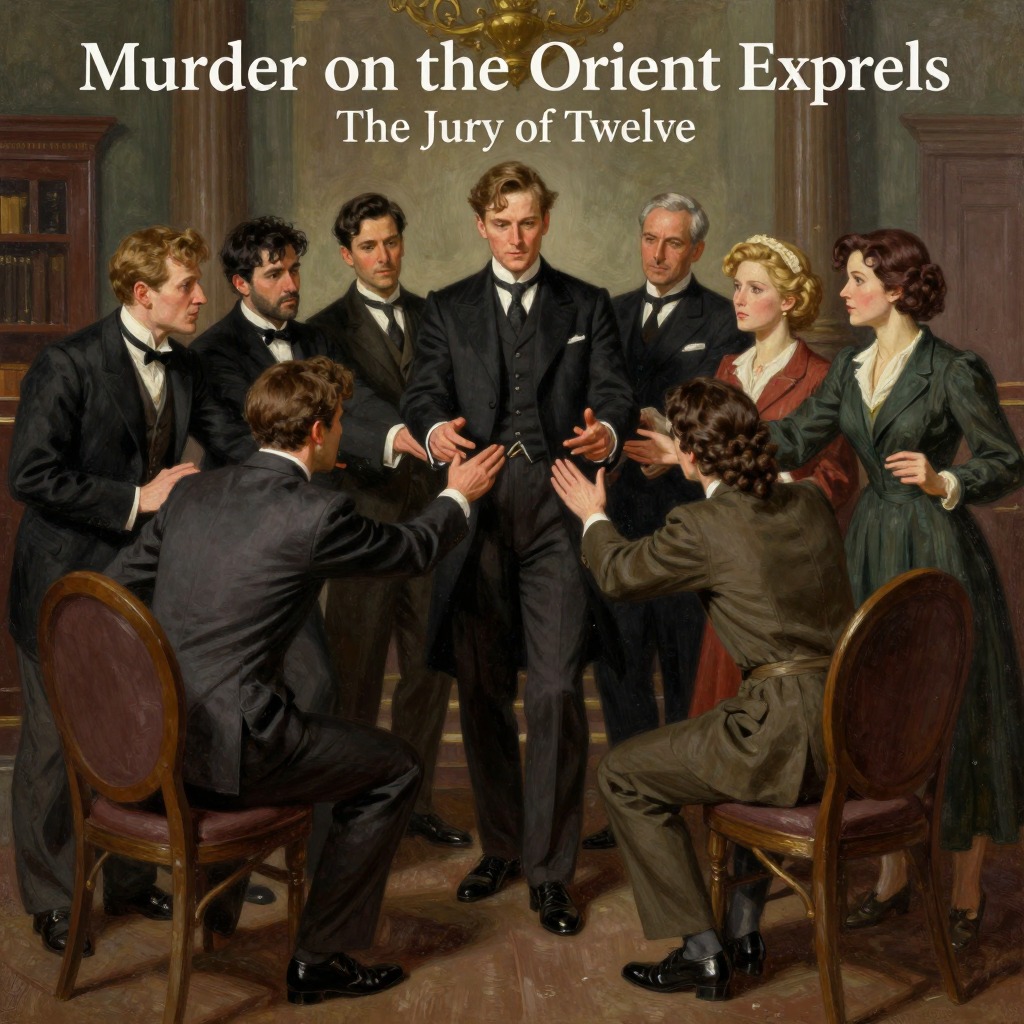
At the climax, Poirot presents two solutions. The first is a conventional explanation: an outside assassin boarded the train, stabbed Ratchett, and escaped. Bouc initially finds this plausible but is overruled by Dr. Constantine's objections. When Poirot then reveals the second solution—that all twelve passengers in the Stamboul-Calais coach were part of a conspiracy, each stabbing Ratchett once as a form of vigilante justice—Bouc listens in stunned silence. After Linda Arden (disguised as Mrs. Hubbard) confesses, Bouc is the first to speak. He clears his throat and says, "In my opinion, M. Poirot, the first theory you put forward was the correct one—decidedly so. I suggest that that is the solution we offer to the Jugo-Slavian police when they arrive." With this, he formally adopts the cover story, allowing the conspirators to go free. His decision reflects both his loyalty to the company and his personal sympathy for the Armstrong tragedy.
Thematic Significance
Bouc embodies the institutional authority that must decide between legal justice and moral justice. As a director of the Wagons Lits company, he is responsible for the train's reputation and the smooth handling of the crisis. Yet he is also a humane man who, once he understands the full story, chooses to protect the conspirators rather than deliver them to the police. His final ruling—accepting the false solution—makes him an active participant in the cover-up, not merely a passive observer. In this way, Bouc represents the pragmatic compromise that the novel itself endorses: that sometimes the most just outcome is the one that remains officially unrecorded.