Orient Express snowbound
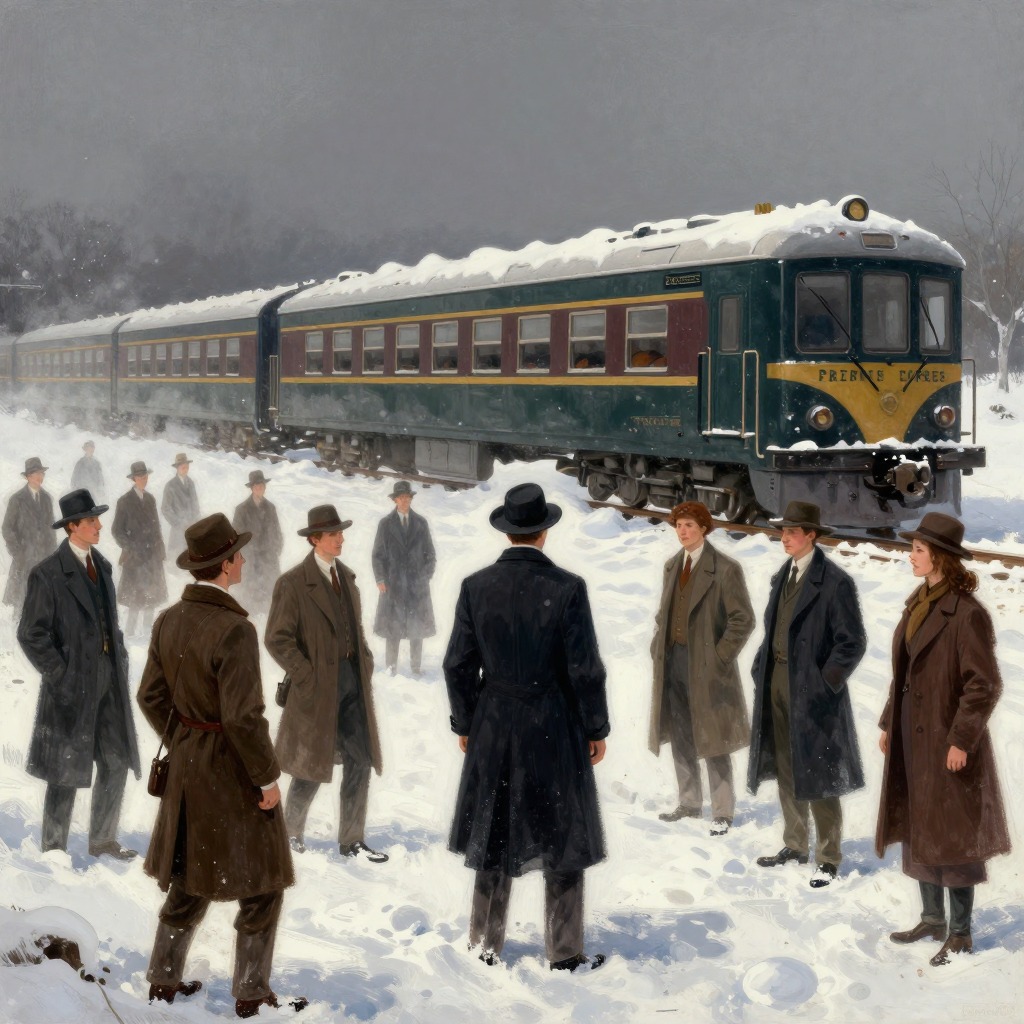
Murder on the Orient ExpressThe Orient Express snowbound event is the pivotal crisis that transforms a routine journey into a locked-room murder investigation, trapping the train and its passengers in a snowdrift between Vincovci and Brod and thereby forcing the murderer to remain among them.
Causes and Background
The snowstorm that struck the Balkans was unusually severe. The Wagon Lit conductor, Pierre Michel, informed Hercule Poirot that the train had run into a snowdrift and that he remembered once being snowed up for seven days. The train had already been running late due to the weather; it left Vincovci twenty minutes behind schedule at 12:10 a.m. instead of 11:58 p.m. The snow continued to fall heavily, and shortly after midnight the train came to a complete halt. Poirot, who had been awakened by a cry and then by the ringing of bells, learned from the conductor that they were stuck between Vincovci and Brod. The train was at a standstill, and the silence outside was so profound that Poirot noted the absence of the usual motion and noise.
What Happens
When Poirot awoke the next morning, the train was still motionless. He raised a blind and saw heavy banks of snow surrounding the train. The passengers gathered in the restaurant car, their earlier barriers broken down by the shared misfortune. Mrs. Hubbard was loudest in her lamentations, wailing that her daughter had said it would be the easiest way in the world and that now she might miss her boat. The Italian said he had urgent business in Milan. The Swedish lady wept, saying her sister and her children waited for her and she could not get word to them. Mary Debenham asked how long they would be there, but her voice, unlike her earlier feverish anxiety on the Taurus Express, sounded merely impatient. Mrs. Hubbard complained that nobody knew anything and that nobody was trying to do anything, calling the other passengers a pack of useless foreigners. Colonel Arbuthnot, mistaking Poirot for a director of the line, asked him in careful British French for information. Poirot corrected him and noted that M. Bouc was not present. Princess Dragomiroff, the Hungarian couple, Ratchett, his valet, and the German lady's-maid were also absent. The Swedish lady tried to console herself with Christian sentiment, saying all was for the best, but MacQueen restlessly observed that they might be there for days. Poirot remarked to Miss Debenham that she was the only patient one, and she replied that she had learned to save herself useless emotion. The communal life in the dining-car passed the morning; Poirot listened to Mrs. Hubbard's accounts of her daughter and her deceased husband, and to the Swedish lady's missionary aims. It was during this enforced idleness that a Wagon Lit conductor came to Poirot with a summons from M. Bouc, leading him to the discovery of the murder.
Consequences and Aftermath
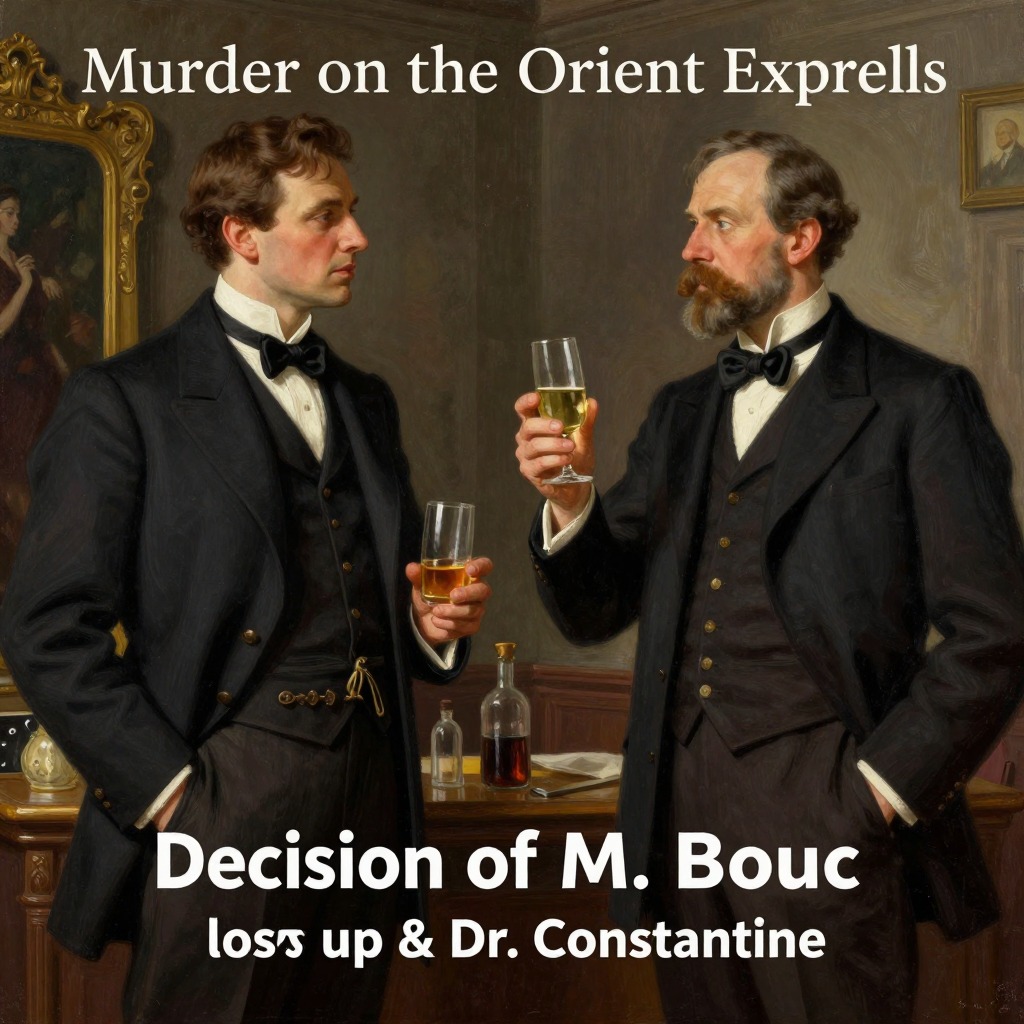
The snowdrift had a decisive impact on the murder investigation. Because the train was stuck, no one could have left it after the crime. Dr. Constantine confirmed that at half an hour after midnight they ran into the snowdrift, and no one could have left the train since then. M. Bouc solemnly declared that the murderer was with them on the train now. The snow also frustrated the murderer's original plan. Poirot later explained that the murder was intended to look like an outside job, with the assassin presumed to have left the train at Brod, where it was timed to arrive at 0:58. The Wagon Lit uniform would have been left in a conspicuous place, and no suspicion would have attached to the passengers. But the accident to the train changed everything. The murderer remained in the compartment with his victim, waiting for the train to go on, and when he realised it was not going on, different plans had to be made. The snow thus forced the conspirators to improvise, leading to the dropping of clues such as the handkerchief and the pipe-cleaner, and to the elaborate charade of the watch set to 1:15. The snowbound train became a closed space in which the twelve conspirators, who had planned the murder as a perfect crime that would appear to be an outside job, were now all trapped together and subject to Poirot's investigation. The snow, which had been intended to be merely a seasonal inconvenience, became the element that unraveled the carefully laid plan.