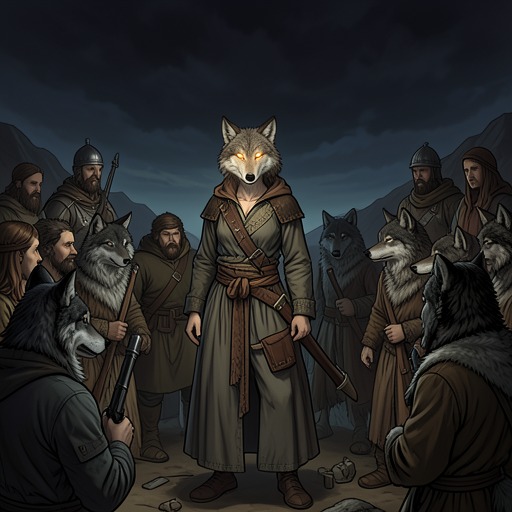
Fating
My Dark Mate: A Rejected Mate Werewolf Shifter RomanceFating is the recognized bond between destined shifter partners, a connection that reaches beyond affection or choice into the mental, emotional, and spiritual life of both people. It is first treated by Ren Sheppard Chase as something she has heard about but never truly believed in, yet it eventually becomes the force that explains her instinctive attachment to Caleb Chase, Caleb’s recovery from his earlier devastation, and the belonging secured by their final mating and marriage.
Definition and Cultural Meaning
Fating is not presented as ordinary romantic compatibility. Caleb Chase explains that fating creates a bond on a mental, emotional, and spiritual level, so that losing a fated partner resembles having a part of oneself torn away and left bleeding. The comparison to death establishes the bond’s stakes: separation is not merely emotional disappointment but an injury that can alter a shifter’s ability to function. Caleb’s former mate, Shelly, rejected him and severed their mating, leaving the bond broken and nearly nonexistent; the experience drove him into an obsession so intense that he could not think clearly without her. His later refusal to repeat that vulnerability is therefore grounded in remembered damage rather than simple indifference.
Ren initially places fating alongside stories of shifters becoming feral after losing a mate. Because she comes from a pack and generation in which fatings supposedly did not occur, she has begun to regard fated mates as fairy tales, despite what her grandmother taught her. That skepticism gives the concept a gradual structure in the narrative: Ren does not begin by seeking a destined bond, and her fear is intensified by the possibility that Caleb’s previous rejection and period of feral behavior may be connected to the same system of mating that could claim her.
Bodily and Involuntary Recognition
The bond operates before either character can comfortably name or rationalize it. Ren’s wolf recognizes something in Caleb even while Ren insists that friendship is safer than mating. Her internal debate distinguishes wanting from doing, but the distinction becomes increasingly unstable as the animal and human sides of her experience respond to Caleb independently of deliberate judgment. The possibility of being claimed frightens her because claiming means mating, and she doubts that a man who reacts defensively even to her smiles could willingly accept such a permanent connection.
Caleb’s resistance is equally explicit. He associates the old bond with Shelly with madness, loss of control, and a wound he never wants reopened. The familiarity of Ren’s touch therefore alarms him before he understands its source. The fated bond is represented as a bodily intensity rather than an idea alone: Ren is touched, shaken, and emotionally overwhelmed, while Caleb’s eventual transformation is visible in his eyes. When he returns to Ren, he kisses her with raw urgency, his eyes glowing gold in both irises, and bites her shoulder. The bite is painful and then intensely pleasurable, making the mating bond physically undeniable even as its meaning remains emotionally contested.
This physical recognition also differentiates Caleb’s inner animals. Trey Chase argues that Caleb has two animals and that the golden eyes reveal the participation of the bear as well as the wolf. Trey believes Caleb’s former relationship involved only the wolf, not the full dual-animal self, which helps explain why that earlier bond could exist yet fail to represent Caleb’s complete nature. Fating thus becomes not only a pairing between two people but also a possible alignment between the different animal and human dimensions within a shifter.
Ren and Caleb’s Revelation
Ren is the first of the pair to consciously identify the relationship. After trying to interpret her feelings as love and keeping silent because Caleb had already suffered a fated bond, she can no longer contain what her wolf knows. She tells Caleb that they are fated, while he rejects the revelation outright. His denial is not a neutral request for proof; it is an active defense against the history he associates with mating, and it causes Ren to recoil and sob.
The revelation changes the meaning of the preceding relationship. Ren had hoped that patience, honesty, and friendship would allow Caleb to grow close to her, even imagining that he would eventually love her. Caleb, meanwhile, had tried to maintain distance precisely because the familiarity of her touch suggested the possibility of another consuming bond. Their attachment therefore develops through a conflict between conscious strategy and involuntary recognition: Ren tries to make intimacy safe by calling it friendship, while Caleb tries to make it safe by refusing to name it at all.
Trey Chase challenges Caleb’s denial by pointing to the changes already visible in him. He argues that Ren has healed Caleb and that Caleb belongs with her, with Ren’s wolf recognizing the truth before Caleb’s conscious mind does. Trey describes fating as a melding so deep and intimate that the partners never feel alone. Ren, still hurt by Caleb’s disbelief and resentful of Shelly, cannot experience that promise as uncomplicated comfort. For her, the bond is both evidence of connection and a source of powerlessness: she knows what she feels, but cannot force Caleb to accept the same interpretation.
Consequences, Risk, and Hope
Fating carries dangerous consequences when a bond is rejected or severed. Caleb’s history with Shelly supplies the clearest example. He once became so deeply bonded and obsessed that his wolf could not think straight, and the rejection nearly ended him. His fear of Ren is therefore a fear of repetition: if he accepts the bond, he may again surrender himself to an attachment capable of destroying him; if he denies it, he risks injuring Ren and resisting the change already taking place within him.
Ren responds to this uncertainty through a recurring practice of optimism. She tells herself that everything will be fine, searches for a silver lining, and imagines that even Caleb’s anger will eventually pass. This hope helps her endure moments of rejection and panic, but it also postpones direct acknowledgment of how much power the bond has over both partners. Fating is consequently framed neither as a purely benevolent gift nor as a simple trap. It can isolate, wound, and destabilize, yet it can also provide the connection Ren and Caleb have lacked.
The relationship becomes more secure when recognition is joined to action. Caleb’s mating bite marks Ren as his partner, and his altered eyes and behavior reveal that his resistance has given way to the fuller expression of his dual-animal nature. Lacy Baneblood, Ren’s grandmother, accepts Caleb as the person protecting Ren and asks him not to let the Sheppard family take advantage of her again. Her approval gives the bond familial and protective significance at the moment when she is preparing to die.
From Bond to Belonging
The story distinguishes being fated from being loved. At the formal mating ceremony, Ren understands that Caleb is not merely mating and marrying her because destiny demands it. He is giving her something she did not know she needed: belonging. The ceremony includes the wider pack, a white dress, a human-world marriage record, and Caleb’s insistence that their union be legally recognized. These details move fating from private instinct into public and social identity.
The final form of the bond is therefore not passive surrender to destiny. Caleb becomes openly devoted, even obsessed to the point of madness, but Ren emphasizes that she is more than fated: she is loved. Their union retains the intensity and possessiveness associated with the bond while adding deliberate care, public commitment, and a shared future. Ren’s pregnancy with a shifter baby, including the difficult six-month gestation and Caleb’s decision to lock away the guns after she once tried to shoot him, extends the consequences of mating into domestic life and family formation.
Fating’s decisive narrative function is to turn an apparently impossible attachment into a structure that must still be negotiated. The bond explains why Ren’s wolf knows Caleb before Ren can accept the truth, why Caleb’s damaged past makes acceptance terrifying, and why the mating bite changes more than their romantic status. Yet the ending insists that destiny alone is insufficient. Their lasting relationship depends on recognition, protection, forgiveness, work, and love; fating supplies the profound connection, while belonging is achieved through the way they choose to live within it.