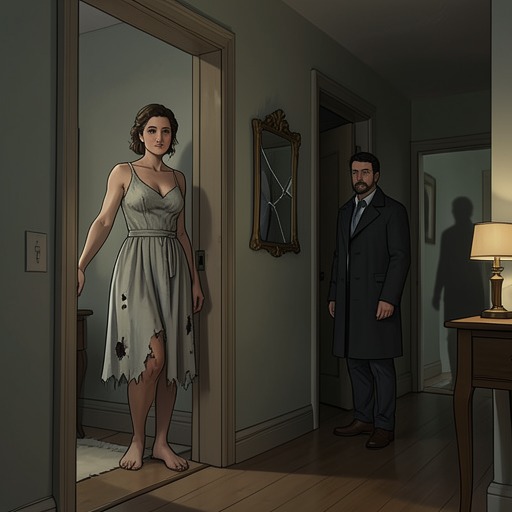
Feral state
My Dark Mate: A Rejected Mate Werewolf Shifter RomanceThe Feral state is a condition in which a shifter’s animal nature overwhelms ordinary judgment and threatens both the shifter and everyone nearby. In the novel it is treated as a real danger within shifter life rather than as a simple metaphor for anger. The state is associated with the loss of a mate, the rupture of a mating bond, and the frightening possibility that a person may no longer be able to distinguish personal will from the demands of the wolf or bear within. Caleb Chase’s history and his later response to Ren Sheppard’s fall make the state central to the book’s understanding of trauma, attachment, violence, and recovery.
Definition and Shifter Context
The Feral state belongs to the wider condition of being a shifter, whose animal is presented as more than a hidden physical form. Ren Sheppard understands shifters as beings who appear human but possess heightened senses and the ability to change into animals; their animals can also seem like separate beings inside the mind, capable of controlling the human side when least expected. Most shifters learn to regulate this animal presence and develop a symbiotic bond with it, but the possibility of that balance breaking remains an underlying threat. The Feral state is therefore the collapse of a negotiated relationship between human consciousness and animal power.
Ren initially encounters the idea through Caleb. She knows that males of their kind can lose control after losing a mate, and she learns that Caleb’s former mate, Shelly, did not die but rejected him and severed the mating bond. The distinction matters: grief is not limited to physical death. The destruction of a bond can produce a comparable psychic wound, leaving the abandoned partner vulnerable to a state in which the animal’s attachment and fury become unmanageable. Ren has heard of fated mates but has regarded them as little more than fairy tales, just as she has doubted stories about wild male beasts who kill indiscriminately after going feral. Caleb’s existence forces those dismissed stories into the realm of immediate fact.
Caleb Chase’s First Feral Crisis
Caleb’s fear of the Feral state is rooted in direct experience. After Shelly rejected him, his wolf became so deeply bonded and obsessively in love that he could no longer think clearly. He describes himself as having been driven to the point of madness, and the consequences nearly ended his life. When he returns from the Feral state, his patience is exhausted and he must wrestle his mind back into submission, suggesting that recovery is not a clean return to an earlier self but an ongoing effort to keep control.
His response is severe self-containment. Caleb keeps the wolf weak and silent, refusing to risk its emergence again. He believes that he must keep the animal side buried because it almost killed him once, and he fears that releasing it would cost him what remains of his sanity. The memory shapes his refusal to track Tully Graves during a storm: although his bear might be useful, hunting could awaken the wolf, and the possibility of that return produces cold sweat and renewed terror. Caleb is not merely reluctant to help; he is defending himself against an internal force he believes may once again become lethal.
The danger is also visible in his body. When Ren touches him, his dormant wolf stirs and his bear growls in warning. His left eye turns golden brown while his right remains gray when the animals press toward the surface, and Caleb immediately tries to prevent the change. The physical sign makes his divided condition legible: the Feral state is not an abstract diagnosis but a bodily transformation that he monitors with vigilance. Ren’s touch is especially threatening because it revives a part of him he has deliberately tried to kill off.
Grief, Bonding, and the Return of Violence
The novel links Caleb’s vulnerability to the logic of mating bonds. Shelly’s rejection did not leave him simply heartbroken; it severed a structure that had joined his human and animal selves to another person. Caleb therefore associates intimacy with catastrophe. He no longer loves Shelly, and the bond has become nonexistent, but he still cannot bear the reminder of how far he once went for her. His resistance to Ren is partly a defense against repeating that history: the familiarity of her touch suggests another bond capable of waking the buried wolf.
That fear reaches its crisis when Ren is attacked and thrown over the cliff. Caleb sees her blond hair flying just before she disappears into empty space, hears her screams, and feels the return of the insanity he has spent months fearing. His bear and wolf roar together, and he stops resisting the transformation. Unlike his earlier attempt to fight the Feral state in order to save himself, he now does not want to be saved. With Ren apparently gone, he believes life has lost its meaning, and grief becomes the force that breaks the barrier he built around his animals.
In the ensuing attack, Caleb tears through the males around him without thought. He tastes blood and hears screams and the sounds of death, while rage and grief merge into a single destructive momentum. When he reaches Shane Sheppard near the cliff edge, Shane’s blue eyes brighten as he shifts, and Caleb experiences true bloodlust. The scene gives the Feral state its most literal and violent expression: perception narrows, bodies become obstacles, and killing appears to be the only answer to the loss of the mate.
Agency Within the Feral State
The decisive complication is that Caleb does not remain wholly absent from himself. As he faces Shane, he recognizes that the command to kill is not coming only from the bear or the wolf. He understands that it is also his own thought. This distinction turns the scene from a simple relapse into a crisis over agency. Caleb is horrified because the Feral state is present, but he is also not insane in the precise way he feared; the violence expresses his personal love and grief as well as his animals’ instincts.
Caleb’s motives are explicitly separated from wounded pride, masculine humiliation, or possessiveness. He wants to destroy the man who harmed his mate, but the deepest source of his despair is the imagined ordinary future he has lost: waking beside Ren, seeing her smile, hearing her chatter, smelling her vanilla scent, and listening to her call him a “dick-wart” when she thinks he cannot hear. The details anchor the Feral crisis in domestic attachment. His violence is not presented as a detached animal reflex; it grows out of the threatened loss of a particular person and a particular shared life.
This moment also changes Caleb’s understanding of his dual nature. Earlier, he treats the wolf as the dangerous self and the bear as the safer remainder. Later, Cole Chase tells him that Caleb is fundamentally a bear, and that the identity he had inhabited in another life was not truly him. The bond with Ren becomes evidence of that integration: Cole has never seen Caleb happier than he is with her, even when Caleb tries not to show it. The Feral crisis thus exposes the cost of suppressing one animal identity while also revealing that Caleb’s recovery depends on accepting the whole of himself rather than returning to a rigid human-versus-animal division.
Narrative Function and Consequences
The Feral state creates a recurring value shift between safety and danger. Caleb’s self-imposed silence initially appears to protect him, but it also leaves him emotionally dead and unable to respond naturally to Ren. Her touch awakens the wolf, making intimacy frightening while simultaneously beginning Caleb’s return to feeling. The same animal presence that threatens to destroy him becomes connected to renewed attachment, and the novel repeatedly tests whether suppression is safer than integration.
Ren’s own optimism provides a sharp contrast to Caleb’s fear. After frightening experiences, she tells herself that everything will sort itself out and searches for a silver lining, even when she is crying or endangered. That outlook helps her continue, but it does not erase the danger around her. Caleb’s Feral state exposes what her hopeful reframing cannot fully contain: grief has physical consequences, bonds can destabilize identity, and love can be both a source of rescue and a trigger for catastrophic loss.
By the later stages of the story, Caleb’s relationship with Ren offers a route beyond the condition that once defined him. The contrast between Shelly’s rejection and Ren’s bond allows him to recognize that not every fated connection repeats the same destruction. The Feral state remains terrifying because it has nearly killed him and causes him to attack without restraint, but the cliff confrontation also shows that Caleb can recover reflective choice even at the edge of transformation. Its ultimate narrative significance lies in that unstable border: Caleb must neither deny the wolf and bear nor let them erase him. Recovery means making the animal forces part of a conscious self capable of love, protection, and responsibility.