Shifters
My Dark Mate: A Rejected Mate Werewolf Shifter RomanceShifters are beings who appear human but possess heightened senses and the ability to change into animal forms. Their defining condition is not merely physical transformation: each shifter also lives with an animal presence that can act, react, and exert pressure from within. This dual existence supplies the foundation for the story's understanding of identity, instinct, intimacy, and difference.
Nature and Inner Partnership
Shifters generally grow up learning to control their animal side. In ordinary cases, that discipline develops into a workable symbiotic bond, with the human self and the animal cooperating rather than existing as simple master and subordinate. The animal is therefore more than a metaphor or an extension of the body. It is experienced as a separate being inside the shifter's mind, capable of taking control when least expected.
This arrangement makes shifter embodiment relational from the beginning. A shifter is neither wholly human nor simply an animal in disguise; the self is produced through an ongoing negotiation between two forms of consciousness. The animal's reactions can interrupt thought and conduct, while the human side must interpret, restrain, or accommodate those responses. The result is a species whose most important conflicts may occur internally before they become visible to other people.
Difference, Rarity, and Fear
Although shifter society has established ways of managing the animal side, rare cases disrupt the expectation that every shifter's inner life will remain familiar and controllable. Ren·Sheppard·Chase begins to fear that her own experience may indicate one of these exceptional conditions. The possibility is frightening not simply because it would make her unusual, but because it would place her outside the ordinary knowledge that allows shifters to trust their bond with their animal.
The story links this fear to the scarcity of shifter talents. Ren considers the possibility that she may possess an ability to dream of the future, a gift associated with an exceptionally rare kind of shifter known as a Dreamer. Her uncertainty is sharpened by the fact that her parents have no talents, while family stories connect the possibility to an older generation. Shifter identity thus includes hereditary and unpredictable dimensions: abilities may run through family memory without appearing in every generation, and an apparently ordinary person may discover that ordinary categories no longer contain her.
Power and Exceptional Forms
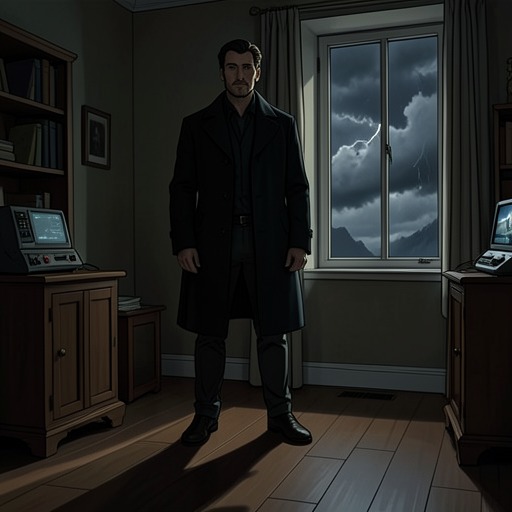
The species also contains major differences in physical capacity. Caleb·Chase is described as an ex-Enforcer who possesses two animals, a condition characterized as extremely rare. His dual-animal nature makes him stronger even than the Alpha, placing him at the edge of what shifter society regards as normal power.
Yet Caleb's exceptional strength does not translate into uncomplicated mastery. He is emotionally and mentally damaged and has convinced himself that keeping his wolf weak is his only viable protection. His condition shows the cost of suppressing the animal partner: control can become defensive isolation, and extraordinary ability can coexist with profound internal fracture. Shifter physiology therefore produces neither automatic freedom nor automatic authority; it creates capacities that must be lived with, and sometimes resisted, at considerable personal cost.
Social Stakes and Narrative Significance
Shifters' difference is also governed by social danger. When Ren worries that she may possess a rare talent, her fear is not abstract curiosity. She understands that being different within an already unusual species may expose her to consequences she cannot predict or control. The species' shared secrecy from ordinary people further intensifies this vulnerability: shifters can appear human while carrying an entire nonhuman structure of sensation, instinct, and social knowledge beneath that appearance.
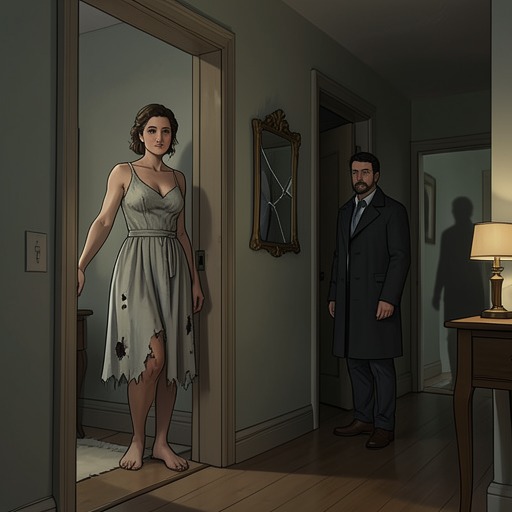
The contrast between Ren and Caleb gives the species its clearest narrative range. Ren fears an emerging difference that she has not yet learned to name, while Caleb already knows what it means to inhabit an exceptionally powerful and divided form. Their experiences reveal Shifters as a community organized around coexistence with animal selves, but also haunted by the possibility that the bond may become too strong, too rare, or too unfamiliar to fit accepted rules. In this framework, the animal is not merely a tool for human drama: it has its own impulses and practical influence, making shifter personhood fundamentally plural and embodied.