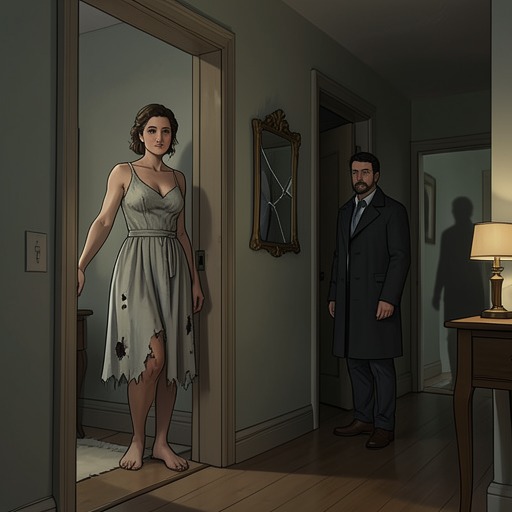
Rejected mate
My Dark Mate: A Rejected Mate Werewolf Shifter RomanceRejected mate names the position Ren Sheppard occupies when a fated bond is acknowledged by one partner but denied by the other. In Ren's case, the label is not merely romantic disappointment. It combines the pain of a severed bond, the fear of being unwanted, the public suspicion surrounding Shane Sheppard's death, and the memory of a marriage in which danger and violence preceded emotional intimacy. The story makes the phrase a temporary identity imposed by rejection, then overturns it through Ren's eventual life with Caleb Chase.
Definition and Emotional Force
The world of the novel treats fated mating as a bond formed on mental, emotional, and spiritual levels. Caleb explains that losing such a bond can feel like having part of oneself ripped out and left bleeding, comparable to the death of someone loved. His own former mate, Shelly, rejected him and severed their mating, leaving him traumatized and driving him into a feral state. That history makes Caleb especially resistant to Ren: when she touches him, his nearly dormant wolf stirs and his bear growls, awakening a part of him he has deliberately kept buried. Rather than risk another consuming attachment, he tries to keep Ren away.
Ren therefore encounters rejection from both intimate and communal directions. She has already been treated as though she were responsible for Shane's death, although she maintains that Shane ran off the cliff himself after following her and throwing himself at her. Her Baneblood background further marks her as suspect in Caleb's community. When Mary Fen calls her a killer in the grocery store, the accusation turns the label into a public threat rather than a private fear. Cole Chase defends her by attacking the women who surround her and insisting that she is worth more than their judgment, but the scene shows how quickly the community converts suspicion into social exclusion.
From Survival to Attachment
Ren's first response to danger is a performance of brightness. She arrives at Caleb's farm-style house terrified that she will become homeless, packless, and dead, yet talks herself through the approach and presents herself as his new housekeeper. She announces a practical cleaning plan involving laundry, dishes, the kitchen, bedrooms, bathrooms, and the study, then fills the silence with cheerful conversation about the house, the paintings, and her grandmother Lacy. Her emotional labor is also her means of survival: she smiles, jokes, cooks, cleans, and makes herself useful while trying not to appear afraid.
That labor changes Caleb's home and begins to change Caleb himself. After Ren's first day, he notices that the house he built with his own hands has become a home. She puts pictures on the dusty mantel, flowers in the entryway, and a cleaned throw rug over the sofa. The alterations are small, but they make domestic life visible again. Caleb recognizes that Ren has done something his former mate could not do, and his resistance begins to soften as the house becomes evidence of her care.
Ren also becomes part of Caleb's recovery. Caleb realizes that her open kindness has brought him an unfamiliar calm. She does not judge him, does not lose her temper unless he behaves badly, and makes conversation easier. He still refuses to pour out his feelings, but he listens to her, including the contradiction between her history of abuse and the easy happiness with which she moves through daily life. Her presence does not erase his former wound, yet it gives him a relationship in which he can begin to live beyond it.
The Rejected Mate Crisis
The relationship changes when Ren's wolf claims Caleb during sex and bites him. Ren understands the act as the revelation of their fated-mate bond, but Caleb reacts with anger and rejection. She tells Trey that Caleb does not want either her or the fating, and describes the pain as worse than ordinary heartache, as though she is breaking apart. The rejection immediately connects her present to her marriage with Shane: Caleb's disgusted and betrayed expression recalls the anger that once preceded Shane's beatings, even though Ren knows Caleb would not hurt her in that way.
Ren's refusal to return to Caleb is therefore both emotional and protective. Her wolf pulls her back toward her mate while her conscious self remains fixed on the image of rejection. Trey holds her and promises that she will be safe, but Ren understands the deeper contradiction: at that moment, she is the one causing pain to herself by resisting the bond. The rejected-mate identity becomes an internal struggle between bodily recognition, emotional need, and the learned necessity of retreating before another powerful male can decide her worth.
Her anger also exposes the asymmetry of her relationship with Caleb. She has accepted a life of shared sex, shared showers, domestic routine, and companionship while pretending that they are merely friends with benefits. In truth, she wants romantic words, a date, flowers, and the assurance that she is more than a cook, housekeeper, or sexual partner. She insists that she deserves those things. The statement is a turning point because Ren stops treating her needs as unreasonable and begins to measure the relationship against the dignity she believes she should receive.
Caleb's Reinterpretation of Rejection
Caleb's understanding of his own past helps explain why he initially rejects Ren. He once confused the intensity of fating with proof that Joyce was the right mate, then sacrificed his hopes for a warm home, children, laughter, and domestic belonging in order to preserve that bond. Joyce did not share those hopes: she disliked cooking and cleaning and dismissed his attempt to discuss a family. Caleb worked as many as sixteen hours a day trying to provide for her and prove that he was a good male and mate, yet received none of the life he imagined.
After Joyce left, Caleb grieved not only her but the entire future he had pursued through her. He realizes that much of his grief came from losing what he had wanted while believing that staying with Joyce was the correct thing to do. With Ren, the contrast is unmistakable. She creates the home he wanted, offers care without demanding that he perform an image of adequacy, and brings his bear as well as his wolf into the relationship. Cole observes that Caleb was never fully himself with Joyce and that his happiness with Ren reveals the difference.
This reinterpretation allows Caleb to distinguish rejection from compatibility. A bond can be powerful and still fail to produce the life its participants need; conversely, Ren's bond with him becomes meaningful because it joins emotional recognition to an actual shared home. Caleb's eventual confession that he has fallen in love marks the point at which he no longer treats fating as an old injury that must be avoided. He begins to understand Ren as the person who fits the future he had mistaken Joyce for.
Resolution and Thematic Significance
The rejected-mate identity reaches its darkest point when Ren feels that Caleb's refusal has confirmed the status she most fears: unwanted, excluded, and replaceable. Yet the ending directly reverses that status. Caleb tells her that she is wonderful, gorgeous, funny, and intelligent, and names the concrete abilities that make her more than domestic service: she can cook nearly every dish, bake, knit, quilt, clean a gun, and make an exceptional peach pie. His praise answers Ren's demand to be recognized as a person with feelings rather than merely a useful partner.
At the formal mating ceremony, Ren's happiness exceeds the lavish setting, her white dress, and the presence of every pack member. Caleb is not merely mating and marrying her; he is giving her something she did not know she needed. The public ceremony transforms private acceptance into a visible social position, countering the community's earlier treatment of her as a killer and outsider.
The final reversal is expressed through family. Ren loves Caleb more than life itself, and their cub gives the future a concrete shape. She remembers herself as the rejected, hated, poor mouse she once was, but now her animal and the turmoil in her mind are calm through the bond she shares with Caleb's bear and wolf. With love, sex, family, and a baby on the way, she is finally wanted. The phrase Rejected mate thus remains important as the name of the wound, but the completed arc refuses to let that wound define the woman who survives it.