Sheppard brothers
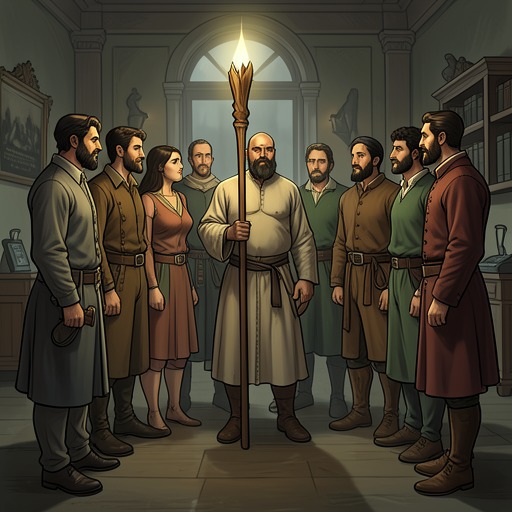
My Dark Mate: A Rejected Mate Werewolf Shifter RomanceThe Sheppard brothers are the male members of the Sheppard Clan whose hostility makes Ren Sheppard Chase’s early life in the Walker Pack precarious. Initially treating Ren as responsible for Shane Sheppard’s death, they become a collective threat around her home and within the wider pack. Their later change of heart does not erase the fear they helped create, but it gives their arc a distinct reversal: the brothers who once helped make Ren feel hunted eventually assist in protecting her and stand at the edge of the family she builds with Caleb Chase.
Identity and Position
The brothers are presented collectively rather than as fully individualized figures. Caleb Chase describes them as men who want Ren and as part of the broader Sheppard pressure surrounding her, while Walker Pack leadership places men on watch because the Sheppard Clan may try to reach her. Their power comes less from a single named personality than from their shared family identity: Ren is vulnerable not simply to one hostile man, but to a group whose kinship gives its anger persistence and reach.
Their hostility is rooted in the belief that Ren caused Shane Sheppard’s death. The surrounding circumstances are more complicated: Ren insists that Shane stalked and terrorized her, followed her to her trailer, and ran over the cliff himself after she escaped his attack. Nevertheless, the Sheppard brothers and others assume she had something to do with his death. That accusation turns Ren into a public target, and the brothers’ family connection to Shane makes their judgment especially dangerous.
Threat, Intimidation, and Public Conflict
The brothers’ antagonism is felt through the danger of collective pursuit and through the social atmosphere created around Ren. Walker tells Caleb that he has warned Nolan and his sons to stay away from her, while also acknowledging that they are angry and believe Ren is to blame for Shane’s death. The order is backed by Alpha authority, but the need to issue it demonstrates that the threat is not abstract. Ren’s continued safety requires surveillance, protection, and the possibility of severe punishment for disobedience.
Their hostility also feeds the stigma attached to Ren in public. At the grocery store, Mary Fen calls her a killer while a group of women surrounds her, reviving the pattern of being cornered and expecting to be hurt. Cole Chase and Trey Chase intervene, turning the confrontation against the women and exposing the humiliating circumstances of Shane’s relationship with one of them. Although Cole and Trey are not Sheppard brothers, their intervention clarifies the brothers’ position by contrast: the Chase brothers use their family power to shield Ren, while the Sheppard brothers’ family association has helped make her an object of suspicion.
The Sheppard brothers’ hostility is not only verbal. When Ren’s trailer is later discovered trashed, Trey Chase enters immediately after Ren asks him to accompany her, and the wreckage confirms that her fear of being alone and unprotected is grounded in real danger. The evidence does not assign the vandalism directly to the Sheppard brothers, but their established pursuit and animosity form part of the danger surrounding her. Their collective reputation is therefore narratively important even in scenes where they are not the confirmed perpetrators.
Reversal and Protection
The decisive change comes after the brothers reconsider their conduct. When Ren disappears and Caleb finds blood in her home, Walker explains that he initially suspected the Sheppard brothers, but that they are as angry and alarmed as Caleb and are helping the Enforcers follow a trail. Their participation marks a sharp reversal: the family once associated with blame is now contributing to the search for Ren.
Josh Sheppard speaks for the group with an admission of guilt. He says that the brothers had stopped bothering Ren weeks earlier, after recognizing how wrong they had been. Their former anger had been intensified by Shane’s death and by their mother’s repeated attacks on Ren, but they eventually understood that even if Ren had killed Shane, Shane would have deserved it. This is not a claim that Ren did kill him; it is an acknowledgment that the brothers’ moral judgment had been distorted by family loyalty and grief. Their apology therefore changes the meaning of their earlier behavior without pretending that it was harmless.
The brothers say they went to Ren’s place to patrol rather than frighten her. They criticize the Walker Pack’s protection as inadequate and specifically note that Ren’s wolf is useless in a fight, adding a mocking observation about her shooting. The remarks retain the rough, insulting humor associated with their earlier conduct, but their practical action has changed. They are now using their knowledge of the territory and their physical presence to guard Ren, placing themselves between her and possible danger instead of creating danger for her.
Relationships with Ren and the Chase Family
Ren’s relationship with the brothers is defined by fear, resentment, and eventual conditional forgiveness. Their early treatment reinforces her sense that she is a rejected and hated outsider, while their later patrol work helps establish that her enemies are not permanently fixed in place. The change does not make them intimate confidants. Rather, it creates a fragile form of belonging based on changed behavior, acknowledgment of wrongdoing, and shared concern for Ren’s survival.
The brothers also become part of the larger reconciliation surrounding Ren and Caleb. At the formal mating ceremony, Cole Chase and Trey stand behind four visibly nervous Sheppard brothers. Their placement turns the former conflict into a public family scene: the Sheppard brothers are no longer positioned as pursuers outside Ren’s safety, but as participants in the gathering where her new life is recognized. Their nervousness suggests that forgiveness has not erased accountability; they appear before Ren knowing that their conduct remains part of the history between them.
Ren’s response is deliberately comic and physical. Caleb Chase proposes that she kick the brothers, claiming that they deserve it even though she has forgiven them, and Ren does so. The gesture allows the ceremony to acknowledge the brothers’ past without restoring the old fear as its final meaning. Forgiveness is expressed not as sentimental absolution but as a controlled reversal of power: Ren, once surrounded and defenseless, is now secure enough to punish the brothers playfully in front of the people who protect her.
Narrative Role and Ending
The Sheppard brothers function as a collective measure of the social world Ren must survive. Their early presence embodies inherited blame, family prejudice, and the danger of being treated as guilty before anyone accepts her account of Shane’s death. Their later conduct demonstrates that pack relationships can change through recognition and action, even when the original harm cannot simply be forgotten.
Their arc also helps define Ren’s movement from isolation to chosen kinship. At the grocery store, the arrival of Cole and Trey gives her the first strong sensation of having people who care for her, and she longs to tell Caleb that she now has family. By the wedding, the Sheppard brothers can appear in the same public space as the Chase family without controlling the meaning of the occasion. Ren’s happiness is tied to being wanted, loved, and no longer treated as the poor, rejected figure she once believed herself to be. The brothers’ transformation is one strand of that larger change: they move from agents of exclusion to uneasy members of the communal world that Ren has earned and helped create.