The Knowing
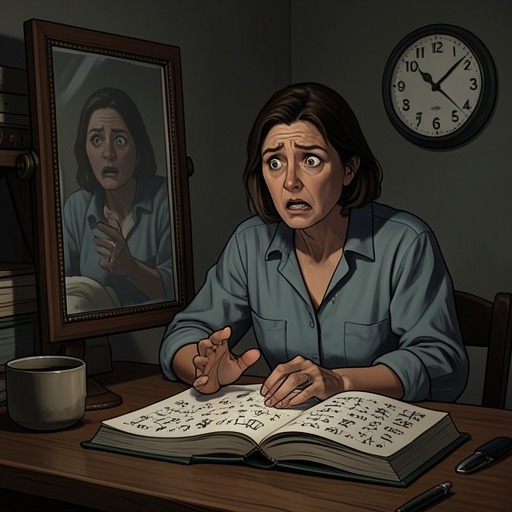
My Dark Mate: A Rejected Mate Werewolf Shifter RomanceThe Knowing is the rare shifter talent associated with the Dreaming and the figure of the Dreamer. It allows Ren Sheppard Chase to receive foreknowledge through dreams, trance-like episodes, and waking visions, but the ability does not give her calm mastery over the future. Instead, it arrives as a bodily and emotional assault: falling, fear, a racing heart, a struggling wolf, and knowledge that she would rather reject. Its decisive importance is that it changes Ren's understanding of herself from someone merely troubled or different into a member of a rare line of shifters whose perceptions can reveal events before they happen.
Nature and Family History
The Knowing is presented as an uncommon shifter talent rather than an ordinary feature of animal transformation. Shifters possess heightened senses and an animal side that is experienced as a distinct presence within the mind, usually brought into a workable, symbiotic relationship through upbringing and control. Ren's experience is different because the visions interrupt that balance and provide information she has not consciously sought. She initially resists the possibility that she possesses any talent at all, reasoning that it is too rare and that neither of her parents has one.
Her family history supplies the first framework for interpreting the episodes. Ren remembers stories from her grandmother about an ancestor who was a Dreamer, a shifter capable not only of dreaming events but also of hearing people's thoughts. The connection does not establish that Ren has exactly the same powers; indeed, the text distinguishes the Dreamer's reputed mind-hearing from Ren's own experience. Yet it makes her recurring visions legible as inheritance rather than random instability. The family story turns what Ren calls bad luck into a feared continuity with shifter history.
Premonitions and the Problem of Interpretation
Ren's earliest confirmed premonition concerns Shane Sheppard. She once saw what he would have done to her if she had entered the trailer, and the later course of events proves that the warning was accurate. This retrospective confirmation gives the Knowing authority, but it does not make Ren trust it. She was right and did not want to be right; that contradiction defines her relationship with the ability. A true vision is still a burden when it reveals violence that cannot be comfortably prevented or emotionally absorbed.
The talent also appears in a dream in which Caleb Chase claims Ren. The vision joins desire, fear, and prophecy in a single disturbing image. Ren's wolf recognizes the significance before Ren can accept it, and the episode contributes to her eventual admission that she and Caleb are fated. The Knowing therefore does not merely forecast external danger. It can expose relational truths that the conscious self has tried to rename as love, fantasy, or coincidence.
The visions are not restricted to sleep. While sitting in pain at Trey Chase's house, Ren is abruptly thrown into an experience that feels physically real: she falls, believes she is dying, and wakes with the terror still active in her body. She explains that the episodes keep happening, including the knowledge that she would bite Caleb. The contrast between the event's certainty and Ren's helplessness is central. She knows something before it occurs, but knowledge does not automatically provide control, protection, or an acceptable choice.
A later waking vision occurs during Shane's manipulation. Ren recognizes that Shane is lying, and immediately afterward experiences a flash that is unlike an ordinary dream. Although she knows the scene is not real yet, she sees Walker furious and Caleb transforming into an enormous russet-brown wolf whose appearance suggests his wolf and bear shifting together. The moment extends the Knowing beyond Ren's private dread into a perception of Caleb's latent power and the danger surrounding Walker. Its form remains unstable, suspended between present perception and future possibility, but its emotional force is unmistakable.
Social Stigma and Personal Cost
Ren's relationship to the Knowing has been shaped by rejection. She tells Trey that her parents and family hated her for it, shunned her, and kept her under their control because her pack regarded the Dreaming as no gift. The ability is therefore not simply a supernatural advantage; it is a social identity imposed through fear and contempt. Ren grows up learning that the perceptions others might call extraordinary make her less acceptable within her own family and pack.
Her memories of Shane deepen that harm. Ren once saw happiness with him, only to understand later that the vision had been a ruse because it showed only the happy parts and concealed the rest. That experience teaches her that even genuine-seeming foresight can be partial and misleading. The danger is not only that Ren sees too much, but that she may see an edited portion of reality and mistake it for the whole. The Knowing thus produces a severe interpretive anxiety: every revelation may be true while remaining incomplete.
Shane later reveals that he knew about Ren's gift. He recalls her sitting in a trance for hours and then crying, and says he recognized the significance when she reacted that way shortly before his grandmother died. His knowledge confirms that the episodes were visible to others and that Shane had been observing them for a long time. It also converts a private vulnerability into something that an abuser can exploit. His contempt for the gift shows how easily foresight becomes a source of control when the person who possesses it has already been isolated.
Relationships, Knowledge, and Misunderstanding
The Knowing directly affects Ren's bond with Caleb. When Ren's wolf finally acknowledges that they are fated, Ren confesses the truth to Caleb despite having tried to suppress it. Caleb initially denies the revelation, and his reaction turns a disclosure of spiritual connection into an immediate emotional rupture. He later confronts Ren at Trey Chase's house, displaying her mark and accusing her of professing love to him before suddenly mating with his brother. His anger shows that the Knowing does not simplify the fated relationship; it brings a hidden bond into speech, where jealousy, denial, and competing loyalties can make it more painful.
The ability is also misunderstood as mental intrusion. Caleb initially dislikes the possibility that Ren can connect to him and read his mind. His later understanding is more precise: Ren does not function as a mind-reading villain. Her visions are dreams, while any connection she manages to make is scrambled by the constant arguments in her head. This clarification preserves the distinction between foresight and telepathy and limits the apparent power of the gift. Ren can receive fragments of knowledge, but she cannot simply command or decode every consciousness around her.
Trey provides the first sustained space in which Ren can describe the Knowing without being reduced to it. She tells him about her family, Shane, the false happiness of the earlier vision, her fear and loneliness, and the bite she gave Caleb. Trey identifies the ability as the Knowing and responds with awe rather than disgust, insisting that it is not inherently bad. Ren cannot accept that reassurance immediately because the gift has brought pain, but his response begins to separate the ability itself from the cruelty with which her family treated her.
Narrative Function and Meaning
The Knowing structures the story's movement between uncertainty and confirmation. Ren's visions are often presented before their meaning is secure, so the reader shares her hesitation between dream, warning, memory, and waking reality. The later fulfillment of the Shane premonition and the relevance of the Caleb vision gradually move the gift from apparent unreliability toward supernatural credibility. Even then, the vision of happiness with Shane demonstrates that accuracy does not equal completeness. The narrative keeps foresight dangerous by making interpretation, rather than perception alone, the site of error.
The gift also externalizes Ren's divided identity. Her wolf recognizes truths that her human consciousness tries to deny, while the animal's whining, silence, and fear make foreknowledge a conversation among internally distinct selves. Ren is not portrayed as an all-knowing oracle. She is a shifter whose body and animal counterpart register realities before her conscious mind is willing to name them. The result is a form of knowledge that intensifies vulnerability: she sees danger, fated attachment, and betrayal, yet must still endure the consequences in ordinary time.
For that reason, The Knowing functions as both plot mechanism and lived condition. It reveals Shane's threat, contributes to the disclosure of Ren and Caleb's fated bond, anticipates Caleb's dual-animal transformation, and marks Ren as valuable to people who believe her perceptions can help them. At the same time, it leaves her isolated, frightened of future knowledge, and burdened by the belief that a gift condemned by her pack can only bring suffering. The story's larger revaluation of the ability does not erase that history. Instead, it makes the central tension clear: The Knowing may be extraordinary, but whether it becomes a gift depends on whether Ren is met with protection, trust, and room to interpret what she sees.