Cranberry
My Father's DragonCranberry is a port on the route to the Island of Tangerina, remembered both as a stop in Old Alley Cat’s travels and as the destination that lets Elmer Elevator slip ashore hidden among sacks of wheat. The place matters less for a described landscape than for its working harbor: ships unload cargo there, and the routines of delivery briefly conceal an improbable passenger.
A Port on the Route to Tangerina
Old Alley Cat recounts stopping at Cranberry on a voyage to the Island of Tangerina. After missing the boat, the cat waited for the next one and explored the nearby Wild Island, which the travelers had passed on their way. The account makes Cranberry a point of access to the surrounding island route: Wild Island and Tangerina are joined by a long string of rocks, though people avoid Wild Island because of its jungle and wild animals.
The Wheat Shipment
Elmer reaches Cranberry as a stowaway aboard a ship carrying wheat. After six days and nights concealed in the hold, and two near-discoveries when the ship stopped for more cargo, he learns that Cranberry is the next port and that the wheat will be unloaded there. To avoid being sent home if the sailors find him, he climbs into an empty grain bag labeled for Cranberry, takes his knapsack with him, folds the bag closed, and secures it with a rubber band.
The disguise is visibly imperfect: Elmer does not look quite like the other bags. During unloading, a sailor notices the lumpy sack but trusts its Cranberry label; another feels Elmer’s elbow, mistakes what he has found for dried corn on the cob, and puts the sack into the net with the wheat. The port’s cargo operation thus carries Elmer ashore without anyone recognizing him as a boy.
Unnoticed Arrival
The shipment is unloaded late in the afternoon, too late for the punctual merchant to count it before dinner. The captain’s written tally records 160 bags of wheat and one bag of dried corn on the cob. The sailors leave the note for the merchant and sail away that evening, while Elmer remains concealed in the bag.
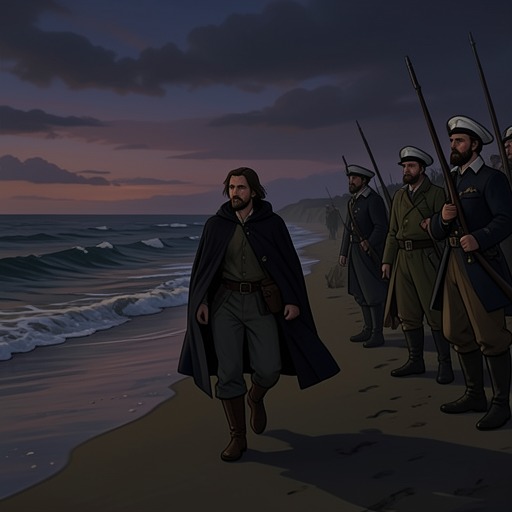
The next day, the merchant counts and recounts the sacks, feeling each one in search of the supposed bag of dried corn, but cannot find it: after dark, Elmer has climbed out, folded the grain bag, and put it back in his knapsack. He walks along the shore and sleeps on a sandy place. Cranberry’s narrative function is therefore sharply practical: its ordinary process of receiving and accounting for cargo creates both the cover for Elmer’s arrival and the comic discrepancy that sends the merchant searching for a missing sack that was never really cargo.