Crocodiles
My Father's DragonThe Crocodiles are the unpredictable river dwellers of Wild Island: their appetite and changeable temper make them an unreliable alternative to walking around the island’s broad, muddy river. They are also Baby Dragon’s only friends during his captivity. When Elmer Elevator needs to cross the river, he persuades them to form a living bridge with Pink lollipops; their subsequent drift downstream carries the pursuing animals away and helps make the rescue possible.
Place in the Island’s Life
The river cuts across Wild Island, beginning near one end of the island and flowing into the ocean at the other. The animals dislike the long detour around its beginning, which makes visits inconvenient and slows mail deliveries, especially during the Christmas rush. The Crocodiles might seem a natural ferry service: they could carry passengers and mail across. But the cat describes them as moody, undependable, and always looking for something to eat. The animals therefore continue to walk around the river rather than rely on them.
That contrast defines the Crocodiles’ place in the story. They are potentially useful, but not in the orderly, dependable way the animals would need for a regular crossing. Their appetite is not merely a reason for the island’s impractical travel arrangements; it also becomes the force that overturns those arrangements at the decisive moment.
A Small Kindness in Baby Dragon’s Captivity
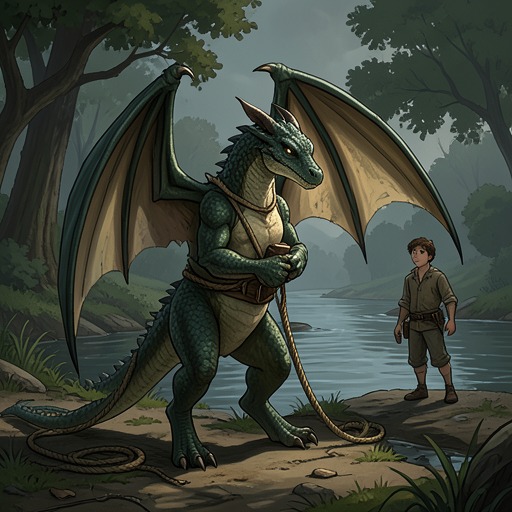
About four months before the cat arrives on Wild Island, Baby Dragon falls from a low-flying cloud onto the riverbank. Too young to fly well and with one wing badly bruised, he cannot return to the cloud. The animals seize on his arrival as a solution to their crossing problem: they tie a large rope around his neck and, once his wing heals, train him to carry passengers and loads across the river.
The Crocodiles are the only creatures who offer Baby Dragon companionship in this period. The cat says they greet him about once a week, if they remember. Their contact is slight and intermittent, especially beside the animals’ constant exploitation of him, but it gives them a distinct place in his otherwise lonely captivity. The story does not present them as organizers of his rescue or as consistent protectors; rather, their occasional greeting is a modest counterpoint to the labor and violence imposed on him.
Elmer’s Lollipop Bridge
When Elmer reaches the river, he finds a high flagpole and a rope running over to the opposite bank. The crank bears instructions to summon Baby Dragon and report disorderly conduct to Gorilla. Knowing that the rope is tied around Baby Dragon’s neck, Elmer understands that summoning him would expose him to further coercion: Gorilla could twist his wings or crank the rope to force him across. Elmer considers climbing the pole and crossing hand over hand, but the height, the muddy water, and whatever might be in it make that a perilous alternative.
At dusk, a voice from the water invites Elmer to swim, revealing a Crocodile’s head just above the surface. The speaker is craving something sweet. Elmer declines the swim but offers a Pink lollipop, then proposes that there may be treats for the Crocodile’s companions as well. Seventeen Crocodiles appear, their heads peeping above the water, and answer the prospect of lollipops with enthusiasm.
Elmer has two dozen Pink lollipops and rubber bands. He first leaves one on the bank, then gives the first of the Crocodiles a taste. Once it accepts the treat, he fastens another lollipop to its tail. He asks the next Crocodile to lift its tail from the water so he can attach another, and then tells the group that lining up across the river will save time. They do so, tails raised as they wait for their rewards. The tail of the seventeenth Crocodile reaches the far bank, completing a bridge that Elmer can use to cross.
The Bridge Turns into a Diversion
The crossing is temporary, and Elmer’s pursuers are close behind. Wild Boars, Seven Tigers, two Lion, Rhinoceros, and Gorilla are among the animals heading over the Crocodiles, along with the screeching crowd. Elmer reaches the far bank and begins cutting Baby Dragon’s heavy neck-rope with his jackknife while Baby Dragon urges him to hurry. The Crocodiles’ bridge has bought him a route to the captive, but it has not stopped the pursuit.
Then the arrangement breaks apart for a reason Elmer did not plan. The first Crocodile finishes its lollipop, turns away from the bank, and swims downstream. The second follows while still sucking its treat, and the others trail after them in a line. The pursuing animals, already on the Crocodiles, are carried down the middle of the river, yelling and getting their feet wet. A temporary bridge becomes an unintended ferry: the Crocodiles follow their appetites, not a rescue plan, but their departure removes the crowd from Elmer and Baby Dragon.
Elmer and Baby Dragon laugh at the sight. Once they recover, Elmer finishes cutting the rope, and Baby Dragon races in circles and tries a somersault. The Crocodiles remain in the river with the animals aboard, still licking their Pink lollipops as Elmer and Baby Dragon fly away. In the final image, they are grinning as they carry what the narration calls a fine feast on their backs; a dependable crossing matters less to them than the sweet reward and the unusual cargo.
Narrative Significance
The Crocodiles’ role turns on a comic reversal. Their unreliability first explains why the island’s animals have not solved an everyday transportation problem, yet precisely that same unpredictability undoes the pursuers’ advance. Elmer makes clever use of their desire for sweets, but he cannot command what they do afterward. Their decision to follow the first Crocodile downstream arises from appetite and imitation, not loyalty to Elmer or Baby Dragon.
That distinction keeps the rescue from becoming a story of animals suddenly united by a common purpose. The Crocodiles have shown Baby Dragon a little companionship, and their behavior gives Elmer the means to cross; nevertheless, the decisive escape depends on an accidental convergence of their appetites and the animals’ attempt to pursue him. The Pink lollipops briefly make the Crocodiles into infrastructure, then turn that bridge into a moving distraction. Their practical value lies not in dependable service but in the comic consequences of their refusal to behave dependably.