Mouse
My Father's DragonMouse is a small observer whose uncertain report becomes evidence in the wild animals’ mistaken investigation of an invasion. A paw on Elmer Elevator’s knapsack, an extraordinary rock that seems to disappear, and a warning that something should be told all connect Mouse to the animals’ growing alarm. Mouse’s role is comic, but it also gives the search for the supposed invader a witness, a report, and finally an assigned lookout at the Ocean Rocks.
Identity and First Encounter
Mouse first appears after Elmer has slept through the day on Wild Island. Waking late in the afternoon, Elmer hears a tiny voice puzzling over whether a nearby object is a rock or a dock. He then sees a tiny paw rubbing itself on his knapsack. The detail makes the encounter intimate but incomplete: Mouse is close enough to touch the pack, yet Elmer remains still, and Mouse hurries away without discovering or addressing him directly.
Mouse’s speech is marked by slips and self-corrections. After deciding that the object is a rock, Mouse says, “I must smell tumduddy. I mean, I must tell somebody.” The malapropism makes the departure amusing, but the corrected sentence matters to the plot: Mouse intends to pass along an observation. Mouse has not recognized Elmer as a person, and the narrative does not show what Mouse makes of the knapsack or its owner. Instead, the reader sees how a brief, confused sighting can become consequential once it enters the animals’ conversation.
The Report and the Supposed Invasion
The wild boars’ account makes Mouse’s report one part of a three-sign argument. They cite fresh Tangerine peels near the Ocean Rocks, Mouse’s report of an extraordinary rock some distance away that was gone when investigated, and more peels at that second spot. Because Tangerines do not grow on the island, the boars reason that someone must have carried them across the Ocean Rocks. They cannot establish what the rock was or where it went, but they connect its appearance and disappearance to the peels and call the combination evidence of an invasion.
The connection is accurate in one limited sense and badly mistaken in another. Elmer has brought the Tangerines with him, and Mouse has encountered something associated with his hidden presence; nevertheless, the animals interpret the signs as an invasion rather than tracing them to a lone traveler. Mouse’s testimony is not fabricated in the account: Mouse did report an extraordinary rock. The error lies in how that uncertain observation is combined with physical evidence and turned into a confident explanation.
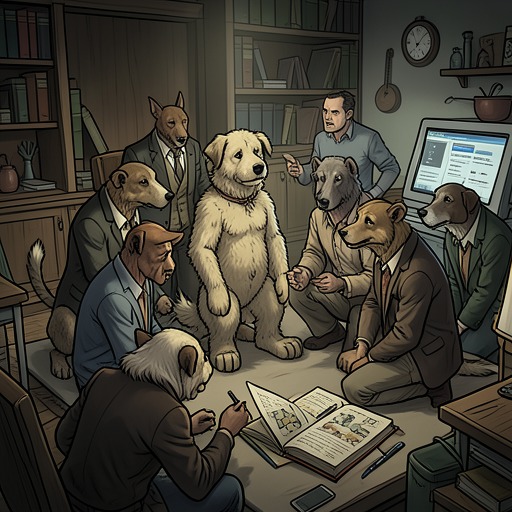
The first boar’s solemn list is immediately checked by the second, who says they are taking the matter too seriously, proposes that the peels floated over by themselves, and calls mice unreliable. The boars then abandon the discussion and return to the jungle. That dismissal does not settle the suspicion. Later, one boar recalls that the tortoises thought they saw Monkey carrying a sick grandmother, notes that Monkey’s grandmother had died a week earlier, and concludes that the sighting must have been something else. The other boar insists that an invasion is under way and wants to investigate. Mouse’s report thus persists not as a verified identification, but as one unresolved clue among several mistaken sightings.
Lookout and Pursuit
When Elmer later overhears the boars discussing the search, Mouse is with them. A tiny voice repeats the second boar’s complaint—“Nee meither,” followed by “I mean, me neither”—and Elmer recognizes Mouse’s presence. The correction recalls the first encounter’s verbal stumble, giving Mouse a consistent speaking pattern while also placing the witness inside the animals’ active investigation.
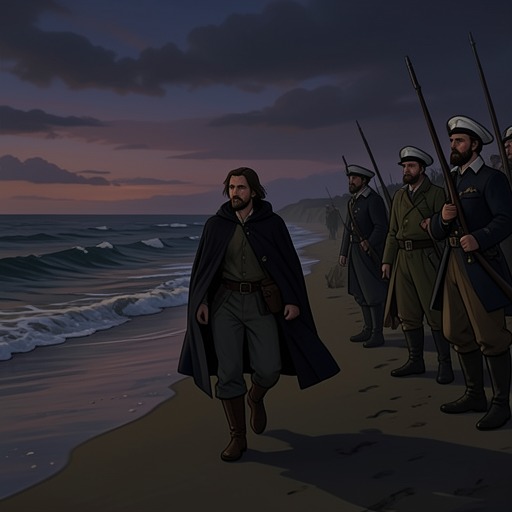
The first boar divides the search: one boar is to follow the trail toward Baby Dragon, the other is to go back through the big clearing, and Mouse is sent to watch the Ocean Rocks in case the invasion tries to leave before they find it. This instruction turns Mouse from a source of information into a participant in the animals’ response. It also gives Mouse a defined task at the point where the supposed invasion has become a coordinated search. Elmer hides behind a mahogany tree as a boar passes, then follows after the other has gained a head start; his concern that the boar will see the tigers chewing gum makes clear how one discovered episode could intensify suspicion about the next.
The Closing Cry and Narrative Role
At the end, as Elmer and Baby Dragon fly over the Ocean Rocks, a tiny excited voice cries, “Bum cack! Bum cack! We dreed our nagon! I mean, we need our dragon!” The stammering correction resembles Mouse’s earlier speech, and the call comes from the very place where Mouse had been ordered to keep watch. The scene does not explicitly identify its speaker, so the resemblance and location support an association rather than a certain identification. The animals’ need is clear: Baby Dragon, whom they had treated as a captive worker, is leaving with Elmer. Elmer and Baby Dragon continue toward the shores of Island of Tangerina and know they will not return to Wild Island.
Mouse’s appearances help the story build its comic misunderstanding through repeated misreadings and imperfect speech. A fleeting sighting becomes an “extraordinary rock”; that report joins the Tangerine peels in an argument about invasion; and the witness is then assigned to watch for the invader’s departure. At the same time, the final cry reverses the meaning of the lookout’s position: the animals may want their dragon back, but their call comes too late to change the escape. Mouse is not shown deciding whether Elmer is an invader or understanding the animals’ larger mistake. The narrative instead uses Mouse’s report and recurring verbal slips to show how little observations acquire force when others build a story around them.