When Elmer is a young boy
A Rainy-Day Meeting
On a cold, rainy day, [Elmer Elevator](entity:character-recall-character-elmer-elevator-0611685b78ac) meets an uncomfortable [Old Alley Cat](entity:character-recall-character-022e0fef30cf) in the street. Moved by the cat’s plight, he offers her shelter by his family’s warm furnace and promises to find her milk.
The encounter begins a friendship that will shape Elmer’s life. In the cat, he finds a companion who treats his wishes seriously and opens a path toward an extraordinary adventure.
Soon after Elmer brings the cat home
His Mother’s Refusal
Elmer’s mother rejects the [Old Alley Cat](entity:character-recall-character-022e0fef30cf), saying she will not provide milk for a stray and warning that feeding one will invite every stray in town. Her hostility sharply contrasts with Elmer’s instinctive kindness.
Elmer apologizes to the cat for his mother’s rudeness and secretly promises to feed her anyway. His decision turns their friendship into an act of quiet defiance.
Over the next three weeks
Secret Meals Discovered
Elmer secretly brings the [Old Alley Cat](entity:character-recall-character-022e0fef30cf) a saucer of milk each day. The arrangement lasts three weeks, until his mother discovers the saucer in the cellar.
She whips Elmer and throws the cat out of the house. The punishment deepens the conflict at home, but it does not break the friendship: Elmer sneaks out to find the cat afterward.
During a walk in the park after the cat is expelled
A Dream of Flying
Elmer and the [Old Alley Cat](entity:character-recall-character-022e0fef30cf) walk together in the park, trying to find pleasant things to talk about. Elmer confides that, when he grows up, he wants an airplane so he can fly wherever he pleases.
The cat asks whether he wants to fly badly enough to do anything for it. When he says that he does, she hints that she knows a way he might fly while he is still a boy.
During the same walk
The Cat’s Island Story
The [Old Alley Cat](entity:character-recall-character-022e0fef30cf) tells Elmer about her travels, including a voyage to the [Island of Tangerina](entity:location-recall-location-89dd8c27d45a) and a stop at [Cranberry](entity:location-recall-location-616148587668). After missing a boat, she explored nearby [Wild Island](entity:location-recall-location-wild-island-630a33a03c70), a largely jungled place connected to Tangerina by a long line of rocks.
There she discovered a young dragon being exploited by the island’s animals. The cat’s account transforms Elmer’s wish to fly into a practical chance to help someone in need.
Four months before the cat tells Elmer her story
The Dragon’s Captivity
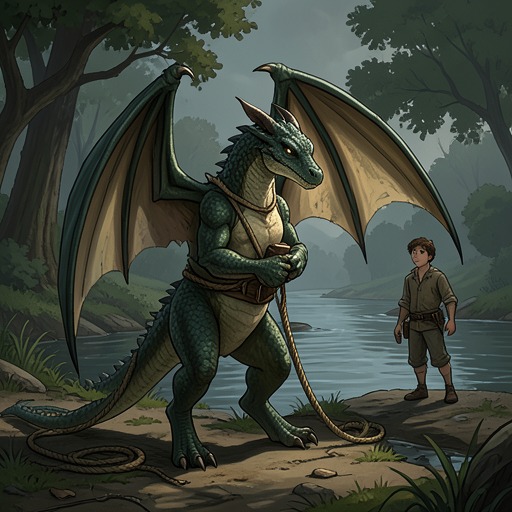
The cat explains that [Wild Island](entity:location-recall-location-wild-island-630a33a03c70) is divided by a wide, muddy river, which the animals once had to walk around. A baby dragon fell from a low cloud onto the riverbank, injured and unable to fly back to the sky.
The animals recognized an opportunity to make the dragon carry passengers across the river. They tied a heavy rope around his neck and, after his wing healed, worked him relentlessly, beating him and twisting his wings whenever he resisted. The cat befriended him in secret and promised to try to help.
At the end of the cat’s story
A Rescue Is Proposed
The [Old Alley Cat](entity:character-recall-character-022e0fef30cf) tells Elmer that the [Baby Dragon](entity:character-recall-character-039a655494ee) might let him ride on his back if Elmer can rescue him and treats him kindly. She admits that the rescue will be difficult, since the rope is exceptionally tough and knotted.
Elmer eagerly accepts the possibility. Angry at his mother for her treatment of the cat, he feels no sadness about leaving home for a while and commits himself to the rescue.
That afternoon and the night before departure
Preparing to Sail
Elmer and the [Old Alley Cat](entity:character-recall-character-022e0fef30cf) go to the docks and learn that a ship will sail for the [Island of Tangerina](entity:location-recall-location-89dd8c27d45a) the following week. They secretly gather and hide supplies in the park, while the cat advises him about the journey and [Wild Island](entity:location-recall-location-wild-island-630a33a03c70).
On the eve of departure, Elmer borrows his father’s knapsack and packs food and an assortment of useful objects, including a jackknife, rubber boots, a compass, toiletries, ribbons, magnifying glasses, chewing gum, and pink lollipops. The supplies will later let him meet danger with ingenuity rather than force.
The night before the ship sails
Stowing Away
At the docks, a night watchman is on duty. The [Old Alley Cat](entity:character-recall-character-022e0fef30cf) distracts him with strange noises while Elmer slips aboard, hides among bags of wheat in the hold, and waits for the ship to leave.
The ship sails early the next morning. Elmer has begun his journey without permission, relying on secrecy and the cat’s help to reach the island where the [Baby Dragon](entity:character-recall-character-039a655494ee) is held.
On the sixth day at sea
The Cranberry Disguise
After six days and nights in the hold, Elmer hears that the ship’s next port will be [Cranberry](entity:location-recall-location-616148587668), where the wheat will be unloaded. Fearing the sailors will send him home if they find him, he climbs into an empty grain bag marked for Cranberry and secures it with a rubber band.
A sailor notices the lumpy bag but mistakes Elmer for dried corn on the cob and adds him to the cargo net. The disguise is imperfect, but it gets him off the ship without being discovered.
The night after the ship reaches Cranberry
Escape from the Grain Bag
Elmer arrives in [Cranberry](entity:location-recall-location-616148587668) among the wheat sacks. The merchant who ordered the cargo does not count the bags until the following morning, giving Elmer time to climb out after dark.
He folds the grain bag into his knapsack and walks along the shore before settling down to sleep. The close call ends his covert passage and leaves him free to seek the route to [Wild Island](entity:location-recall-location-wild-island-630a33a03c70).
The morning after reaching shore
Tangerines for the Journey
Elmer wakes hungry beneath a tree, struck on the head by a falling fruit. He recognizes that he is on the [Island of Tangerina](entity:location-recall-location-89dd8c27d45a), where tangerine trees grow wild, and gathers as many [Tangerines](entity:object-recall-object-2f90ea1521a3) as he can carry.
The fruit becomes his ration for the trek ahead. He sets off along the coast, looking for the rocks that link the island to [Wild Island](entity:location-recall-location-wild-island-630a33a03c70).
During the day after Elmer leaves the shore
Warnings About Wild Island
As Elmer walks along the coast, he asks a fisherman how to find [Wild Island](entity:location-recall-location-wild-island-630a33a03c70). The fisherman is so frightened by the thought of the place that he struggles to answer, then warns that explorers have gone there and never returned alive.
The warning does not turn Elmer back. He continues along the shore, sleeping on the beach and keeping his attention fixed on the rescue rather than on the danger awaiting him.
The next clear day
The Ocean Rocks
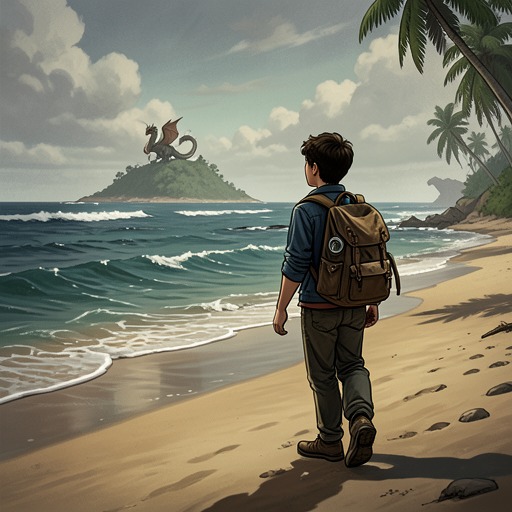
In the distance, Elmer sees a long line of rocks stretching across the ocean toward a tiny patch of green: [Wild Island](entity:location-recall-location-wild-island-630a33a03c70). He eats some of his [Tangerines](entity:object-recall-object-2f90ea1521a3), walks to the rocks, and waits for night as the [Old Alley Cat](entity:character-recall-character-022e0fef30cf) advised.
The plan depends on darkness concealing him from the island’s animals. Once night falls, he puts on his rubber boots and begins the difficult crossing over slippery, uneven rocks.
During the night crossing
The Sleeping Whale
The crossing is treacherous: some rocks rise high above the water, others are nearly submerged, and gaps force Elmer to leap from one to the next. As a loud rumbling grows around him, he discovers that he has landed on a sleeping whale wedged between rocks.
The whale’s snoring is mistaken for the noise of the sea, and it never realizes Elmer has jumped onto its back. After seven hours of climbing and leaping, Elmer reaches the final rock and steps onto [Wild Island](entity:location-recall-location-wild-island-630a33a03c70) before daylight.
At dawn on Wild Island
Hiding in the Jungle
Beyond a narrow beach, Elmer finds thick, dark jungle. He crawls beneath a wahoo bush, eats some [Tangerines](entity:object-recall-object-2f90ea1521a3), and reasons that the [Wild Island River](entity:location-recall-location-88244aed463e) should be easiest to locate by following the shoreline.
He walks until sunrise, then hides in tall grass, removes his boots, and rests. Because he has seen no tangerine trees on the island, he saves his remaining food carefully rather than risk running out.
Late that first day on Wild Island
The Mouse’s Suspicion
While Elmer sleeps, a [Mouse](entity:character-recall-character-111c3192cc9b) approaches his knapsack and mutters about the strange smell. The Mouse says it must tell somebody, alerting Elmer to the risk that his presence may soon be noticed.
Near nightfall, Elmer leaves his hiding place and continues along the beach. The encounter also supplies the first clue that the island’s animals are beginning to interpret small traces of his passage as evidence of an intruder.
That night, while Elmer walks the beach
A Monkey’s Sick Grandmother
Elmer sneezes in the darkness, and a nearby voice mistakes him for a [Monkey](entity:creature-recall-creature-86106ea19b49). Asked whether he has something on his back, he answers yes; when told he must be carrying his sick grandmother to a doctor, he agrees again and hurries on.
Only later does he realize that he had been talking to two tortoises. The accidental answers help him pass unnoticed, even as the island’s animals begin piecing together reports of an unexplained presence.
Later that same night
The Boars Debate an Invasion
Elmer nearly walks between two [Wild Boars](entity:character-recall-character-4bc344cd2c5b) whispering about signs of an invasion. They cite fresh tangerine peels, a [Mouse](entity:character-recall-character-111c3192cc9b)’s report of a strange rock that vanished, and more peels found where the rock had been.
One boar dismisses the clues as unreliable, but the other remains uneasy and says they should retire. Elmer understands that his discarded peels have made him conspicuous, so from then on he saves every one.
Toward morning after Elmer’s first night on the island
The Riverbank Route
After walking through the night and concealing his food scraps, Elmer reaches the [Wild Island River](entity:location-recall-location-88244aed463e). He hopes to follow its bank to the [Baby Dragon](entity:character-recall-character-039a655494ee), who is tied somewhere along it.
The river marks the beginning of the harder part of the expedition. Dense jungle and swamp will soon obstruct the straightforward route Elmer had imagined.
After Elmer reaches the river
Lost in the Jungle
The riverbank is swampy, and Elmer’s boots nearly sink in the mud. When the jungle thickens, he uses his compass to maintain a direction, not realizing that the river has sharply curved away from him.
He presses through tangled ferns, roots, and closely spaced trees, moving farther from the river instead of staying beside it. Whispering sounds begin to follow him, making the jungle feel increasingly hostile and disorienting.
After Elmer becomes lost in the jungle
Surrounded by Tigers
Elmer stumbles into a clearing, where fourteen green eyes emerge from the surrounding jungle. They belong to the [Seven Tigers](entity:character-recall-character-a994ecbc37a1), who circle him and announce that he is trespassing, reminding him that explorers have not left the island alive.
The tigers say they are hungry and consider whether he will be tender. Elmer knows the [Old Alley Cat](entity:character-recall-character-022e0fef30cf)’s survival contradicts their claim, but he wisely keeps that thought to himself rather than challenge predators ready to eat him.
Immediately after the tigers surround Elmer
Chewing Gum Ruse
With the [Seven Tigers](entity:character-recall-character-a994ecbc37a1) closing in, Elmer offers them [Chewing gum](entity:object-recall-object-27e18e614466), which the [Old Alley Cat](entity:character-recall-character-022e0fef30cf) had told him was rare on the island and especially appealing to tigers. The animals initially insist they would prefer to eat Elmer.
He claims that the gum will turn green and grow into more gum if planted. Eager to be first to cultivate it, the tigers chew and inspect one another’s mouths so intently that Elmer slips away unnoticed.
After Elmer escapes the clearing
The Boars Track the Mystery
Elmer finds a trail away from the clearing and soon overhears the [Wild Boars](entity:character-recall-character-4bc344cd2c5b) discussing what the tortoises saw: someone appearing to be a [Monkey](entity:creature-recall-creature-86106ea19b49) carrying a sick grandmother. Since the Monkey’s grandmother died a week earlier, the boars decide that the sighting must have been something else.
One boar declares that an invasion is underway and sets out to discover it. The animals’ efforts to explain Elmer’s trail become a parallel pursuit, turning his attempts to stay hidden into an escalating island-wide misunderstanding.
During Elmer’s continued trek along the trail
The Private Weeping Pool
Thirsty, Elmer stops at a pool beside a brook. A [Rhinoceros](entity:character-recall-character-51cf56df937e) seizes him by the seat of his pants with its tusk, lifts him into the air, and threatens to drown him for trespassing in its private weeping pool.
The Rhinoceros explains that it weeps because its once-white tusk has turned yellow-gray, making it feel thoroughly ugly. Elmer listens for a weakness he can answer with something from his pack.
Immediately after the Rhinoceros threatens Elmer
A Whiter Tusk
Elmer promises that he can make the [Rhinoceros](entity:character-recall-character-51cf56df937e)’s tusk white again. The animal sets him down, and Elmer demonstrates with a toothbrush and toothpaste, scrubbing a small patch until it shines pearly white in the water’s reflection.
Delighted, the Rhinoceros takes over the brushing and forgets about Elmer. A Wild Boar arrives, sees the strange grooming, and grows more suspicious when the absorbed animal will not answer questions.
After Elmer leaves the Rhinoceros
The Lion’s Tangled Mane
Elmer hears angry shouting ahead and discovers a [Lion](entity:character-recall-character-a1a3422481af) clawing at a mane tangled with blackberry twigs. The Lion catches Elmer as he tries to crawl around the clearing and says he is hungry enough to eat him immediately.
The Lion is especially distressed because his mother is due to visit on the [Baby Dragon](entity:character-recall-character-039a655494ee) that afternoon and might cut off his allowance if she sees his untidy mane. Elmer offers the grooming tools in his pack as a way to distract him.
During the encounter in the clearing
Ribbons for the Lion
Elmer shows the [Lion](entity:character-recall-character-a1a3422481af) how to brush and comb the snarls from his forelock, braid the hair, and tie it with one of the colored ribbons. The Lion watches the demonstration, pleased by the transformation.
Once given the comb and brush, the Lion becomes absorbed in grooming the rest of his mane and does not notice Elmer leaving. The distraction lets Elmer continue toward the river without violence.
After Elmer passes the Lion’s clearing
The Dragon Ferry Sign
Elmer hears the [Wild Boars](entity:character-recall-character-4bc344cd2c5b) again, now complaining that the [Seven Tigers](entity:character-recall-character-a994ecbc37a1) are occupied with gum and the [Rhinoceros](entity:character-recall-character-51cf56df937e) is busy brushing its tusk. He hurries on, anticipating their reaction when they discover the [Lion](entity:character-recall-character-a1a3422481af)’s ribbons.
At a crossroads, he reads signs pointing toward the beginning of the river, the [Ocean Rocks](entity:location-recall-location-e91422ca51ab), and the [Dragon Ferry](entity:concept-recall-concept-dragon-ferry-18609b03300c). A dignified lioness passes without noticing him; recognizing her as the Lion’s mother, Elmer infers that the [Baby Dragon](entity:character-recall-character-039a655494ee) must be on this side of the river.
Late afternoon at the riverbank
The Gorilla’s Challenge
Elmer reaches the river but sees no [Baby Dragon](entity:character-recall-character-039a655494ee). As he sits beneath a palm tree trying to think, a huge [Gorilla](entity:character-recall-character-36d22fd8941a) drops from above and demands Elmer’s name, business, age, and the contents of his pack, giving him almost no time to answer.
The Gorilla threatens to twist Elmer’s arms as he does the dragon’s wings, but abruptly releases him to scratch at a flea on his chest. The irritation creates an opening for Elmer to divert the Gorilla’s attention.
Immediately after the Gorilla grabs Elmer
Magnifying Glasses
The [Gorilla](entity:character-recall-character-36d22fd8941a) calls for six small attendants to find the flea, but they cannot see it. Elmer offers the six magnifying glasses from his pack, and the enlarged view makes the tiny pests much easier to search for.
More onlookers gather to peer through the glasses, surrounding the Gorilla and keeping him occupied. With his threat forgotten and Elmer out of sight, the boy gets away from the riverbank without being harmed.
After Elmer escapes the Gorilla
The Rope Across the River
Elmer walks along the bank, looking for a way to cross. He finds a high flagpole with a rope running over the river and a crank bearing instructions to summon the dragon and report disorderly conduct to the [Gorilla](entity:character-recall-character-36d22fd8941a).
The [Old Alley Cat](entity:character-recall-character-022e0fef30cf)’s story helps Elmer understand that the rope is tied around the [Baby Dragon](entity:character-recall-character-039a655494ee)’s neck. Calling the dragon could alert the Gorilla, while climbing the pole and crossing hand over hand would be slow and dangerous; with no good alternative, Elmer hesitates over the river.
At dusk, beside the river
The Crocodiles’ Sweet Tooth
A Crocodile surfaces and invites Elmer into the water, admitting that it craves something sweet. Elmer refuses to swim after sundown but offers a pink lollipop, drawing a chorus of eager voices from [Crocodiles](entity:character-recall-character-567157f201de) nearby.
He gives one a taste and fastens another treat to its raised tail with a rubber band. His offer turns the Crocodiles’ appetite into a possible way across the river.
As darkness falls
A Bridge of Crocodiles
Elmer persuades the [Crocodiles](entity:character-recall-character-567157f201de) to line up across the river, promising each one a lollipop. He moves along their backs, fixing the sweets to their tails until the chain reaches the opposite bank.
The improvised bridge gives Elmer a route to the [Baby Dragon](entity:character-recall-character-039a655494ee) without using the flagpole or calling for the [Dragon Ferry](entity:concept-recall-concept-dragon-ferry-18609b03300c). The Crocodiles’ willingness to cooperate rests on their desire for candy, not any interest in solving the animals’ crossing problem.
While Elmer crosses the Crocodiles
The Invasion Reaches the Bank
As Elmer nears the far bank, the noise of the animals gathering behind him overwhelms the sounds of the crowd around the [Gorilla](entity:character-recall-character-36d22fd8941a). The [Wild Boars](entity:character-recall-character-4bc344cd2c5b) lead [Seven Tigers](entity:character-recall-character-a994ecbc37a1), a [Rhinoceros](entity:character-recall-character-51cf56df937e), Lions, the Gorilla, and many other animals toward the river, convinced that an invader is after their dragon.
They shout that the [Crocodiles](entity:character-recall-character-567157f201de) have made a bridge for the intruder. Elmer finishes attaching the last lollipop and leaps ashore just ahead of the pursuing animals.
Immediately after Elmer reaches the far bank
Finding the Baby Dragon
The [Baby Dragon](entity:character-recall-character-039a655494ee) runs out of the bushes, calling for Elmer to hurry. He warns that the Wild Boar and the rest of the animals are following across the [Crocodiles](entity:character-recall-character-567157f201de), while the rope still binds him in place.
Elmer reaches the dragon with his jackknife and begins sawing through the thick rope. The rescue has become a race: the pursuing animals are close, and the many knots make the restraint slow to cut.
During Elmer’s attempt to cut the rope
The Crocodile Train
With the pursuers still coming, Elmer tells the [Baby Dragon](entity:character-recall-character-039a655494ee) to hold steady and says they can fly to the other side if the rope cannot be cut in time. The shouting grows louder, making it seem that the animals are about to reach them.
Then the first Crocodile, having finished its lollipop, turns and swims downriver; the next follows while still sucking its treat, and the others trail after them. The pursuers are carried away on the moving chain, yelling and getting their feet wet instead of crossing to stop the rescue.
At the climax of the rescue
The Dragon Freed
With the animals carried downstream, Elmer finishes cutting the Dragon’s rope. The [Baby Dragon](entity:character-recall-character-039a655494ee) celebrates by racing in circles and trying a somersault, overwhelmed by the sudden freedom after months of captivity.
Elmer’s rescue succeeds through patience and cleverness rather than a direct fight. The two laugh at the absurd sight of their pursuers riding the [Crocodiles](entity:character-recall-character-567157f201de), then prepare to leave before the animals can return.
That night, near the ending
Flight from Wild Island
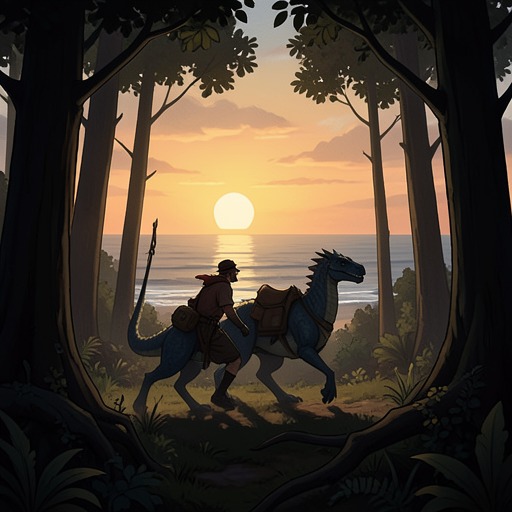
Once the [Baby Dragon](entity:character-recall-character-039a655494ee) calms down, Elmer climbs onto his back. They set out for the shores of the [Island of Tangerina](entity:location-recall-location-89dd8c27d45a), soaring over the dark jungle, muddy river, angry animals, and the [Crocodiles](entity:character-recall-character-567157f201de) still carrying their unwitting passengers.
As they pass over the [Ocean Rocks](entity:location-recall-location-e91422ca51ab), a small voice cries that the animals need their dragon. Elmer and the Baby Dragon know that nothing will make them return to [Wild Island](entity:location-recall-location-wild-island-630a33a03c70), and their escape closes the rescue adventure.