
The Rescue’s Ethical Choice
My Father's DragonThis flow traces the story’s contrast between using another creature for convenience and helping that creature regain a choice.
increasing Bearing strength in each event
 decreasing
Bearing strength in each eventdecreasingThe Animals’ Convenience
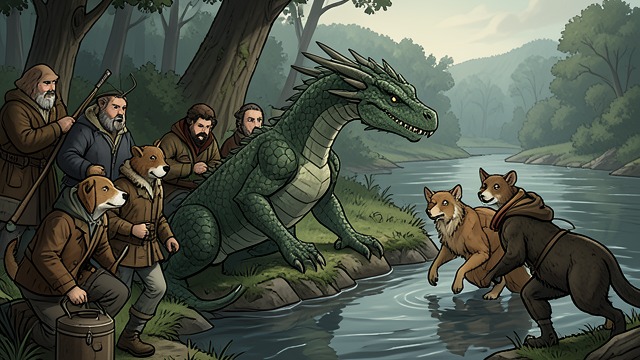
A Problem Solved at Another’s Expense
The plan
The animals see Baby Dragon’s ability to fly as a solution to the river crossing. They do not first ask what he wants.
The ethical fault
Their need is real, but it does not justify taking control of the dragon’s body and labor. The conflict begins with usefulness replacing consent.
Force Behind the Ferry
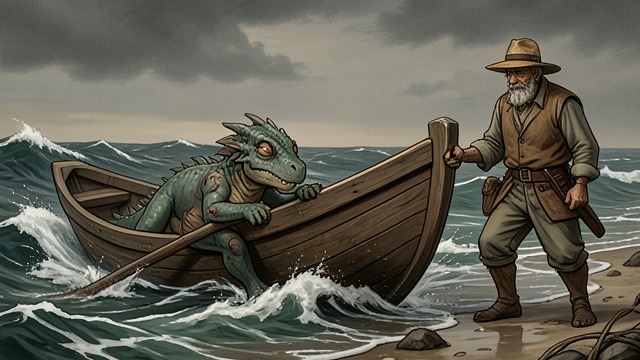
Work Sustained by Punishment
Coercion
The animals overwork Baby Dragon and hurt him when he complains. The ferry depends on compulsion rather than cooperation.
The contrast sharpened
A convenient service cannot be considered fair when its provider is prevented from refusing. The dragon’s suffering makes the rescue ethically necessary.
Elmer’s Nonviolent Tactics
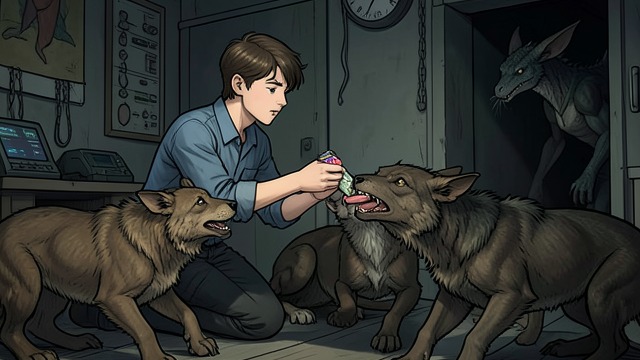
Survival Without Domination
A different method
Elmer distracts dangerous animals with useful or pleasing gifts, from Chewing gum to grooming tools. He does not attempt to command them through force.
The distinction
His tricks protect him, but they do not create a continuing system that exploits the animals. Their temporary distraction contrasts with the dragon’s prolonged forced service.
The Rope Is Cut
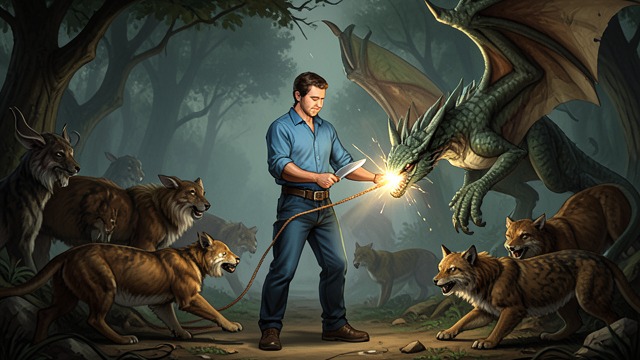
Ending Coercion
The action
Elmer cuts The dragon’s rope even as the pursuing animals approach. He does not seek to take over the ferry or profit from the dragon’s ability.
An ethical resolution
The aim is to restore Baby Dragon’s freedom, not redirect his labor toward a new master. The decisive act removes the means of control.
Flight by Consent
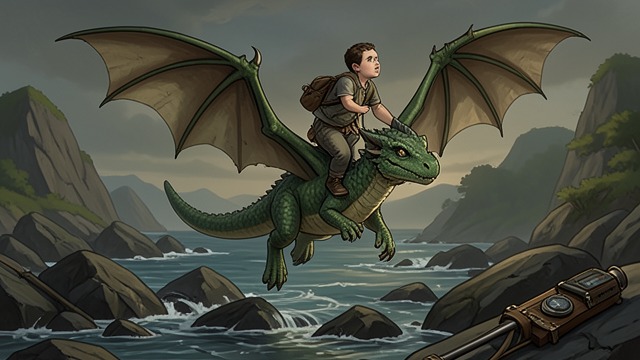
Chosen Cooperation
A voluntary ride
Baby Dragon asks where to go and carries Elmer after the rescue. His help is offered freely and can be distinguished from the animals’ demands.
The story’s conclusion
The rescue succeeds because friendship replaces coercion. Flight becomes meaningful when the dragon, not the island, chooses its direction.
when the island animals discover the fallen dragon
during Baby Dragon’s forced service
during the encounters on the jungle trail
at the climax on the riverbank
during the final departure from Wild Island
