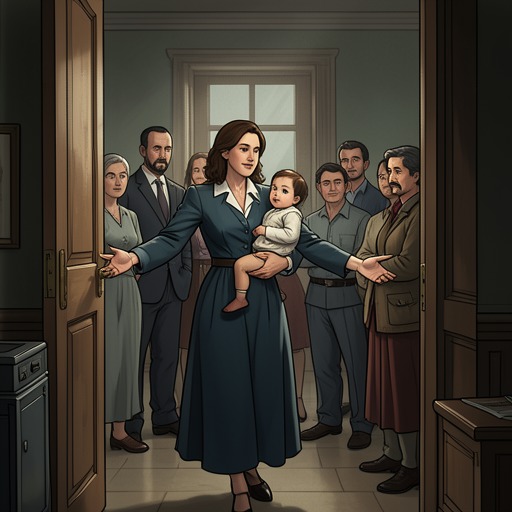
Ava found out she was pregnant
My Hot Secret: Geheimes Baby mit dem CEO Milliardär - Enemies to Lovers (German Edition)Ava discovers that she is pregnant when the physical signs she has tried to dismiss become an unmistakable fact. The discovery begins during a high-stakes presentation at Harvest Foods International, where nausea interrupts her professional performance, and ends with a positive pharmacy test and a decision to keep the child. It becomes the concealed foundation of her later choices concerning Gabriel, love, work, and family.
Symptoms Behind the Professional Mask
Ava’s discovery first appears as a bodily failure in a setting where she is determined to appear competent. After John has warned her that Harvest Foods International has been losing money for more than a year and urgently needs a turnaround before its loans force the company toward bankruptcy, she spends two weeks working intensely on a rescue strategy. During the presentation of her findings to John and other participants, the audience seems impressed, but her growing sickness becomes impossible to suppress.
Near the end of the presentation, Ava reaches for a wastebasket and vomits its contents. She explains the episode as breakfast not agreeing with her, but that explanation is false: she has eaten only a few dry crackers, and the nausea disappears immediately after she is sick. The surrounding details make the symptom retrospectively legible. Oatmeal has begun to taste like dirt, its gray appearance has become unappetizing, and even the smell of eggs is intolerable. The workplace scene therefore functions as both an embarrassment and an inadvertent diagnostic signal: Ava’s carefully managed professional identity is interrupted by a body already carrying information she does not yet understand.
From Calculation to Proof
Back at her desk, Ava checks her calendar and counts twenty-eight days from the previous month. Her period is more than a week late. She initially searches for an alternative explanation, wondering whether stress has caused the delay, but then remembers that she forgot to take her birth-control pill on the morning Nick ended their relationship. The chaotic events that followed meant that more than a day passed before she took the next pill, making pregnancy a real possibility rather than an abstract fear.
Ava identifies Gabriel as the only possible father. She had not slept with Nick during the last night they saw each other, and the previous occasion with Nick had been before her last period. Even while frightened, she tries to impose order on the crisis, deciding that she will establish the facts before deciding what anything means. She goes to an empty drugstore, buys a home pregnancy test, and uses it in a public restroom. The minute of waiting feels interminable, but the result is positive. Sitting on the closed toilet seat with her face in her hands, Ava understands that she is pregnant; she takes the test back with her because she needs a tangible reminder that the event is real and not a strange dream.
The discovery collides with the identity Ava has built around responsibility and planning. She regards the pregnancy as the consequence of a drunken night and a risky decision made in the heat of the moment, an event that has altered the direction of her future without belonging to her plan. Her first response is not immediate certainty but disciplined containment: she tells herself that there is still time to resolve the situation and that she does not have to manage everything at once.
Choice, Autonomy, and Beverly’s Support
Ava tells Beverly the news at work, making the pregnancy more real by speaking it aloud. Beverly responds with enthusiasm at first, then recognizes Ava’s grim expression and makes room for uncertainty. She explicitly tells Ava that keeping the baby would be wonderful if that was what Ava wanted, but that abortion would also be acceptable and would remain Ava’s decision. Beverly further notes that women she knows have had abortions without regretting them, removing the pressure to treat either outcome as morally predetermined.
The conversation separates Ava’s reproductive choice from other people’s expectations. Beverly offers emotional support without claiming authority over the decision, while Ava weighs the practical consequences of continuing the pregnancy. She thinks first about travel, a central part of her established life, and recognizes that carrying a baby across the country would complicate it. The decision is therefore made against concrete professional and personal costs rather than through a sentimental dismissal of them.
Ava ultimately tells Beverly that she thinks she wants to keep the baby. Her reasoning is connected to a larger emotional change. After the death of her fiancé, she had closed herself off from genuine intimacy; she had also run from Gabriel when she felt herself beginning to open to him. The encounter with Gabriel has awakened a desire for connection that she did not know she still possessed. The pregnancy is difficult and life-changing, but it also arrives at the moment when Ava has begun to want love and no longer wants to run from it. Beverly responds that Ava will make a wonderful mother, affirming the decision without taking it away from her.
Concealment and Its Consequences
Although Ava chooses to continue the pregnancy, she does not immediately tell Gabriel. The pregnancy thus becomes both a decision and a secret. Her uncertainty about Gabriel’s capacity for fatherhood leads her to assess him indirectly while she preserves control over the situation. The secret also allows her to maintain the boundaries she has constructed around work and emotional vulnerability, even as the pregnancy steadily undermines those boundaries.
The concealed fact later becomes inseparable from Ava’s relationship with Gabriel. After publicly declaring that she still loves him and asking to be part of his team, she tells him that she is pregnant while gripping his shirt and hoping he will not withdraw. The disclosure produces an immediate reversal: Gabriel’s smile disappears, his fingers slide away from her necklace, and he reacts with disbelief. The pregnancy therefore changes the meaning of their romantic reconciliation. What began as Ava’s private discovery becomes a test of whether Gabriel can accept responsibility and remain present when love carries consequences.
The story repeatedly contrasts what Ava knows privately with what she performs publicly. At Harvest Foods International she disguises pregnancy-related vomiting as a bad breakfast, while later she exposes the secret to Beverly and eventually to Gabriel. Her body first reveals the truth through nausea, her calendar confirms its possibility, the test proves it, and speech turns it into a social fact. The progression moves from private sensation to evidence, then from evidence to choice and finally to relational confrontation.
Medical Continuity and the Approaching Birth
The discovery is not an isolated shock but the beginning of an evolving pregnancy narrative. At a later ultrasound, Doctor Morris applies warm gel to Ava’s abdomen and presses the ultrasound wand against it while searching the screen. She tells Ava that everything looks normal and prepares to measure the baby and listen to the heartbeat. The medical examination gives the pregnancy an institutional confirmation and moves it beyond Ava’s initial uncertainty into an observable, monitored reality.
The pregnancy eventually reaches its physical culmination when Ava believes that her waters have broken while sitting with Gabriel. The event comes two weeks before the expected due date, surprising him because he assumes there is still more time. Ava responds by pointing to the wetness on her lap and observing that the new car will need cleaning. The practical humor does not erase the significance of the moment: the pregnancy that began as an unwanted disruption during a corporate presentation has become an imminent birth shared with Gabriel.
Narrative Significance
Ava’s discovery of pregnancy is the plot’s decisive hinge because it converts a brief encounter with Gabriel into a continuing bond and forces Ava to reconsider the life she has protected through work, planning, and emotional distance. It does not simply give her a future obligation; it gives form to a newly recovered desire for connection while exposing the limits of her previous self-sufficiency.
The event also establishes a conflict between bodily knowledge and social performance. Ava can control a presentation, explain away an embarrassing incident, and postpone a difficult conversation, but she cannot make the pregnancy remain merely an internal possibility. Each stage strips away another layer of avoidance. By choosing to keep the baby, Ava does not claim that the consequences will be easy. She chooses to enter an altered future deliberately, even though the identity of the father, the demands of her career, and the possibility of renewed emotional injury make that future uncertain.