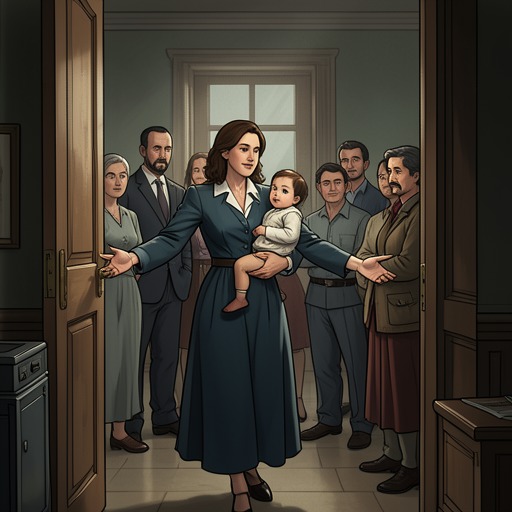
Ava's emotional guardedness
My Hot Secret: Geheimes Baby mit dem CEO Milliardär - Enemies to Lovers (German Edition)Ava's emotional guardedness is the central survival strategy formed after the death of her fiancé. A single night and a car accident destroyed the life she had expected, and she concluded that another loss would be unbearable. Rather than risk renewed intimacy, she shut down the part of herself capable of romantic love and made work her principal source of stability, achievement, fulfillment, and passion. This guardedness is not simple indifference: it is grief converted into discipline, distance, and control.
Origin in Loss
Ava's withdrawal begins with bereavement. After her fiancé died, she believed that she could not survive another emotional catastrophe, so she made closeness itself seem dangerous. She had already sealed off her heart for years before the plot begins, and the memory of the accident remains the private explanation for behavior that others experience only as coldness. The loss is both sharply specific and largely unspoken; Ava thinks that the wound governs her, but she cannot initially tell Nick why.
That silence defines her failing relationship with Nick. When Nick presses her to discuss her feelings and complains that, despite their time together, he scarcely knows her, Ava refuses to open up and clings even more tightly to her suitcases. Nick identifies the visible pattern directly, accusing her of letting nobody come close. Ava quietly acknowledges that he is right, but acknowledgment does not become confession. Her guardedness therefore operates through a pursuit-and-withdrawal pattern: the more intimacy is requested, the more firmly she protects the sealed interior of her life.
Work as Defensive Structure
Ava's professional identity gives her a controlled alternative to romantic attachment. She describes work as the force that pulled her out of an abyss of unimaginable pain, and the more time she devoted to it, the more successful she became. At the beginning of her assignment at Harvest Foods International, the company is already in severe financial danger: it has been losing money for more than a year, faces loans coming due, and risks bankruptcy despite having generated billions of dollars in earlier profits through its holdings in widely known food brands.
The crisis suits the logic of Ava's defense because it offers a problem that can be examined, organized, and solved. When John challenges whether she is capable of the rescue task, she answers with confidence in her abilities. His subsequent criticism of her lateness, appearance, and explanations humiliates and angers her, but it also intensifies her resolve. She decides to dedicate herself to saving HFI and to prove John wrong. Her response turns injury into labor: professional competence becomes both ambition and emotional shelter.
This structure also shapes her assessment of her relationship with Nick. Alone in her hotel room after their separation, Ava does not feel grief at losing him and recognizes that this may make her appear cold and selfish. She cannot bring herself to let anyone in again, because she has killed off the part of herself that could love as it once did. She believes that her only chance at genuine love may have died with her fiancé. Work consequently becomes the one area where she still experiences fulfillment and passion, a substitute that feels safer precisely because it cannot demand the same exposure as intimacy.
The Fracture Caused by Gabriel
Gabriel unsettles Ava's defenses after their passionate night. She leaves before he wakes and provides neither a message nor a means of contacting her. Avoiding the bakery and withholding her workplace allows her to impose what she regards as a clean ending. The decision is deliberate rather than accidental: she wants pleasure without a new relationship and tries to force the less logical part of her mind to accept that the encounter is over.
Yet the experience has already breached the barrier she has carefully built. On the way to present her HFI strategy, Ava remembers feeling safe and relaxed with Gabriel, his tenderness after sex, and the desire that followed to speak and open herself to him. The contrast with her months with Nick is decisive: she had never wanted to reveal herself to Nick, while one night with Gabriel makes the armor show cracks. Her fear arrives after excitement, so guardedness is shown not as an absence of feeling but as the mechanism that immediately attempts to suppress feeling once it becomes dangerous.
The same conflict appears during the later baking conversation. Once the dough has been covered and left to rise, the practical distraction of baking disappears, and Ava can no longer avoid what Gabriel's vulnerability has awakened. Learning that he has suffered a similar loss breaks through the dam of her suppressed emotions. She tells him that after her fiancé's death she wanted no one close and found it easier to keep people at a distance because she could not bear another loss. Gabriel responds that he understands, and Ava recognizes that he genuinely does. Speaking the wound aloud does not erase her guardedness, but it changes its function: the private defense becomes a truth shared with someone capable of witnessing it.
Guardedness at Work and in Public
Ava's emotional control extends beyond romance into professional and social performances. When Trevor probes her private life during an HFI meeting and asks whether she is seeing someone, she refuses to let him claim access to information unrelated to the work. Her answer that her private life is none of his business preserves a boundary that is both personal and tactical. The exchange shows that guardedness can protect her from workplace intrusion even as it leaves her vulnerable to the accusation that her personal life is interfering with her work.
Later, under pressure from Special Agent Gill, Ava performs exaggerated sweetness rather than reveal exhaustion or irritation directly. She bats her eyelashes, adopts an anxious expression, and offers a deliberately obscene series of supposed services, including coffee, a lap dance, and an enema. The performance makes other agents and insurance investigators laugh and leaves Gill red with anger, while Ava remains conscious that she must avoid provoking him because she is still on the FBI payroll. Here emotional labor becomes armor: she displays an artificial emotion to control the consequences of her real one. Her guardedness is therefore not merely silence; it also includes calculated theatricality, sarcasm, and the ability to convert vulnerability into a controlled public act.
Meaning and Limits of the Defense
Ava's guardedness protects her from repeating the devastation associated with her fiancé's death, but it also narrows the life she permits herself to inhabit. It costs her openness with Nick, encourages her to flee from Gabriel before intimacy can acquire consequences, and makes professional success carry the weight of an entire emotional life. Her anger at John and her sharp resistance to Trevor show that the barrier is not passivity. It is an active system of self-command, boundary-setting, and redirected energy.
Gabriel's presence reveals the system's instability. His tenderness and shared experience of loss do not force Ava open; rather, they create the conditions in which she chooses to speak. The movement from unspeakable grief to direct disclosure is the state’s most important development. Ava remains wary of loss, but the encounter demonstrates that emotional protection need not mean permanent emotional death. The guarded self that once treated work as everything begins, however cautiously, to recognize that being understood may be less dangerous than remaining entirely alone.