Leonard
My Hot Secret: Geheimes Baby mit dem CEO Milliardär - Enemies to Lovers (German Edition)Leonard is an older homeless man whose life embodies the cost of treating work as a substitute for intimacy. Ava first encounters him as a stranger in a shabby coat, but his history soon becomes a moral counterpoint to her own work-centered ambitions. By the end of the story, Leonard has regained contact with his family and is walking with his granddaughter, transforming him from a figure of isolation into evidence that estrangement need not be permanent.
Identity and First Encounter
Leonard enters the narrative while Ava is hurrying back to work through a park. She initially assumes from his shabby clothing that he is homeless and feels a brief impulse of pity, even as she changes sides of the path to pass him. When he trips over loose stones and falls heavily, however, her professional urgency gives way to immediate action: she runs to him, helps him up, and offers him her coffee, with milk and a lump of sugar. Leonard introduces himself after asking Ava’s name. His hand is one she shakes carefully, and he tells her that helping an old man makes her a good person because most people do not even notice people like him. The exchange establishes him not as a passive object of charity but as an observant participant who understands the social invisibility attached to homelessness. His gratitude opens a conversation in which he becomes able to read Ava’s emotional defenses as clearly as she reads his circumstances.
A Life Sacrificed to Work
Leonard recognizes something of his former self in Ava’s devotion to her career. He explains that he once told himself his work would give his family a better life, but the justification gradually became a pattern of absence: he missed birthdays, holidays, and other important occasions until his family barely knew him. His regret remains emotionally immediate rather than safely historical; his sigh and visible wound show that the loss has not become an abstract lesson. The consequences are severe. Leonard is now old and alone, has lost all his money, and has not seen his children for years. He does not present himself as blameless or merely unlucky. Instead, he admits that he pushed away everyone he loved and cannot fault his children for staying away. That assumption of responsibility is what makes his warning persuasive. He is not condemning ambition from a distance; he is describing the final shape that his own choices have taken. Leonard tells Ava that it is not too late for her. She is young enough to avoid repeating his mistakes, a statement that reaches beyond her immediate pregnancy and toward the kind of mother and worker she may become. Ava has been proud of being a workaholic and has believed she could secure her child’s future through effort alone. Leonard forces her to imagine a harsher possibility: that a child might one day hate a mother who provided materially but remained emotionally absent. His story helps her articulate a different ambition, one in which she works hard while still taking part in her child’s life.
Recurrence and Moral Crisis
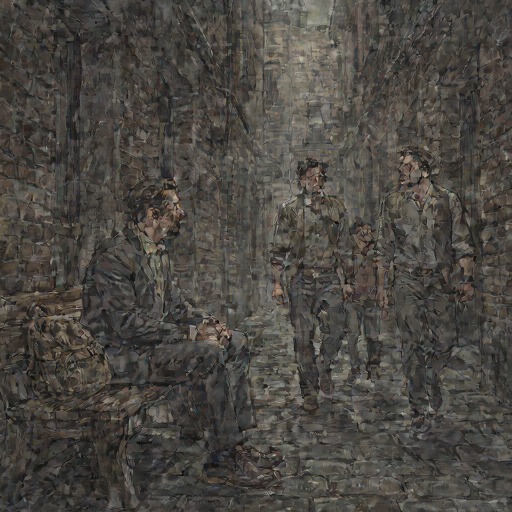
Leonard’s second major appearance occurs later, when Ava sees him again in the park during rain. He is crouched on a covered bench, wrapped in a thin coat and trying to remain warm and dry. The encounter makes his earlier account concrete. He is no longer simply recounting the consequences of a career-first life; Ava can see those consequences in front of her, as an old man alone and homeless beneath the trees. The sight devastates her because Leonard has become a possible image of her own future. She remembers that he placed his career above his family, lost his money, and was left without support when employment and financial security failed. She begins to cry, turns away so that he will not see her, and runs toward her hotel. Her distress marks a decisive change in her understanding of work. She had once treated employment as the one dependable thing remaining in her life, but Leonard’s presence makes that belief untenable: work may provide status and income, yet it cannot by itself replace family, love, or reciprocal care.
Connection with Ava’s Choices
Leonard’s warning directly intersects with Ava’s decision to keep her pregnancy and evaluate Gabriel privately before revealing it. Ava plans to learn whether Gabriel could be a good father; if he proves unwilling or unsuitable, she is prepared to disappear and raise the child alone. She also resolves to work harder than ever to secure the baby’s future, imagining that success at HFI might eventually give her a permanent home and financial independence. Leonard complicates that plan without directly instructing her how to act. His history shows that providing for a family cannot be separated from being present for one. Ava still values independence and professional competence, but she now wants to avoid the false choice between motherhood and achievement. Leonard’s lesson is therefore not that work is worthless. It is that work becomes destructive when it is used to justify rejecting every other bond. His influence also remains connected to Ava’s eventual emotional risk. When she publicly tells Gabriel that she loves him and wants to be on his team, she describes the decision as taking a leap into cold water. Leonard’s earlier appeal not to repeat his mistakes has helped make that leap imaginable. He serves as a quiet mentor figure, not because he possesses authority or success, but because the wreckage of his life gives Ava a future she can recognize before it is too late.
Recovery, Family, and Ending
After becoming CEO, Ava returns to the park to find Leonard because the image of him curled on the bench in the rain continues to haunt her. He initially refuses her help. She eventually reaches him by telling him about the death of her fiancé and explaining that his words in the park helped her risk love with Gabriel. By connecting his warning to a concrete change in her own life, she makes it possible for him to accept assistance without reducing him to a problem to be solved. Ava helps Leonard obtain a job as an accountant at a local delicatessen. Her recommendation as the head of HFI carries considerable weight, but the outcome is presented as more than institutional charity: Leonard’s previous skills remain usable, and employment gives him a route toward stability and self-respect. She also helps trace his family. His son is a pilot, and his daughter is a teacher in the city; Leonard eventually reaches them and meets his granddaughter Courtney. The final image reverses the earlier park scenes. Courtney calls Leonard her grandfather and pulls him toward a meadow to play ball, while he affectionately calls her “Firefly,” the same family nickname Rose remembers from her own childhood. Leonard is no longer curled alone under a thin coat in the rain. He is holding his granddaughter’s hand, surrounded by family, and participating in an ordinary act of care and play. His recovery does not erase the years he lost, but it demonstrates that acknowledgment, practical help, and renewed contact can reopen a life that once seemed finished.
Narrative Role and Significance
Leonard functions as the novel’s embodied critique of the slogan that more work will automatically create a better life. His story gives a social and emotional consequence to the values Ava initially treats as protective: mobility, relentless labor, financial self-reliance, and the refusal to depend on others. In contrast, his later reunion with his family confirms the novel’s movement toward chosen interdependence. A future is secured not only by earning money, but also by remaining available to the people for whom that future is supposedly being built. He is also a bridge between warning and repair. At first, Leonard is the possible endpoint of Ava’s emotional isolation; later, he becomes someone Ava can help because she has learned to treat relationships as responsibilities rather than liabilities. His presence links the private story of love and pregnancy with the broader ethical question of what work, family, and responsibility are meant to serve. The ending grants him neither miraculous restoration nor a denial of the damage he caused. Instead, it gives him the more credible consolation of renewed family contact, useful work, and a place in his granddaughter’s present life.