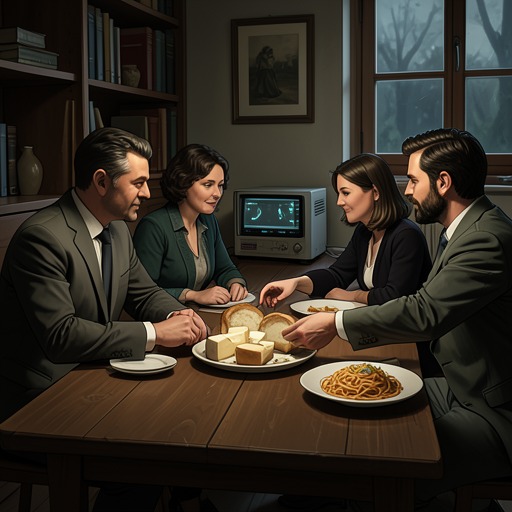
Marco
My Hot Secret: Geheimes Baby mit dem CEO Milliardär - Enemies to Lovers (German Edition)Marco is the owner of Marco's, a long-established Italian restaurant that Gabriel regards as superior to even the most celebrated and expensive restaurants he has visited. Although Marco is not a principal actor in the central conflict, his presence gives the story a concrete image of a life built through craft, loyalty, hospitality, and sustained human connection. The restaurant becomes more than a dining room: it is a place where Gabriel is known, welcomed, teased, and measured against a community that values sincerity over status.
Identity and Place in the Story
Marco is presented as the proprietor of Marco's and as a member of the family that has owned the restaurant for decades. Gabriel has been returning there for years and has come to know Marco and his family personally. The restaurant occupies a middle position in the market rather than an elite one, yet Gabriel considers its food among the best he has ever eaten. Its appeal rests not on money or spectacle but on the heart and love invested in its cooking, as well as on the quality that has earned the family lasting customer loyalty.
That distinction matters because Gabriel has firsthand knowledge of a very different relationship to wealth. He has watched his father pursue money and the exclusivity attached to it at the expense of other things. Marco's represents the opposite principle: excellence is not created by prestige alone, and customers with less disposable income must be given a reason to spend their hard-earned money. Marco's success therefore embodies a form of value grounded in labor and trust rather than display.
Relationship with Gabriel
When Gabriel brings Ava to Marco's, Marco greets him as someone whose absence has been noticed. He embraces the reunion warmly, asks how Gabriel is doing, and remarks that it has been far too long since Gabriel's last visit. Gabriel answers that he is always busy, prompting Marco to repeat the word with affectionate mockery. Marco jokingly associates Gabriel's constant activity not only with the bakery but also with skydiving and swimming with sharks, suggesting that he knows Gabriel as a restless seeker of experiences rather than merely as a customer.
Marco's familiarity is intimate without being intrusive. He recognizes Gabriel's patterns, jokes about them, and immediately notices that the woman accompanying him is significant. His question about whom Gabriel has brought places Ava within the social meaning of the visit: if Gabriel has brought her to this particular restaurant, she must matter. Ava becomes embarrassed while waiting for Gabriel's answer, and the moment exposes how unusual it is for Gabriel to bring someone into a setting connected with his personal history.
Marco also knows the staff well enough to make the restaurant feel like a community rather than a service transaction. Gabriel greets the servers as old friends and knows each of them by name, behavior that Ava reads as evidence of his caring and sociable side. Marco's restaurant thus reveals a Gabriel who is capable of durable, reciprocal relationships, even while Gabriel's broader reputation is associated with busyness, pleasure, and avoidance of commitment.
Hospitality and Culinary Values
Marco's role is inseparable from the story's treatment of food as a form of care. The restaurant's worth is explained through the devotion of the people who run it and the loyalty they have earned over decades. Food is not treated as a luxury ornament or as a badge of class; it is the material result of work performed with passion. Marco's family restaurant offers a social economy in which quality and affection are converted into trust, and where the ordinary act of feeding people carries moral weight.
This ethic parallels Gabriel's own attachment to baking. He tells Ava that he puts as much love into his baking as Marco and his family put into their kitchen. The comparison places Marco among the practitioners who understand that skilled work is also a relationship with the people who receive its results. Gabriel respects those who pursue their craft passionately, especially because he understands how difficult it is to persuade people with fewer resources to part with money they have worked hard to earn.
Marco's hospitality also gives the dinner a ritual dimension. He does not remain a distant owner; he crosses the restaurant to greet Gabriel, exchanges a physical greeting, speaks directly with the guests, and later returns to ask whether they enjoyed the meal. His attention makes the restaurant feel domestic and communal. The warmth of the encounter helps Ava see that Gabriel's world contains forms of generosity and belonging that cannot be reduced to his wealth or appetite for adventure.
Connection to Ava's Experience
Marco first affects Ava through the atmosphere of the restaurant and through the way he receives Gabriel. His welcome places her inside a circle of recognition that predates her. When he asks whether she is someone special, the question is playful, but it also turns the dinner into a test of Gabriel's willingness to acknowledge her publicly. Marco's family setting makes visible the difference between a casual encounter and an introduction to people whose opinion Gabriel values.
The meal also becomes part of a recurring food motif in Ava and Gabriel's relationship. Gabriel later compares Marco's cooking with the brioche made in his own bakery, while Ava's experiences of warm bread, enriched dough, pizza, and a croissant repeatedly connect appetite with bodily knowledge and emotional change. Marco's restaurant is the first major setting in which Gabriel's culinary identity is placed within a wider culture of family labor and shared enjoyment. His food is not presented as an isolated talent but as part of a continuum of care represented by Marco's household.
Marco's question about whether the meal satisfied them invites Gabriel to tease Ava about whether it was the best food she had ever eaten. The exchange is light, but it shows how Marco's presence allows intimacy to develop through ordinary social play. Ava and Gabriel steal food from each other's plates, while Marco's return at the end of the meal confirms that the restaurant's hospitality includes attention after the order has been served. The scene makes eating together a form of courtship without turning it into a grand declaration.
Narrative Significance
Marco functions as a quiet counterweight to the story's larger patterns of inheritance, wealth, and withdrawal. Against the exclusivity pursued by Gabriel's father, Marco offers an inherited enterprise whose legitimacy comes from decades of work and customer loyalty. Against Gabriel's tendency to remain busy and evade lasting responsibility, Marco's restaurant suggests continuity: a place, a family, a staff, and a standard of care maintained over time.
Although the evidence does not assign Marco a later independent plot resolution, his significance persists through the values attached to his restaurant. The story's later movement toward responsibility, family, and the transformation of HFI into something positive gains an early analogue in Marco's model of stewardship. Marco does not lecture Gabriel about commitment; he demonstrates, through the way he runs his restaurant and receives people, that pleasure and responsibility need not be opposites. His brief appearances therefore help establish the social and ethical world into which Gabriel may eventually grow: one in which craft is valued over glamour, welcome is stronger than performance, and love is made tangible through repeated acts of care.