Mountain of Light Artifacts
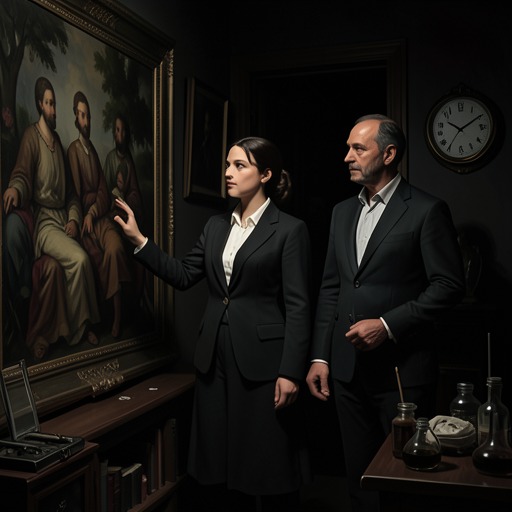
My Hot Secret: Geheimes Baby mit dem CEO Milliardär - Enemies to Lovers (German Edition)Mountain of Light Artifacts, identified as Aiden Niles’s gallery, is less a passive backdrop than an access system through which art, wealth, influence, and criminal opportunity converge. Its importance lies in the way it enables Jordan Reed to move from the margins of an exclusive event into the immediate presence of the Rampant Lion Diamond, while also exposing how the gallery’s prestige depends on controlled display, selective invitations, and vulnerable human attention.
Identity and Setting
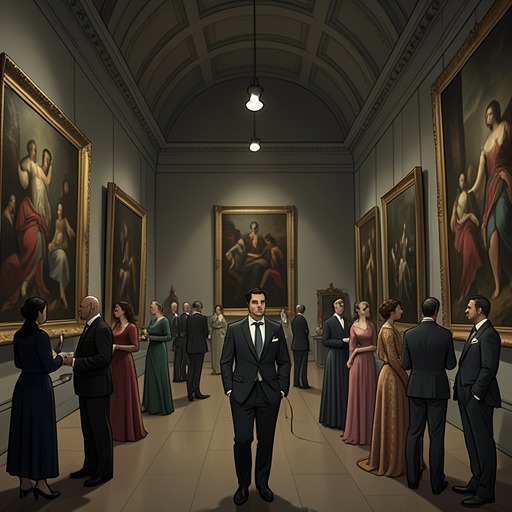
Mountain of Light Artifacts is a gallery associated with Aiden Niles and the elite art world. The narrator enters it during a crowded gala in New York, an event whose exclusivity is reinforced by the gallery’s limited physical space. Although the room is not especially large, it is filled almost to capacity, with no more than roughly three hundred guests. The narrator contrasts its scale with the much larger nightclubs of Manhattan, yet recognizes that the crowd seems enormous in relation to the gallery’s importance. The restricted setting therefore produces prestige: scarcity of space and access makes the gathering appear more valuable than an ordinary public exhibition.
The gallery also functions as a social network rather than merely a commercial venue. Aiden Niles stands near a counter beside a small bulletproof glass case protecting an invaluable Egyptian funerary mask. He is speaking with another man and appears connected to the right people, even if he is not himself important enough to command the narrator’s attention. That detail establishes the gallery’s practical power. Its value is not limited to the objects it displays; it also lies in its ability to connect guests, collectors, dealers, and operators who need one another’s credentials.
Access, Relationships, and Manipulation
Jordan Reed reaches the gala through Christine Louise, an established contact in the art world. Christine is introduced as an old friend and as the person who arranged the difficult invitation. Her relationship with the narrator is warm enough for familiar cheek-kissing and flirtatious exchange, but it is also shaped by his deliberate use of her attraction to him. Their acquaintance began when Jordan visited the gallery to inspect an impressive miniature by Kesu Das. Christine quickly liked him and made no secret of her interest, while Jordan concealed that he had briefly stolen the miniature and placed it in his pocket before it later reappeared.
The theft of the miniature is not presented as an impulsive act undertaken for the picture’s own sake. Jordan uses it as a test, intending to discover what he needs to know. Afterward, he repeatedly visits Mountain of Light Artifacts, talks with Christine about ordinary matters, and tells both her and Niles that he plans to invest in a new work for his family collection. He invents a supposed gap in the collection’s Indian art and claims that he can think of no better acquisition than Mountain of Light. The gallery consequently becomes the stage for a sustained performance of legitimacy: Jordan poses as a serious collector while concealing that his true objective is the Rampant Lion Diamond.
Jordan explicitly understands the entire arrangement as a scheme designed to secure an invitation and gain sight of the diamond. His cultivated interest in Indian art, his repeated visits, and his charm toward Christine are all means of entry. The gallery’s social codes make the deception possible because status is treated as evidence of trustworthiness. A familiar face, a wealthy family collection, and the language of connoisseurship allow Jordan to approach objects that would otherwise be inaccessible.
The Gallery and the Rampant Lion Diamond
The gala’s central attraction is the Rampant Lion Diamond, an extraordinary red diamond displayed on a small velvet-covered podium. Christine presents it while a guard watches over the proceedings. She places the stone on a motion sensor and signals the guard, who remains responsible for ensuring that no guest acts foolishly around it. The security arrangement combines technology and human surveillance: a remotely controlled system is activated, while a second remote sensor is held by the guard so Christine can remove the diamond and show it to the guests.
The diamond’s material presence dominates the scene. Its brilliant red color is described as breathtaking, and the light in the gallery breaks across its facets, casting rainbows onto the white column behind Christine. Its name is linked to its unusual color and compelling history, while Christine begins explaining that the mines that normally produce red diamonds are in Australia. Jordan outwardly responds with admiration, praising the stone’s beauty and the way it captures the light, even comparing its radiance favorably with rubies. His apparent wonder is therefore both genuine attention to the object and a calculated part of the performance required to approach it.
The gallery’s protective system also gives the diamond an active role in the scene. Jordan hears the subtle click of the remote security mechanism and understands how the sensors work. His unusually sensitive hearing, described as a lifelong gift and burden and as one reason for his ability to learn tricks easily, allows him to detect the system’s activation. The object is thus surrounded by a network of guards, sensors, gestures, and timing. The diamond is not simply displayed; its presence organizes the behavior of everyone around it.
The Heist and Its Consequences
Jordan waits for a moment when the guard’s attention shifts to Christine. He deliberately avoids staring at the guard, knowing that close scrutiny would appear suspicious, and instead bends toward the diamond as though captivated by its beauty. When the guard’s eyes settle on Christine, Jordan identifies the brief interval in which human error cannot be corrected and seizes his chance. The gallery’s security is not defeated by brute force. It is penetrated through observation of the system, the choreography of the presentation, and the predictable limits of the guard’s attention.
This makes Mountain of Light Artifacts the site of a sharp reversal. The gallery presents itself as a controlled environment in which priceless objects are protected by exclusivity, technology, and professional vigilance. Yet the same ritual that displays the diamond also exposes it. Christine must hold the stone so guests can admire it; the guard must monitor Christine and the audience; the security system must be temporarily adapted to public presentation. The gallery’s promise of perfect control therefore creates the opening Jordan needs.
The gallery also connects this theft to the book’s wider pattern of opportunity-based crime. Elsewhere, hidden bank accounts reveal that Trevor has diverted HFI funds for years, and Gabriel identifies a plan to weaken the company so it can be bought cheaply with the money Trevor misappropriated. At Mountain of Light Artifacts, by contrast, the target is visible in a glass-protected, heavily monitored display. Both crimes depend on a motivated offender, a valuable target, and a weakness in supervision, but the gallery makes those conditions theatrically visible. Its polished world of collections and invitations becomes the setting for a crime that exploits the difference between institutional confidence and actual protection.
Narrative Significance
Mountain of Light Artifacts embodies the unstable boundary between collecting and taking. Jordan speaks the language of preservation, family heritage, and investment while secretly treating the gallery as a testing ground and the diamond as a target. The miniature by Kesu Das reveals his method: an artwork can be temporarily removed not because he intends to keep it, but because its disappearance can expose the reactions and vulnerabilities of the people responsible for it. In the gallery, art is simultaneously cultural property, financial capital, social currency, and bait.
The venue’s elegance also intensifies the irony of the heist. The Egyptian funerary mask rests behind bulletproof glass, the Rampant Lion Diamond is placed on a sensor-equipped podium, and guests gather under the authority of a prestigious art institution. Yet the decisive weakness is neither the glass nor the sensor. It is the human choreography that makes public admiration possible. Mountain of Light Artifacts therefore matters not only as the place where Jordan pursues a valuable stone, but as a model of the novel’s broader interest in systems that appear secure until a skilled observer finds the precise point where trust, performance, and desire interrupt control.