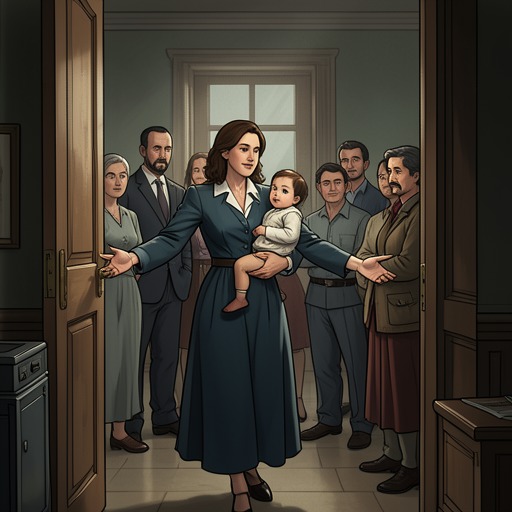
Ava arrived in San Francisco and encountered a series of travel accidents
My Hot Secret: Geheimes Baby mit dem CEO Milliardär - Enemies to Lovers (German Edition)Ava's arrival in San Francisco is defined by a chain of practical disasters: a three-hour flight delay, an additional wait on the runway, missing luggage, an aging rental Fiat, and a hotel reservation that has been double-booked. The sequence turns relocation into an ordeal of exhaustion and improvisation, while also exposing the emotional defenses she has built after losing her fiancé. By the time she reaches her replacement room, the journey has already established the conflict between her need for control through work and the vulnerability that the new city will repeatedly demand from her.
A Journey Delayed Before It Begins
Ava leaves Nick behind in Boston intending to start over in a new city with a new client, telling herself that the unease she feels will quickly disappear. Instead, her flight to San Francisco is delayed by three hours, and landing does not bring immediate relief: the aircraft remains stuck on the runway. She had tried to use the delay productively by researching the company online, but her thoughts repeatedly return to Nick. The abrupt shift from hurried travel to prolonged immobility leaves her feeling physically and mentally jolted, as though the pressure of rushing to the airport has been followed by an equally punishing period of enforced waiting.
When the passengers are finally allowed to stand and disembark, the accumulated delay has made Ava stiff after an already lengthy cross-country flight. Even her body registers the failure of the journey to proceed according to plan. She considers taking up yoga to manage the tension, a small practical thought that contrasts with the larger emotional strain she is trying not to examine.
Lost Luggage and the Collapse of Control
The next setback occurs at baggage claim. Ava expects her suitcases to appear early because she was the last person off the plane, but the conveyor belt continues delivering other passengers' belongings while hers never arrives. As the final bag is removed, she realizes that both suitcases are missing. She checks the other carousels, hoping they have been misdirected, but every one is empty. Her only possessions are the clothes she is wearing and her carry-on bag.
The loss is more than an inconvenience because all of her replacement clothing and personal necessities are in the missing luggage. Ava reports the bags to an uninterested airport employee and describes them as precisely as possible, then searches the other baggage belts herself rather than remaining passive. Her impatient pacing and attempts to investigate show the same competence that will define her professional identity, but the airport offers no problem that her preparation can solve. The journey has shifted from delayed progress to direct deprivation.
The Rental Car and the Hotel Failure
Ava attempts to recover some control by arranging transportation and finding a store where she can replace her clothes. The discount-processing procedure takes still more time, however, and by the time she is led to the rental car, the sun is already low. An entire day has disappeared. The vehicle is an ancient, badly maintained Fiat, hardly the efficient beginning she would have chosen for her arrival, though it remains capable of taking her from one place to another.
Because it is too late to expect a clothing store to remain open, Ava drives to the hotel with only the clothes she has on and the few items in her carry-on. She grips the steering wheel throughout the journey, unable to release the day's tension. She also plans to park where no one from Harvest Foods International will see the decrepit car, revealing how quickly professional self-presentation has become part of the crisis. Even before meeting the company, she is already trying to conceal the evidence of disorder.
At the hotel, the final failure awaits her. Ava produces the confirmation email for the suite she reserved weeks earlier, explaining that the long stay was the reason for booking it. Carol, the hotel employee, apologizes and says that the suite is occupied because it was double-booked, then offers another room. Ava accepts because she has no practical alternative, but the substitution confirms that none of the arrangements she made in advance can protect her from contingency.
Exhaustion, Memory, and the New Professional Threshold
Carol offers Ava a complimentary meal in the hotel restaurant while she waits. The food is good, but Ava cannot enjoy it after the day's delays and losses; she wants only to reach a room. She waits another two hours before being allowed upstairs. The replacement room is clean, yet otherwise worn, dull, and burdened with a terrible view. Its bathroom has a shower but no bathtub. Ava's spoken response is bitterly ironic: even the most basic features of arrival have become another disappointment.
Once inside, she charges her phone and thinks again about Nick. She insists that she is not sad to have left him, but the admission is immediately complicated by her recognition that she may appear cold or selfish. The loss of her fiancé has led her to kill the part of herself capable of romantic love, because emotional shutdown seemed necessary for survival. She doubts that she will ever love anyone as she loved him and believes that her chance at genuine love may have died with him.
That belief explains why work matters so intensely to Ava. It is the one part of life in which she still experiences fulfillment and passion, and the move to San Francisco is therefore not merely a change of address or client. It is an attempt to make professional purpose serve as a substitute for intimacy. The travel sequence makes that strategy visible before the plot begins testing it: every external failure presses against the internal system by which Ava keeps grief, dependence, and desire at a distance.
Arrival as Foreshadowing
The event also prepares the contrast between Ava's carefully managed professional persona and the unpredictable relationships that follow. At Harvest Foods International, she must compose herself before entering John's stylish, spacious office, where John examines her and offers a handshake less firm than she expects. Her arrival has already made her perform competence under hostile conditions, and the workplace extends that pressure rather than relieving it.
The later revelation that Gabriel is the owner of his bakery similarly turns apparent circumstances into concealed structures: Ava initially assumes that he answers to a boss, only to learn that he is the boss himself. Her San Francisco arrival therefore introduces a recurring pattern in which first impressions, planned arrangements, and visible status prove unreliable. That pattern reaches into her professional life when John and Trevor wait unhappily for her presentation, and into her emotional life when Gabriel's apparent pleasure-seeking nature is gradually complicated by patience and care.
Against the exhausting hotel arrival, Gabriel's later Napa Valley weekend is staged as an opposite mode of movement. He arranges a helicopter from San Francisco, plans a spa visit with a massage, facial, and hot springs, and takes Ava above the vineyard rows in a hot-air balloon. The carefully curated views of the valley and the slow passage through vineyards on the Napa Valley Wine Train offer the beauty, leisure, and shared attention missing from Ava's first day. Her journey into the city begins with involuntary waiting and material loss; her later journey with Gabriel allows her to receive an experience without controlling every condition.
The importance of the arrival lies in this value shift. Ava begins by believing that a new client and a new city will let her leave discomfort behind, but the airport, car, and hotel expose how little control she actually possesses. The ordeal does not immediately heal her grief or alter her commitment to work. Instead, it establishes the guarded state from which later intimacy becomes possible: a woman who has lost her possessions, her schedule, and the expected shape of her first day, yet still tries to preserve the one identity she believes cannot abandon her.