Ava met Gabriel after the car broke down and accepted his Brioche
My Hot Secret: Geheimes Baby mit dem CEO Milliardär - Enemies to Lovers (German Edition)Ava and Gabriel’s meeting after Ava’s car breaks down is the catalytic encounter that transforms a disastrous arrival into the beginning of their relationship. The scene moves from mechanical failure and wounded pride to apology, shared food, and reciprocal curiosity: Ava resists Gabriel’s help at the roadside, only to meet him again at Madame Vivienne's, where he gives her warm Brioche and reveals that the bakery is his. The action establishes their attraction while also introducing the pattern that will define their connection—Ava’s guarded independence meeting Gabriel’s persistence, generosity, and ability to make care feel less like rescue than invitation.
Roadside Breakdown and First Impressions
Ava’s car fails at precisely the moment when she is already under pressure to reach an important meeting. She knows little about automobiles, but she can at least determine that the vehicle is not on fire and that it may need water or oil. When she raises the hood, a pale-blue vintage convertible slows beside her. Its driver appears thoroughly at home in the California scene: relaxed behind the wheel, one arm draped over the adjacent seat, with sun-bleached curls, sharp features, hazel-brown eyes, and an easy smile. His appearance immediately catches Ava’s attention, but attraction does not soften her defensiveness.
Gabriel asks whether she needs help and remarks that she does not look as though she knows what she is doing. Ava hears the offer through the insult. She refuses assistance, insists that she can manage alone, and rejects his attempt to get out of the convertible. Gabriel raises his hands in surrender, gives her a final puzzled look, and drives away. The exchange leaves Ava angry, not merely because the stranger has challenged her competence, but because she has been placed in the humiliating role of a helpless woman despite her determination to remain self-sufficient.
The car itself then intensifies the failure of Ava’s carefully controlled situation. When she reaches for the oil cap, it is hot enough to burn her hand. After she twists it loose in short, painful movements, the cap shoots away and strikes her in the stomach, spraying dark, sticky oil across her blouse. The ruined shirt is her only spare top, the disabled car makes a shopping trip impossible, and even reaching the meeting now becomes uncertain. The breakdown therefore functions as more than a travel inconvenience: it exposes how quickly Ava’s professional composure can be disrupted by an obstinate material world.
The Second Meeting at Madame Vivienne's
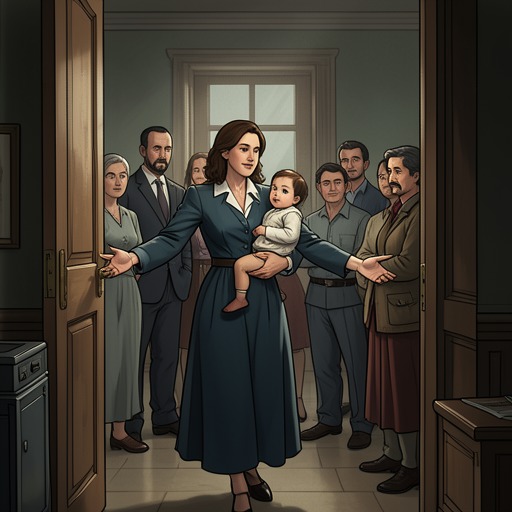
A short walk to Madame Vivienne's gives Ava a chance to calm down. The bakery is painted blue and white, with gold lettering on its facade and wrought-iron bistro tables outside. Inside, French-inspired decoration, antique gold chandeliers, handmade breads, and pastries create an atmosphere sharply opposed to the roadside scene. Ava joins the line at the bread counter, still wearing the oil-stained blouse, and discovers that one of the employees approaching her is the same man who stopped to help her.
The accidental reunion changes the meaning of their first encounter. Gabriel notices that Ava has apparently solved the car problem, and she explains that she ultimately had to call a tow truck. He admits that he regretted driving away, recognizes that he came across as an unpleasant person, and apologizes for speaking to her as though she were foolish. His apology is direct rather than defensive; he holds her gaze and asks for forgiveness through his expression. Ava, now less overwhelmed than she was by the roadside, sees that his smile seems genuine and that his apparent arrogance may have been a misjudgment rather than a fixed character trait.
Ava accepts the correction without surrendering her independence. She tells Gabriel that he had been right about her not knowing what she was doing, while explaining that he encountered her on an exceptionally bad day. This exchange turns conflict into mutual recognition. Gabriel is no longer simply the handsome stranger who offended her, and Ava is no longer merely the irritated woman who rejected his assistance. Both are allowed to revise the first impression without pretending that the first encounter did not happen.
Brioche as Gift and Introduction
Gabriel asks whether Ava has ever eaten Brioche. When she says that she has not, he describes it as light, fluffy bread made with milk and eggs and carrying a slight sweetness. He emphasizes that the timing is perfect because the latest batch has just come from the oven. His enthusiasm for the bread reveals a pride in craft that affects Ava more strongly than his appearance alone. She agrees to try it because his description has made the food, and the pleasure associated with it, difficult to resist.
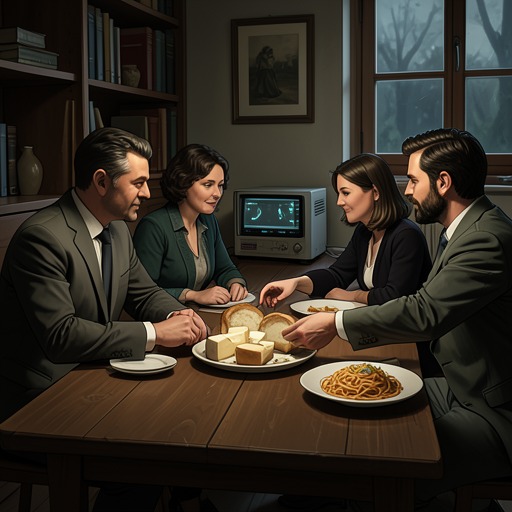
Gabriel disappears into the back room and returns with a tray of steaming Brioche. He uses tongs to place the pieces in a paper bag, introduces himself, and learns that she is Ava. When she reaches for her wallet, he stops her and says that it costs nothing, presenting the food as the least he can do after his behavior that morning. Ava offers to pay, even jokingly acknowledging his persuasive presentation, but Gabriel refuses the refusal. The free bag of Brioche is therefore both apology and courtship gesture: a concrete act that repairs the earlier failure of care without requiring Ava to admit that she needed saving.
The food also establishes Gabriel through labor rather than through glamour. His appeal lies not only in the vintage car or his physical attractiveness, but in his command of the bakery and his pleasure in producing something for another person. Later, while baking with Ava, he explains that Brioche is an enriched dough: unlike ordinary bread made from flour, yeast, and water, it incorporates milk, butter, and eggs, creating a richer taste. He measures flour with practiced confidence and treats the recipe as a form of knowledge. The encounter’s first gift thus anticipates a relationship in which intimacy is repeatedly mediated by preparation, food, and acts of attentive making.
Gabriel’s Hidden Position and the Reframing of the Encounter
Ava initially assumes that Gabriel is an employee or perhaps someone whose supervisor might object to her presence in the kitchen. Gabriel corrects her with the revelation that he is the boss and that Madame Vivienne's is his bakery. This disclosure subtly reverses the social reading of their first meeting. The man who appeared to be a carefree Californian in a polished convertible is also a proprietor responsible for a working establishment, recipes, staff, and a public identity.
The revelation gives the roadside encounter a new dimension. Gabriel had not merely wandered into Ava’s difficult morning; he had come from a life organized around the bakery and its products. His offer of Brioche is consequently not an improvised gesture from a stranger alone, but an offering from the person who made and owns the place where the second meeting occurs. The bakery becomes a backstage space in which Ava can see beyond his surface persona, while Gabriel’s comfortable movement between the car, the counter, and the kitchen hints at the different roles he will continue to negotiate.
Narrative Function and Later Resonance
As an action, the meeting follows a compact romance pattern of collision, resistance, return, and changed valuation. Ava’s need for assistance produces her refusal; the failed repair makes the consequences of that refusal immediate and comic; the bakery reunion gives Gabriel an opportunity to apologize; and the Brioche converts an antagonistic introduction into a shared sensory experience. The value shift is decisive: what begins as a threat to Ava’s dignity becomes the first occasion on which she permits Gabriel to offer something without treating the offer as proof of her weakness.
The scene also foreshadows the later structure of their relationship. Gabriel’s invitation into pleasure eventually expands into baking together, a weekend in Napa Valley, and a deeper emotional connection. During that trip, Ava recognizes that she has gone without thinking about work and begins to imagine Gabriel not only in the life of her baby but in her own life as well. The roadside breakdown and the bakery gift are therefore retrospectively more than meet-cute mechanics. They begin the movement from Ava’s work-centered isolation toward an intimacy in which care, craft, and vulnerability can coexist.
The action’s imagery continues through the novel’s food-centered milestones. Gabriel later hides a ring in a croissant when proposing to Ava, turning baked goods into a recurring language of affection and surprise. The first Brioche is modest compared with that later gesture, but its significance lies in its timing: it arrives after an oil-splattered shirt, a burned hand, a failed attempt at self-repair, and an argument with a stranger. Gabriel’s gift does not erase the humiliating morning; it gives that morning a different ending, one in which the object that matters is not the broken car but the warm bread that opens a door between them.