
The Nuclear Disarmament Campaign
My PolicemanThis flow traces Marion Taylor’s small but consequential movement from private uncertainty toward political participation alongside Julia Harcourt.
increasing Bearing strength in each event
 decreasing
Bearing strength in each eventdecreasingAn Invitation
An Invitation
A new possibility
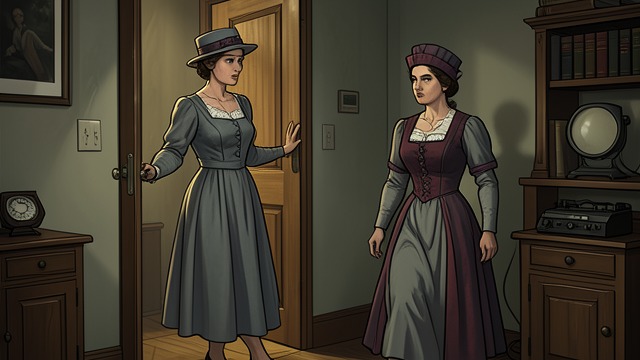
Julia Harcourt invites Marion Taylor to a meeting of the Campaign for Nuclear Disarmament after they discuss work, politics, and the threat of nuclear testing.
The first choice
Marion recognises that attending would mean stepping outside the passive role expected of a policeman’s wife.
The Meeting Room
The Meeting Room
A public argument
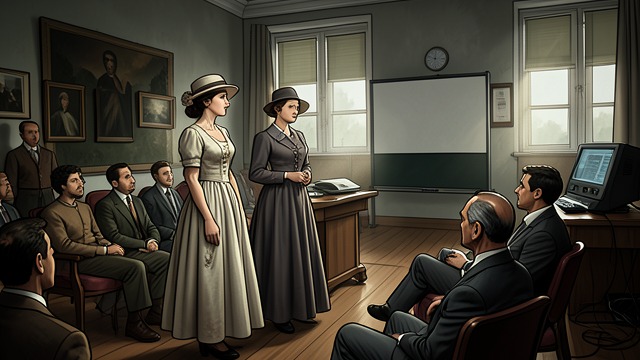
At Friends’ Meeting House, Marion Taylor hears a speaker argue that ordinary people can help stop nuclear weapons through collective action.
Belonging begins
The meeting makes political commitment feel possible, and Marion privately imagines that Patrick Hazlewood would be proud of her for taking a stand.
Leaflets and Secrecy
Leaflets and Secrecy
A modest commitment
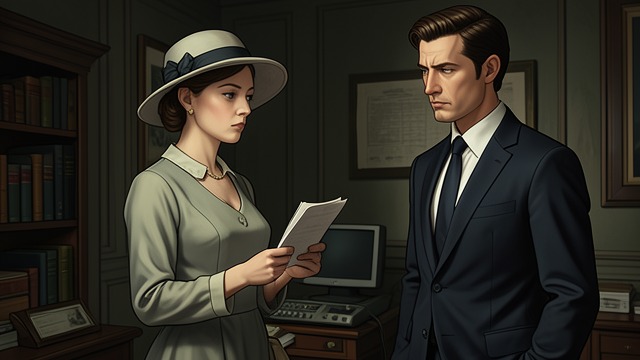
Marion takes campaign leaflets and begins to see activism as a practical way to participate in public life.
Private independence
She keeps the choice from Tom Burgess, recognising that her political activity belongs to her even when her marriage does not encourage it.
The March Remembered
The March Remembered
Collective action
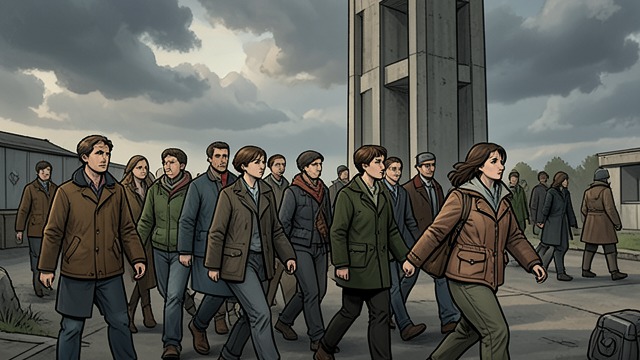
Julia Harcourt describes marching from London toward Aldermaston with a varied coalition opposing nuclear weapons.
A persuasive example
Her memory of shared purpose gives Marion Taylor a picture of solidarity and action different from the isolated secrecy of her marriage.
A Lasting Political Self

A Lasting Political Self
Commitment develops
Marion Taylor later starts a school CND group and studies feminism and literature, extending the early invitation into durable intellectual and civic interests.
Independence with limits
Her growth does not erase the lost friendship with Julia Harcourt, but it shows how a private conversation can redirect a life.
Spring 1958
A Saturday in July 1958
After the July 1958 meeting
Easter 1958, in Julia Harcourt’s recollection
During Marion Taylor’s later career
