Bert
My PolicemanBert is a formidable prisoner at HMP Wormwood Scrubs who becomes Patrick Hazlewood’s protector, confidant, and audience. He offers to conceal Patrick’s exercise book and makes conversation the price of that help. His friendship gives Patrick a reason to write and a rare person willing to listen, but it is not unconditional: when Patrick speaks openly about Tom Burgess, Bert asks him to stop, and the moment ends in a group assault on Patrick.
Identity and Standing
Patrick has heard of Bert before they meet. In D Hall, Bert is feared and influential, with a reputation built partly on his control of a small prison trade: every Friday, he collects profits from tobacco lent to other men at high interest. The account calls him a tobacco baron, a description that makes his authority tangible in the routines of prison life. He has leverage not only through money but through the deference he commands; Patrick observes that no man contradicts him.
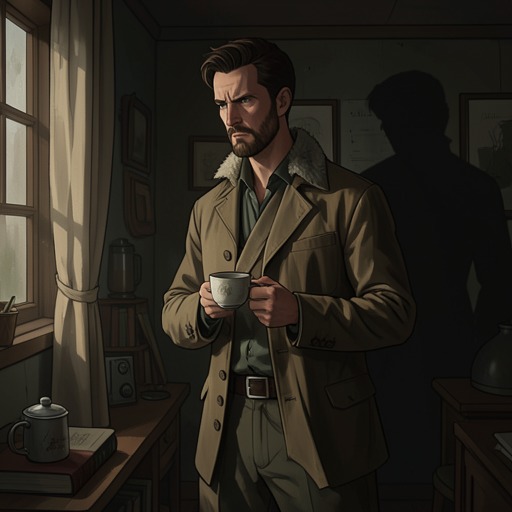
Bert’s appearance contrasts with this standing. He is short and stout, with ginger hair and tattoos on both forearms. He tells Patrick that the tattoos are youthful mistakes, acquired in Piccadilly after an earlier sexual encounter that brought him money. The narrative does not present him as physically imposing. Instead, it locates his power in his quiet voice, his confidence, and his ability to make his wishes understood without needing to gesture. Patrick likens the assurance of his bearing to a tree’s rooted presence.
An Offer of Protection
Bert first makes himself known to Patrick after Patrick is permitted to join the other prisoners during association. In the lunch queue, a man urges Patrick forward with a homophobic insult. Patrick is prepared to keep his head down, a strategy that has helped him avoid too much trouble during his first three months in prison. Bert intervenes, identifying Patrick as a friend and warning the other man against insulting him. It is a public act of protection, and it changes how Patrick moves through the room: for the first time, he walks with his head held straight rather than simply complying.
At the table, Bert says he has heard about Patrick’s case and regards the treatment he received as unjust. Patrick does not correct him. Bert appears to read Patrick as unlike the more visibly expressive prisoners: Patrick does not wear makeup made from kitchen flour or nail colour made from paint taken from the art class. Patrick recognizes that Bert may therefore consider him a “normal,” even though Patrick himself does not accept that implication. His reflections on the prisoners’ theatrical winter capes further show how appearance and labels operate in this setting. Bert’s defense offers immediate safety, but it rests, at least in part, on a distinction between Patrick and the men whom the prison marks as conspicuously different.
Patronage and Conversation
Bert’s offer is practical as well as personal. He says he can hide anything Patrick wants concealed, including the exercise book in which Patrick writes. He claims that the prison officers will not discover it. In return, he wants Patrick to talk: Bert enjoys listening to an educated man. The arrangement gives Patrick a way to continue writing inside prison and establishes an exchange in which Bert supplies protection while Patrick supplies stories and knowledge.
Patrick describes Bert as someone who befriends people who need him and then makes the most of them. That judgment complicates the apparent generosity of his offer. Bert’s care is real in its effects—he stands beside Patrick when another prisoner targets him and safeguards the means by which he writes—but it also belongs to a hierarchy in which Bert decides who receives his backing and what he expects in return. His claim that he cannot read is reported without confirmation; Patrick wonders whether Bert might be lying, but the narrative leaves the matter unresolved.
The Limits of the Friendship
After Marion Burgess tells Patrick that Tom will not visit, Patrick spends an evening with Bert in the Old Rec. The prison is cold, and other men pass the time with a subdued game of table tennis. Bert and Patrick stand apart from the lavatory and talk, as they usually do, but Patrick cannot summon his customary stories about literature, history, art, or food. His thoughts remain fixed on Tom and on the visit that will not happen.
Patrick eventually turns his talk into a story about two men who love each other: one marries a woman but continues to see the older man, who is later imprisoned on a charge Patrick describes as false. He says the imprisoned man still loves the other. Bert comes close and asks him to change the subject. Patrick continues, repeating that the man will always love him. Other prisoners gather, drawn by Bert’s silent anger. Patrick anticipates that they will attack him while the prison officer looks away; the assault follows, and he keeps repeating the declaration of enduring love until he loses consciousness.
The scene exposes the boundary of Bert’s protection. He has defended Patrick against an insult and given him room to speak, but he cannot—or will not—support speech that presses against his own limits in front of the other prisoners. The episode does not erase the earlier help: Bert remains the person who made writing possible and listened when Patrick had few alternatives. Instead, their relationship holds protection and vulnerability together. In prison, the same man who grants Patrick a place at the table cannot guarantee his safety when the subject becomes Tom.