Brighton Museum and Art Gallery
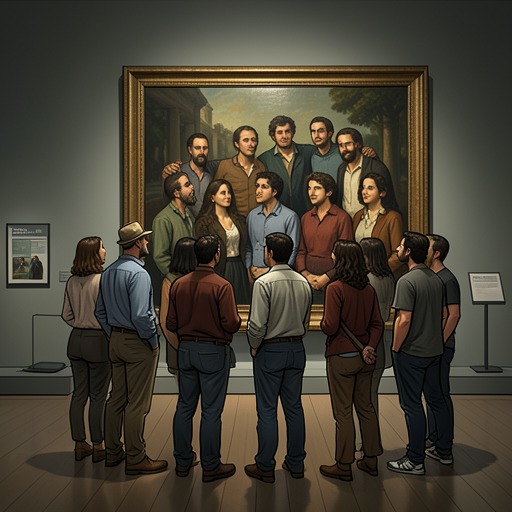
My PolicemanBrighton Museum and Art Gallery is both a physical setting and a point of connection in Marion Taylor’s account: it is where she first meets Patrick Hazlewood, where Tom Burgess’s private friendship becomes part of a three-person cultural life, and where Patrick’s public work later figures in the accusation that helps expose him to danger. Marion’s recollection makes the museum’s ordered, respectable world consequential without separating it from the secrets and pressures that surround the people who enter it.
Setting and Marion’s first visit
Marion remembers that her visit with Tom came soon after she had begun teaching at St Luke’s Infants’ School. She had never previously found a reason to enter an art gallery, a gap in her experience that astonishes her in retrospect. The visit therefore begins not as a routine outing but as an introduction to an unfamiliar cultural space, undertaken with a husband who has visited many times and is eager to explain what they see.
The building makes a strong impression before any artwork does. Marion compares its moss-green tiles, mosaic floor, polished mahogany staircase, and cabinets of stuffed specimens to a butcher’s shop. The comparison reflects her sense that the museum is a male domain: women may enter, she thinks, but the work behind the scenes belongs to men. At the time, she does not object to this arrangement, yet her observation registers the gendered atmosphere of a place that presents knowledge and classification as orderly public pursuits.
Her own clothes sharpen her awareness of being out of place. She has worn a new lilac dress, a full skirt, and kitten-heeled shoes on a frosty day, while the other visitors are dressed mostly in brown serge and navy wool. The heels tap across the mosaic and echo around the quiet rooms; they also bring her almost level with Tom, who walks slightly ahead of her. These details place her at once inside the museum and newly conscious of herself as a visitor who has not yet learned its conventions.
The meeting with Patrick Hazlewood
Tom has prepared Marion for Patrick through repeated descriptions of him as approachable and unpretentious as well as educated and cultured. Marion, tired of hearing these accounts, imagines someone quite different, picturing instead the music teacher at her school. The person she meets is not the figure she has assembled in advance. At the top of the stairs, Tom introduces his wife as a teacher at St Luke’s Primary and names Patrick as Keeper of Western Art at the museum.
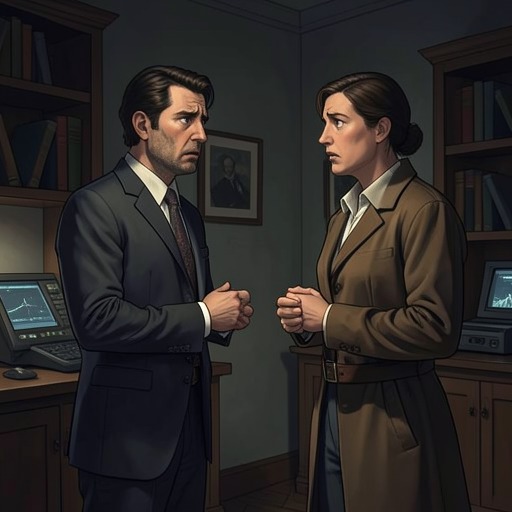
Their first greeting is marked by a handshake that lasts long enough for Tom to withdraw his hand and for both men to look away. Patrick then turns to Marion with a professional smile, meets her gaze, and invites the couple to lunch. The encounter thus takes place in a public institution, but Marion notices a small disturbance in the easy, courteous presentation of the two men. The museum is not simply where she learns who Patrick is; it is where she first sees the strain beneath the social ease that Tom’s descriptions have encouraged her to expect.
Tom acts as Marion’s guide through the collection. From the staircase he points out a celebrated painting, initially describing it only as the work of a famous artist. Marion does not press him for the artist’s name. She eventually recognizes the white hand in the dark painting, and Tom identifies it as The Raising of Lazarus. Her pride in his knowledge accompanies her perception that his usually steady face has softened. The picture gives their visit a specific shared object of attention, while Tom’s response suggests that the museum means more to him than an opportunity to display what he knows.
A shared place of cultural education
The museum belongs to a wider pattern of outings in which Patrick helps Tom and Marion extend their knowledge. For several months, the three spend time together. Marion suspects that Patrick also sees Tom alone once or twice a week, depending on Tom’s police duties, but describes the shared activities as an effort at self-improvement. Patrick encourages their curiosity without ridiculing what they do not know.
Their cultural excursions include Elgar’s cello concerto at the Dome, French films at the Gaiety Cinema, Chicken Soup with Barley at the Theatre Royal, and American poetry, including the work of e. e. cummings, which neither Tom nor Marion takes to. In January, Patrick takes them to London to see Carmen, an opera he considers a suitable introduction because its story concerns lust, betrayal, and murder. The museum is thus the point of their introduction, but the educational companionship it represents continues beyond its galleries. Patrick’s culture is not confined to institutional expertise: he uses his knowledge to bring the couple into contact with music, theatre, film, and literature.
Later, Marion steers Tom into the museum’s room of watercolours and engravings. They are alone there apart from an older visitor leaning close to a display case. Tom admits that he knows little about art; Marion answers by emphasizing response and feeling rather than specialist knowledge. As they approach the artworks, both lower their voices. Marion reflects on how visitors become quieter and slower in museums, whether from awe or respect for their protocols. The setting makes Tom more attentive to his surroundings and draws him into a shared act of looking, while Marion’s account presents cultural appreciation as something learned through participation rather than possession of facts.
Teaching, accusation, and institutional respectability
The museum later becomes the setting for Patrick’s work with schoolchildren. In a letter addressed to Mr Houghton, Head Keeper of Western Art at Brighton Museum and Art Gallery, Marion identifies Patrick as holding art-appreciation afternoons for pupils on the premises. The letter uses that professional activity to frame an allegation that he is a sexual invert guilty of gross indecency with men, presenting the accusation as a concern for children’s safety and the museum’s reputation. Its appeal depends on the institution’s standing: the same respectable educational setting that supports Patrick’s work is made the ground on which suspicion is advanced.
At Patrick’s trial, Marion is called as a character witness. She confirms that he took her pupils for an art-appreciation afternoon at the museum, performed his duties thoroughly, and was someone she would call on again. She also testifies that he was not the sort of person she would ordinarily associate with the alleged conduct. Her testimony draws on the direct professional connection established through the museum, but the prosecution asks whether she knows Patrick outside that capacity, bringing Tom’s friendship with him into the courtroom’s view.
The museum therefore carries two contrasting meanings in Marion’s story. It offers her an entry into art and a shared world of learning with Tom and Patrick; it also provides the respectable institutional language through which Patrick’s work can be invoked in both accusation and defense. The galleries remain a place of looking, instruction, and social encounter, but their public authority cannot shield the people associated with them from the era’s suspicion of male intimacy. In the narrative, the museum’s cultural welcome and its vulnerability to reputational policing stand side by side.