Confession
My PolicemanConfession is the novel’s movement from guarded knowledge into speech, and from speech into a written account that another person must voice. Marion Burgess’s disclosures do not simply expose the history of her marriage to Tom Burgess and his relationship with Patrick Hazlewood: they alter who can hear that history, and who must carry it. The act of telling offers Marion relief, but it also becomes a purposeful, unresolved gesture toward the two men whose lives she has narrated.
Speaking to Julia
The first decisive confession takes place after Julia Harcourt observes that men possess a freedom denied even to married men. Marion looks down; then Julia leads her to sit beneath a willow, on a patch of black lawn. Marion later tells Patrick that she was not crying and felt unexpectedly light: speaking had already changed the weight of what she carried. The scene makes disclosure physical as well as verbal. The two women sit on the grass, stretch out their arms, and remain beneath the leaves while Marion’s words rise into the darkness.
Marion tells Julia how she met Tom Burgess, how he taught her to swim, how he proposed in Patrick Hazlewood’s flat, and how she saw the two men looking at one another on the Isle of Wight. She also recounts Sylvie’s warnings. The account gathers separate moments—courtship, a proposal, an observed intimacy, and an earlier warning—into a history Marion can finally say aloud. She avoids looking at Julia because she fears that meeting her gaze would make her falter or lie. Her attention stays on the moonlight flickering between the leaves as she continues until everything has been said.
Julia does not answer at once. She places her hand on Marion’s, says ‘Poor Marion,’ and repeats it after Marion remembers Julia’s earlier embrace on the beach and wishes to be held again. The response offers sympathy, but not the renewed physical comfort Marion hopes for. Julia then looks her in the eye and tells her that Tom will not change. The confession therefore brings Marion a sense of release without promising a solution: she has been heard, but the condition she has described remains.
From disclosure to confession
The scene beneath the willow is itself narrated to Patrick. Marion addresses him while recounting what she told Julia, making the episode a layered disclosure: Julia is the listener in the remembered encounter, while Patrick is the addressee of the written account. This structure turns a private conversation into part of a text intended to reach the man whose presence has shaped its contents. Marion does not merely report that she spoke; she gives Patrick access to the circumstances and hesitation surrounding her first telling.
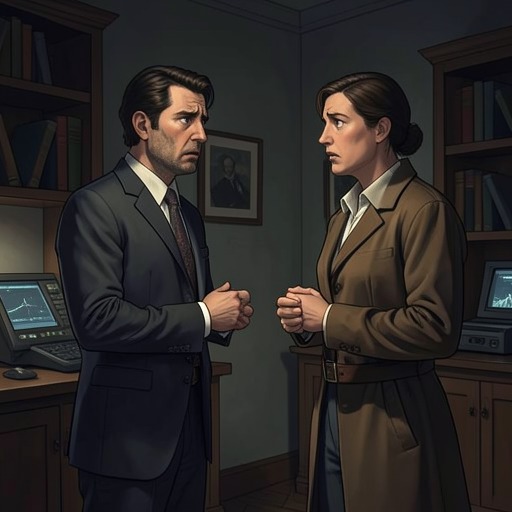
Later, Marion tells Tom Burgess that she has written something for him to read aloud to Patrick. She insists that she wants both men to hear it and identifies its subject as the three of them and what happened. Tom groans, and the exchange exposes how differently they understand silence. He asks what she has made of his silence and says that he has already lost Patrick once. Marion answers that her writing is not revenge but confession, and clarifies that it concerns her own wrongs rather than anyone else’s. The distinction is central to her purpose: she is not presenting the manuscript as a prosecution of Tom or Patrick, even though it recounts a history in which she has been wounded.
Her request also responds to Patrick’s present dependence. Marion reminds Tom that Patrick needed him years earlier and needs him now, then asks Tom to read. Confession here is not only self-disclosure or an accounting of the past. It is an appeal for Tom to act in the present, addressed through the very relationship the manuscript describes. The exchange does not establish that Tom has accepted Marion’s framing; his hesitation and reference to his own silence remain part of the scene.
The manuscript in the house
Marion has kept the manuscript in a kitchen drawer, half hoping Tom will discover it. After a cold, bright morning following heavy rain, she attends to Patrick, changes his bedclothes, bathes him, and feeds him liquidised Weetabix through a straw. She tells him Tom will soon come to sit with him, and notices hope in Patrick’s eyes. These ordinary care routines place the confession within the practical work of their shared household rather than apart from it.
At breakfast, Tom offers Marion tea. They sit with Walter at their feet; Tom reads the Argus while Marion looks out at the rain dripping from the conifers. The meal is their first breakfast together since the morning Patrick spilled his cereal. Afterward Marion retrieves the pages from the drawer, puts them on the table, and leaves the room. The manuscript, hidden in a familiar domestic place, becomes an object through which she can make the history available without supervising the first moment of its being read.
While Tom reads, Marion packs a case with a nightdress, a change of clothes, a washbag, and a novel. She expects Tom can send the rest of her belongings later. Sitting on her plain IKEA duvet, she listens to his voice carrying her words to Patrick and finds the sound strange, frightening, and wonderful. She wonders whether this is what she has wanted all along, and whether it is enough. Her departure is thus prepared alongside the reading: she gives the account to the men, then makes space to leave, without claiming that the act has repaired the marriage or settled the past.
Reading aloud and its limits
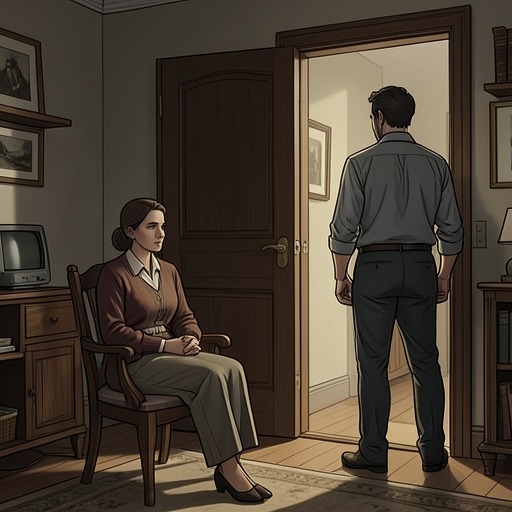
At four in the afternoon Marion looks into Patrick’s room. Patrick is usually asleep at that hour, but now his eyes are open and fixed on Tom. His body is wilting to one side against the pillows Tom has arranged, while Tom sits close to the bed with his head bent over Marion’s pages. He stumbles briefly over a sentence, then continues. The manuscript’s passage from Marion’s hand to Tom’s voice is made visible as a scene of effort and attention, not as a seamless reconciliation.
The day has darkened. Marion turns on a corner lamp so the two men can see one another clearly. Neither looks toward her, and she leaves them alone, closing the door softly. The ending gives her confession a concrete consequence: Tom is reading to Patrick, and the two men share the room and the words Marion has written. It gives no account of Patrick’s verbal response, nor does it confirm what either man will do afterward. Confession makes the buried history audible and creates a moment of contact, but its outcome remains open. Marion’s final act is to provide the words, make their hearing possible, and withdraw.