Criminalization of male homosexuality
My PolicemanThe criminalization of male homosexuality shapes the novel well beyond the courtroom: it makes intimacy a source of exposure, gives blackmailers leverage, and turns respectability into a condition of professional safety. Through the experiences of Patrick Hazlewood and Tom Burgess, the narrative shows law operating both as formal punishment and as a pressure felt in ordinary decisions, from where men meet to what a police officer is expected to make of his private life.
A climate of secrecy and exposure
The threat is present in the routines of intimacy before any prosecution begins. Patrick recalls that Michael received a blackmail letter demanding five pounds for silence about his visits to a public toilet. The two men went together to the address supplied in West Hove, only to find the house empty. That absence made the danger seem faceless and impossible to confront. Michael paid, despite Patrick’s objections; a later demand doubled the price, and within two months of the first letter Michael had died by suicide. The law’s criminalization thus creates an opening for private extortion: the threat of exposure can exert force without a visible accuser or an immediate arrest.
Patrick’s account also links secrecy to discretion in everyday domestic life. Michael’s landlady, Esme Owens, asked no questions and provided him with company; Patrick wonders whether she had noticed his regular visits. At Michael’s funeral, her apparent distress and expensive fur stole prompt further suspicion, but the account does not establish that she was involved in the blackmail. The uncertainty matters: in a climate where disclosure is dangerous, silence may look like protection, concealment, or complicity, without revealing which it is.
Policing and respectability
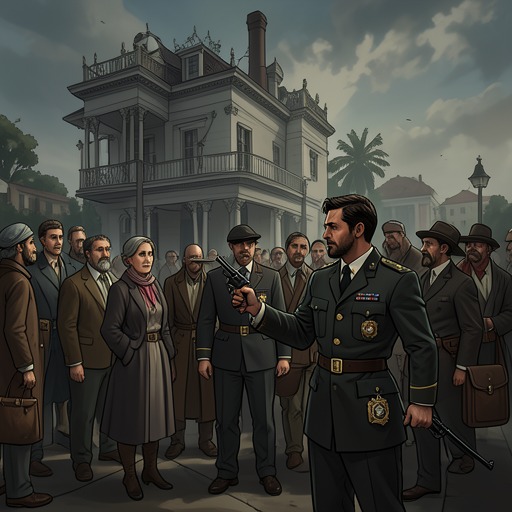
The novel presents enforcement as part of police culture, not merely as an external force. Tom says that men are repeatedly brought into the station by the vice squad, including men caught in the Plummer Rodis public toilet. His description reduces those men to a recognizable type and repeats the department’s language of street-cleaning. The scene shows how policing can enforce a social distinction between men deemed respectable and those marked for repeated attention, while Tom’s own concealed relationship with Patrick remains a danger he must manage.
That concealment is compounded by professional expectations. Tom reports that his superior has asked when he will make a respectable policeman’s wife of some girl, and that bachelors may find it harder to advance in the division. After the Brighton police leadership scandal breaks, Patrick fears that ordinary officers will bear the consequences of their superiors’ disgrace and that the force will come under pressure to appear beyond reproach. The marriage expectation and the demand for a spotless public image make Tom’s private life a professional liability even before the law directly reaches him.
From accusation to institutional punishment
The novel traces the conversion of social suspicion into official action. After hearing the word homosexual spoken on Castle Hill, Marion can no longer keep the possibility of Tom’s relationship with Patrick outside conscious thought. When she later names the accusation to Tom, he rejects it and contrasts Patrick with men the police bring into the station. His denial and his invocation of police practice expose the contradiction at the heart of his position: he protects his own respectable identity by distancing Patrick from the men treated as targets, although the relationship places them both within the same legal danger.
Marion’s anonymous letter to Mr Houghton turns that danger into a formal complaint. It identifies Patrick as a man involved with other men and presents him as a risk to the museum’s reputation and schoolchildren. When police take Patrick away, Tom breaks down and destroys two chairs before telling Marion that he had seen Patrick brought into the station. Marion recognizes that by trying to expose Patrick she has also endangered Tom. The episode makes the consequences of criminalization relational: a letter intended to act against one man can threaten the marriage, home, and employment of another.
At Patrick’s trial, the court treats the allegation as material to be publicly examined. The gallery is warned that the proceedings may contain material considered offensive to women, and the women leave. The prosecution reads from Patrick’s diary and asks Marion to identify the man it calls his lover; it then puts to her the claim that Patrick had an indecent relationship with her husband. The diary, a private record of feeling, becomes evidence through which the state and the courtroom scrutinize the relationship. Patrick’s later imprisonment at HMP Wormwood Scrubs marks the consequence of that process, while the prison’s locked routine and the sounds of another prisoner’s distress show punishment continuing beyond the verdict.
The law’s reach into private life
The novel presents criminalization as a system that operates through more than conviction. Blackmail depends on the fear of exposure; police practice makes some men recurrent targets; workplace advancement is tied to an appearance of heterosexual respectability; and a spouse’s accusation can help carry private knowledge into institutional proceedings. These pressures also produce unequal visibility. Patrick’s relationship is made legible through his diary and trial, while Tom’s position as a serving police officer gives him reasons to deny, conceal, and separate himself from the men his own department pursues.
By following the movement from a concealed relationship to a blackmail threat, an anonymous accusation, police custody, and imprisonment, the narrative shows how the law shapes conduct before and after formal enforcement. Silence is not simply personal reticence: under these conditions it can be a means of survival, a tool of coercion, or the gap in which suspicion grows. The rule’s force is therefore measured not only in sentences imposed, but in the relationships and public identities people struggle to protect.