Marion’s anonymous letter to Mr Houghton
My PolicemanMarion’s anonymous letter to Mr Houghton is the letter Marion Burgess sent to Patrick Hazlewood’s employer, turning private knowledge of his sexuality into an accusation addressed to the institution where he worked. Written amid the strain of caring for Patrick and dispatched before Marion could reconsider, it becomes a consequential act whose possible role in his arrest she later fears and admits to Sylvie.
Composition and Dispatch
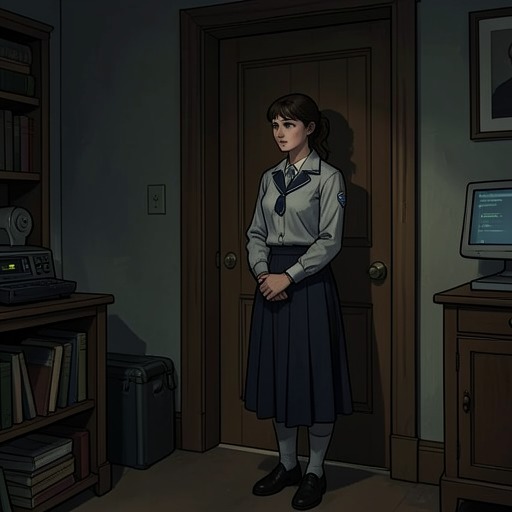
Marion wrote the letter at half past four on a Sunday morning, at the table by the window, while Patrick was living in her care. Tom Burgess was absent, and Julia Harcourt’s words were on Marion’s mind. The circumstances connect the letter to the pressures of her household: she had been managing Patrick’s care and felt that Tom was not prepared to help enough. Her later account recalls exhaustion, but also emphasizes that she acted before she could change her mind.
She sealed the letter in a plain envelope, addressed it to Mr Houghton, affixed a stamp, and walked to the postbox at the street corner. Marion remembered the act of sending it as a decisive release, while acknowledging that she did not stop to consider what might follow. The ordinary steps of posting made the decision irreversible without revealing the sender’s identity.
Recipient and Accusation
The letter was addressed to Mr Houghton, Head Keeper of Western Art at Brighton Museum and Art Gallery, where Patrick was also Keeper of Western Art. It called attention to his art-appreciation afternoons for schoolchildren at the museum and accused him of same-sex conduct. It cast the accusation as a threat to the children’s safety and to the museum’s reputation, and was signed anonymously as coming from a concerned friend.
Marion’s later recollection complicates the letter’s stated rationale. She says she imagined that Patrick might receive a warning from his employer, lose access to the children, or, at worst, lose his job. Yet she also knew that newspapers carried reports of prosecutions in sex cases and that local police were trying to restore their reputation after a corruption scandal. The letter therefore entered a climate in which an accusation could carry consequences beyond the workplace, even though Marion says she did not think through those consequences when she sent it.
Admission and Aftermath
Years later, while speaking with Sylvie, Marion said she believed Patrick’s situation might be her fault and disclosed that she had written anonymously to his employer about him. Sylvie responded with surprise and tried to reassure her that an arrest would not necessarily have resulted from a letter alone. The exchange records Marion’s suspicion and remorse, not proof that her letter caused Patrick’s arrest.
As an object in the narrative, the letter joins a private act of resentment and exhaustion to the public machinery of institutional reputation and policing. Its anonymity protects Marion at the moment of sending, but does not erase her knowledge of what the allegation could expose Patrick to. Her later confession gives the letter a second life: what she had once posted without considering the consequences becomes something she must acknowledge to a friend.