Old Ship Hotel
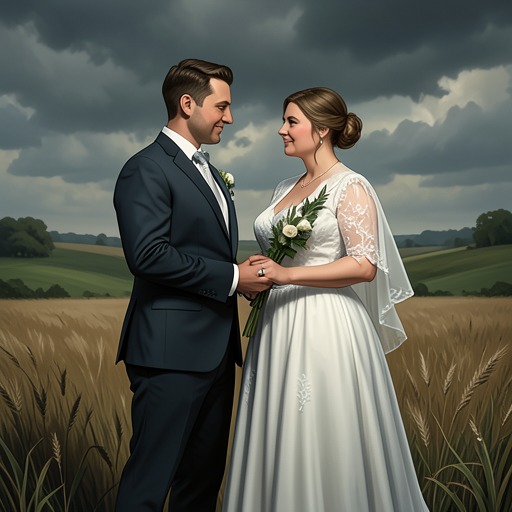
My PolicemanThe Old Ship Hotel is where Marion Taylor and Tom Burgess spend their honeymoon: a single night in Brighton, paid for by Tom’s father as a wedding present. The hotel’s hushed glamour initially makes it seem like a stage on which the newlyweds might begin married life in the style Marion has imagined. Instead, its carefully observed comforts accompany a more uncertain beginning, as her expectation of intimacy meets Tom’s reserve and their first sexual encounter leaves her holding tenderness, pain, relief, and disappointment together.
A wedding gift and a first hotel stay
The stay is brief by necessity. Marion and Tom have spoken vaguely of spending a few days in Weymouth later, but Tom is not due any leave for some time, so the longer trip must wait. For now, their honeymoon consists of one night at the Old Ship Hotel. Tom’s father has paid for both the room and dinner, giving the couple a formal celebration without extending their time away.
Marion remembers the hotel as less grand than the Grand, but impressive to her all the same. She and Tom fall silent as they enter through the revolving glass doors. Beneath them, the thickly carpeted floor creaks and groans; Marion privately notices the aptness of a building that sounds like an old ship. The details make the hotel feel unfamiliar but reassuringly substantial. It is the first time either of them has stayed in a hotel, and both seem unsure of its etiquette. Marion expects, from the films she has seen, bellboys to handle luggage and desk clerks to ask personal questions. Instead, the lobby is quiet.
Their luggage and clothes mark the occasion differently for each of them. Marion has a small case containing a new, pale-apricot lace-trimmed nightgown bought especially for the honeymoon. She has changed out of her wedding dress into a turquoise wool skirt and twinset with a short bouclé jacket, which she hopes is smart enough; her shoes, though scuffed at the toes, are not new. Tom has brought only a canvas bag. Marion wishes he had brought a suitcase so he would look more the part, then tells herself that men travel light and do not make a fuss. Her attention to appearances reveals how much she wants the evening to feel like a proper beginning.
The room and its performance of comfort
The welcome is not quite the efficient hotel service Marion has anticipated. A man in a starched white jacket appears after a pause, looks from Tom to Marion and back again, and begins to address them as Mr and Mrs before Tom supplies their surname. He calls them Mr and Mrs Thomas Burgess, giving their new public identity a crisp, official form.
The room itself has no sea view: Tom’s father’s budget does not stretch that far. Its rear window overlooks a courtyard where hotel staff gather to gossip and smoke. Once inside, Tom does not sit down. He moves around the room, plucking at the heavy crimson curtains and stroking the liver-coloured eiderdown, then exclaims over the mixer tap. The sequence echoes his delight in comforts at Patrick Hazlewood’s flat. The hotel’s amenities are new to him, and his restless inspection gives him something to do besides respond to Marion’s unspoken hopes for the evening.
Tom struggles with the window catch; the wood gives a terrible squeal before he gets it open, admitting the afternoon whine of seagulls. Marion wants him to leave the window and kiss her, or for the two of them to begin undressing without ceremony. It is not yet five, she reflects, and they are newlyweds in a Brighton hotel. But she asks whether he is all right. He kisses her cheek, then returns to the window, twitching the curtains and looking out. His suggestion that they should have some fun because it is their honeymoon acknowledges the occasion, but does not resolve the distance between what Marion desires and what she can bring herself to say.
The honeymoon night
Later, the hotel room’s promise of privacy does not make intimacy straightforward. Tom speaks in the quiet, drawn-out, slightly upper-class tone he had tried on with the man at the door. When he asks whether she wants to use the bathroom, Marion longs instead for him to undress her. She keeps that wish to herself, goes into the bathroom, closes the door, and sits on the edge of the tub, suppressing giggles and taking deep breaths. In the mirror she notices her blotchy cheeks and wine-stained lips and wonders whether marriage has changed how she looks.
Their sexual encounter brings the body into conflict with the romantic picture Marion has carried into the hotel. As Tom moves above her, she recalls an earlier swimming lesson: the delicacy with which he held her in the water, and the episode in which she went under and he found her, held her at the waist, and carried her to shore. That remembered rescue offers a contrast to the present encounter, where she feels the absence of the same delicacy. After Tom’s final thrust, he collapses beside her. She strokes his hair. When he asks if it was all right, she cannot answer: she weeps silently, describing the feeling as relief, wonder, and disappointment. Tom kisses her hand, turns over, and goes to sleep.
Place in Marion’s account
The hotel is more than the address of the couple’s honeymoon. Its conventional signs of married respectability—the formal registration as Mr and Mrs, the wedding-gift room, the private bed—surround an experience that does not fulfill Marion’s expectation of uncomplicated romantic closeness. The contrast is quiet rather than spectacular: the room offers curtains, soft furnishings, and a closed door, while the most consequential feelings remain unspoken between the couple.
Marion recounts the night directly to Patrick Hazlewood, insisting that he understand how things were between her and Tom. Her account does not reduce the marriage to either tenderness or failure. She remembers pain and disappointment, but also Tom’s gentleness, his kiss, and the hand he kisses before falling asleep. The Old Ship Hotel therefore holds the marriage’s early contradiction in one concentrated scene: the newlyweds try, imperfectly, to meet each other, while Marion’s narrated memory preserves both what hurt and what was tender.