Patrick Hazlewood’s arrest
My PolicemanPatrick Hazlewood’s arrest turns a private fear into an official prosecution. In the early hours, police come to his flat with a warrant alleging gross indecency with Laurence Cedric Coleman. Patrick first believes they have come because of his relationship with Tom Burgess; the actual accusation concerns a young man he had encountered separately. The distinction brings immediate relief but no safety: Patrick is taken away, his home is searched, and the allegation proceeds to trial.
Background and immediate circumstances
The arrest follows a period in which Patrick has been cultivating a connection with Tom, a policeman, cautiously imagining that the two might become friends and that the relationship could deepen if he did not rush it. After their encounter, Patrick remains buoyant, notices Tom from a distance on Burlington Street, and chooses not to run after him. His private anticipation sits alongside an awareness that intimacy between men carries risks, especially when one of them belongs to the police force.
That concern sharpens when news breaks of a scandal involving senior officers in Brighton’s Criminal Investigation Department. The Chief Constable and a detective inspector face conspiracy charges, and Patrick initially welcomes the prospect that the police leadership might itself suffer public disgrace. He then worries that ordinary officers, including Tom, will bear the consequences of their superiors’ conduct. The account does not establish that the scandal causes Patrick’s arrest. It does, however, place the arrest within a climate in which police power and the threat of disgrace are already on his mind.
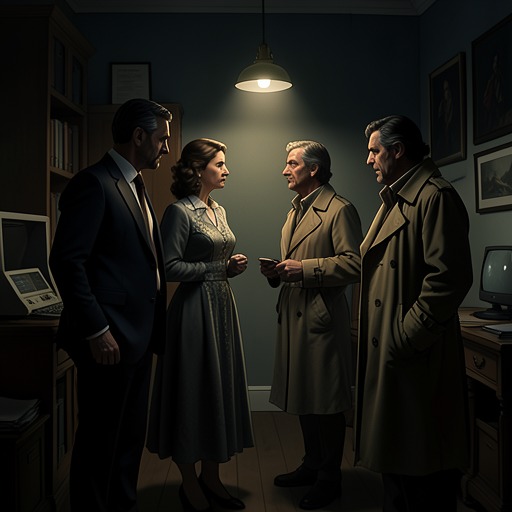
The arrival comes at about a quarter past one in the morning. Patrick describes a knock that signals an official visit and makes the presence of the police known beyond the door. He has slept through the downstairs buzzer and recognizes that the visitor cannot be Tom, who has his own key. The unexpected visitor is another policeman. The timing and manner of the knock make the arrest feel like an intrusion staged not only for the person being taken, but also for the neighbours who might learn of it.
Arrest and mistaken explanation
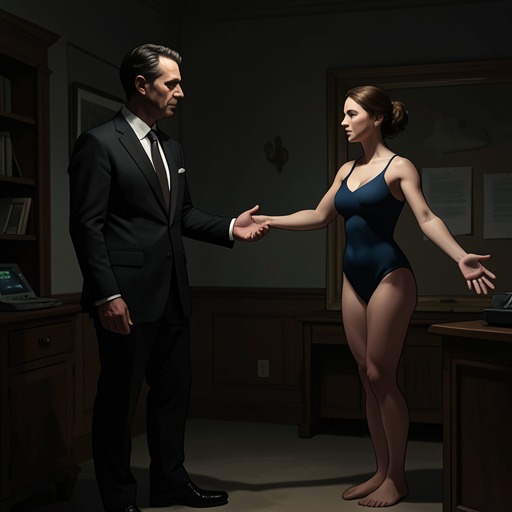
The officers identify Patrick and announce that he is under arrest on suspicion of gross indecency with Laurence Cedric Coleman. Asked who Coleman is, Patrick receives a dismissive response rather than an explanation. While an officer recites the formal warning, Patrick struggles to understand what is happening. When a gloved hand rests on his shoulder, he begins to accept the reality of the arrest—but his first explanation is that the police have discovered his relationship with Tom and are concealing Tom’s name through some procedure or code.
This fear reveals how thoroughly the law has entered Patrick’s understanding of his private life. He does not initially hear the charge as an unrelated allegation; he assumes that the authorities have found the secret he most fears will expose Tom. Yet Patrick is not arrested for his relationship with Tom. Once the officers show him a photograph and ask about an alleged approach to Coleman outside the Black Lion cottage, followed by an alleged encounter inside, Patrick recognizes the young man as someone from the Argyle Hotel. He is almost relieved: the prosecution is not, as he had feared, about Tom. That relief does not mean he accepts the allegation. Patrick denies it.
Patrick goes quietly and is not handcuffed. He believes that making no fuss may reduce the harm to Tom, a thought that shows how his protective concern persists even while he is the person under arrest. An officer named Slater mentions a search warrant, though Patrick sees no such document. Two uniformed men enter his flat, where Patrick knows his journal lies open on the desk in his bedroom. The possibility that the police will find it makes the search a threat to more than his possessions: it may expose the private record of his life and attachments.
Police handling and prosecution
On the journey through town in the Black Maria, Slater appears bored by the arrest. He chats with a plain-clothed colleague about another case and a use of force, and the two men laugh together. The casual exchange contrasts with Patrick’s disorientation and with the gravity of being taken into custody. At the interview, the officers return to the allegation concerning Coleman and the Black Lion cottage. Slater urges Patrick to plead guilty, presenting that course as being in his interest. Patrick’s account records the pressure without suggesting that he accepts either the accusation or the officer’s advice.
The later trial shows the arrest’s institutional consequences. In a small, stuffy courtroom, the public gallery is warned that the proceedings contain material some visitors may find offensive; the women leave. Coleman gives evidence while visibly shaken and avoids Patrick’s eyes. During cross-examination, Coleman admits involvement in a minor theft. Patrick interprets this as a reason Coleman made his claim to escape trouble, but the narrative presents this as Patrick’s understanding, not as an independent finding about Coleman’s motive. Patrick remains dazed as the court proceeds toward sentence, struggling to comprehend that his future is being decided through a process in which the police appear disengaged and the judge impassive.
At the trial, counsel also puts to Marion Burgess the allegation that Patrick had an indecent relationship with her husband. Marion denies it, her voice faint. Her testimony brings the hidden relationship with Tom into the courtroom as a separate line of scrutiny; it does not alter the stated basis of Patrick’s arrest, which concerned Coleman. The distinction matters: the arrest begins with one accusation, while the proceedings expose Patrick to questions about another relationship that he had feared the police already knew about.
Significance
The arrest is a reversal in Patrick’s position. He had regarded the police force as a source of danger to a relationship he was cautiously trying to build, and he had worried that an institutional scandal would place pressure on ordinary officers. Now the state’s authority arrives at his own door, in the night, and takes him away under a charge he initially mistakes for the exposure of his deepest secret. The actual accusation offers a moment of relief only because it is not about Tom; it does not undo the loss of control, the search, or the prospect of punishment.
The episode also distinguishes private knowledge from legal accusation. Patrick’s relationship with Tom remains concealed from the arresting officers as far as the immediate charge is concerned, while the allegation involving Coleman becomes the basis of a prosecution. Later questioning brings Tom and Marion into the legal narrative, demonstrating how a charge directed at one alleged encounter can place other intimate relationships under public examination. The arrest thus marks not a resolution of Patrick’s fears but their conversion into a concrete legal crisis, with the trial carrying the consequences into the courtroom.