Patrick and Tom's first sexual encounter
My PolicemanPatrick and Tom’s first sexual encounter marks the point at which their portrait arrangement becomes an intimate relationship, but it does not bring them into settled agreement about what that relationship can be. The encounter takes place after a drawing session at Patrick Hazlewood’s flat. Its quiet aftermath gives way to a question from Tom Burgess about whether he should return; his subsequent visit, recorded on 12 November 1957, turns that uncertainty into an explicit conflict between their intimacy and his wish to stop coming.
From portrait session to intimacy
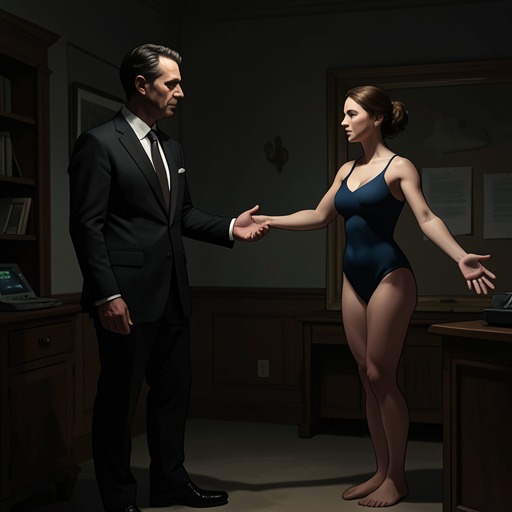
The encounter unfolds within the structure Patrick and Tom have already made for seeing one another: Tom comes to be drawn, and Patrick prepares the spare bedroom as a studio. Tom changes behind its closed door, then appears dressed for the sitting. Once Patrick has finished drawing him, they move into the sitting room. The portrait is not discarded as a pretext; the work has taken place, and the shift to intimacy comes after it.
In the sitting room, Patrick registers Tom’s closeness before either man makes a clear declaration. Tom’s hand moves nearer, then touches Patrick, while Patrick’s attention turns from the room to the contact between them. Tom begins to speak, but Patrick stops the conversation. In this moment, the encounter develops through gesture and response rather than an explanation of what either man wants. The narrative records physical hesitation and changing confidence, but the essential change is relational: what had been framed as a recurring artistic appointment becomes something neither can treat as only a sitting.
Afterward, they remain together on the chesterfield. The curtains are still open; outside, street lamps light the dim room as cars pass and seagulls call. Tom rests his head against the back of the sofa, with his hand in Patrick’s hair, while neither speaks for what feels to Patrick like a long time. The pause does not resolve their position. It makes the intimacy unmistakable while leaving its meaning unspoken.
The question of returning
When Patrick eventually prepares to speak, Tom gets up, fastens his clothes, takes his coat, and asks whether he should not come again. Patrick understands the form of the question: it is not a settled announcement but an invitation for an answer. He tells Tom that he should return. That response keeps the possibility of further meetings open, but it cannot remove the fear expressed by Tom’s question.
The distinction between question and statement matters to the scene’s ending. Their first encounter has not produced a promise or an agreed account of the relationship. Instead, Tom tests whether the intimacy has made the portrait arrangement impossible, and Patrick answers by affirming both the return and the continuing connection. The exchange leaves them with a practical way to meet again, but no shared language for the risk involved.
Tom’s return on 12 November
Patrick’s journal dates the next visit to Tuesday, 12 November 1957. The entry places it against a cold, uncomfortable day: frost remains on the pavements, a gas heater leaks fumes into Patrick’s office, and Jackie is shivering. At half past seven, while Patrick is finishing goulash at the flat, the buzzer sounds. His heart reacts, although he has almost learned not to expect Tom. Tom is there, but initially says nothing and avoids Patrick’s eyes.
This time Tom brings no uniform. He wears a long grey overcoat, which Patrick takes from him once they are inside. Patrick has put away the easel and paints, and the chair used for the sitting has been returned to its place beside the bed. Tom walks into the spare room without waiting to be invited, turns to face Patrick, and asks whether he is going to draw him. He is pale and serious. The room’s arrangement has changed, but Tom’s question restores the stated purpose of their meetings.
Tom insists on the portrait as a portrait of an ordinary person like himself, made on Tuesday evenings. Patrick answers that he wants to complete it and that his wish to draw Tom is genuine. This is more than reassurance about the artwork: Patrick distinguishes the project from the intimacy that has grown around it, without pretending that the intimacy is absent. He also tells Tom that the invitation was not made solely to bring him there for one purpose. The encounter has made Tom suspect that the portrait may conceal an ulterior aim; Patrick’s response is to insist that the work and his desire to continue seeing Tom are both real.
Withdrawal and consequence
Tom nevertheless says that he came to tell Patrick he cannot come again. After a long silence, he lashes out with his arm, but no blow lands on Patrick. Tom strikes his own temple and breaks into visible distress. Patrick asks him to stop and stays with him while he tries to regain control of his breathing. When Tom asks for a drink, Patrick fetches drinks, and they sit together with brandy. Patrick cannot find words that he thinks will reassure Tom, so he remains quiet as Tom gradually settles.
The return therefore repeats, in altered form, the question that followed the first encounter. Tom has come back despite his previous uncertainty, resumed the portrait’s stated terms, and then announced that he must leave the arrangement. Patrick does not answer with a demand or a promise; he tells Tom that coming to speak to him is brave. The episode’s significance lies in this unresolved pattern: intimacy draws Tom back, while fear makes him try to withdraw, and the portrait remains the form through which the two can meet even when neither can settle what their meetings mean.