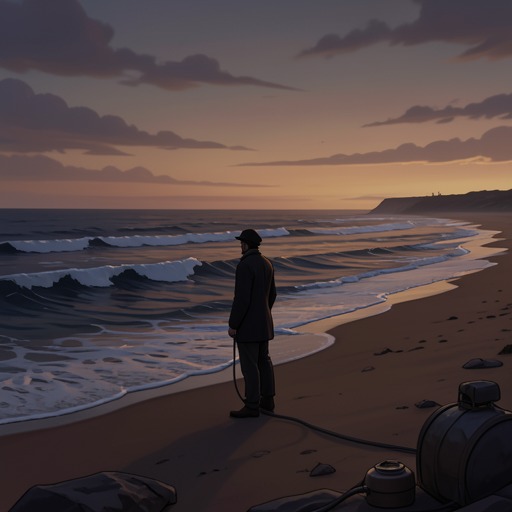
Patrick and Tom’s foggy date at Cuckmere Haven
My PolicemanPatrick and Tom’s foggy date at Cuckmere Haven is an early, defining episode in their concealed relationship: a planned picnic becomes a private walk through fog, a proposal to meet secretly again, and a kiss. Recorded in Patrick’s diary on 24 November 1957, the scene makes visible a change that ordinary weekly meetings, often attended by Marion Taylor, had not yet allowed: Patrick and Tom are beginning to claim time together as a couple, while knowing that their privacy matters.
Preparation and Private Anticipation
Patrick’s account opens with the preparations for a Sunday outing. He has packed food chosen with Tom in mind, including ox tongue, Roquefort, olives, iced buns and beer, and has added napkins and champagne. He considers bringing tea and blankets as well, since the morning is exceptionally cold. The detail gives the excursion the care of a planned occasion, even as Patrick recognizes the absurdity of arranging a picnic in such weather.
The weather also shapes what the outing can mean. Patrick expects wet fog along the coast and hopes that the gloom will discourage the suspicious looks he fears from strangers. His concern is not merely that the landscape might be unpleasant; he is alert to the risk of being observed with Tom. The day’s privacy is therefore part of its appeal, and the outing’s preparations reveal Patrick’s wish both to please Tom and to protect their closeness from public scrutiny.
The entry follows an earlier arrangement to finish Tom’s portrait and to bring a schoolteacher to the museum. That work-related connection sits alongside Patrick’s more personal anticipation: he catches himself thinking of the trip as something undertaken by the two of them. The diary preserves the shift in his own understanding, from arranging an outing to recognizing the intimacy implied by making plans together.
The Walk Through the Fog
Patrick drives Tom in the Fiat to Cuckmere Haven. By the time they reach the area around Seaford, the fog has become so dense that the road ahead seems to vanish. Their car is the only one in the car park. Patrick suggests that they could stay in the car, talk, and eat, but Tom insists on getting out after they have come so far. The small disagreement establishes a contrast between Patrick’s wish to keep the encounter contained and Tom’s determination to continue the walk.
The landscape offers little in the way of a view. The river’s route to the sea is hidden; the path’s grey chalk and the lower portions of the hills are almost all that can be made out, with occasional sheep appearing through the mist. Tom walks slightly ahead with his hands in his pockets. They settle into a comfortable silence and encounter no one else. The fog that had first threatened to make the trip pointless instead gives their walk a secluded quality, while keeping the countryside and the sea beyond it out of sight.
Patrick eventually suggests turning back because they can see neither river nor downs nor sky, and he is hungry after packing the picnic. Tom, however, wants to reach the sea. As they approach it, Patrick can hear the Channel before he can see the beach. Tom quickens his pace, and they stand side by side on the steep pebble bank, facing the mist. The scene’s movement—from an unseen road, along a nearly featureless path, to the sound of water—brings them to a place where they can speak more directly about returning together.
Secrecy and the Kiss
At the water’s edge, Tom remarks that it would be good to swim there. Patrick agrees that they could come back in spring, but Tom suggests they might return sooner, at night. Patrick points out that it would be cold; Tom answers that it would be secret. Their exchange gives the day’s privacy a sharper meaning. Secrecy is not simply a fortunate effect of bad weather: it is a condition Tom proposes for a future meeting, and Patrick’s diary records the intimacy of that invitation.
Patrick responds to Tom’s suggestion by kissing him hard on the mouth. It is the event’s decisive action, changing the outing from an occasion of shared anticipation and indirect possibility into an unmistakable declaration of desire. The kiss follows the pair’s quiet walk and their talk of a return visit; it does not resolve the risks surrounding them, but it makes their attachment harder to treat as merely a friendship or a project connected with the portrait.
The date also belongs to a developing sequence of meetings. Patrick later records that they meet at some lunchtimes when Tom can take a long break, and that Tom has not forgotten the schoolteacher; in December, he brings her along for the first time. Against that later introduction, the November outing stands as a private interval before Patrick and Marion meet: Tom’s life is already being lived across relationships that have not yet been brought into the same room.
Place in the Wider Story
The scene is narrated through Patrick’s dated first-person diary, not as an impersonal account of the landscape. Its attention to the food, the weather, the Fiat and the pace of the walk shows how much feeling he invests in a brief excursion. The limited view is central to that form: the fog withholds the usual landmarks, while the diary supplies the emotional distinctions the landscape cannot show—anticipation, disappointment when Tom leaves the car, ease in silence, and the risk contained in the proposal to meet again at night.
Later parts of the story place this early intimacy against the long consequences of Tom and Patrick’s concealed bond. Marion recalls their marriage on 29 March 1958, and, decades later, travels alone to Venice, where she imagines the two men moving through the city together. She describes that journey as a catalyst: afterward, she seeks Patrick out and brings him back. In 1999 she also hopes that Tom will visit Patrick, whose silence has become part of the household’s life. These later developments do not make the foggy date the cause of everything that follows, but they give it retrospective weight: it is one of the early scenes in which the relationship that will continue to shape all three lives becomes openly legible to the reader.