Police expectations of marriage and respectability
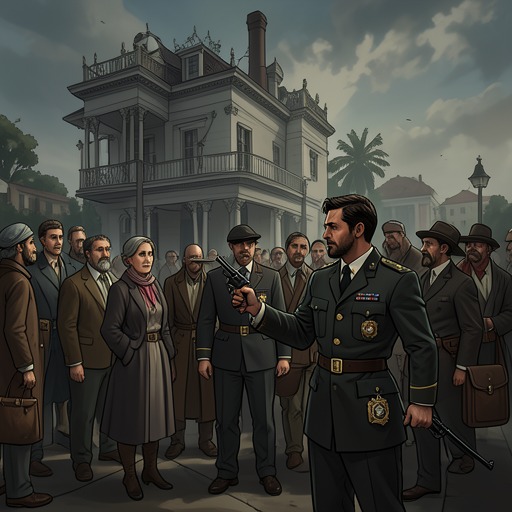
My PolicemanPolice expectations of marriage and respectability make Tom Burgess’s marital status a matter of professional scrutiny, not merely private choice. His superior presents marriage to a woman as part of the image of a respectable policeman and warns that bachelors may struggle to advance. When a scandal reaches the force’s leadership, that demand hardens into a broader pressure on officers to appear irreproachable. The rule’s force lies in the way an apparently ordinary domestic ideal can govern careers and magnify the danger of private life becoming public.
Marriage as a professional expectation
Tom tells Marion Taylor that his superior has asked when he will make some girl a respectable policeman’s wife. The remark is not an isolated tease: Tom says the subject has come up before, and that the superior has pointed to bachelors who have found it difficult to rise through the division’s ranks. Marriage is thus presented as a credential for advancement, with a wife expected to help certify an officer’s respectability.
Tom offers little resistance in the conversation. He has not said much in reply, while Marion calls the question impertinent and suggests that he could refuse it on the grounds that he is too young to marry. His response is laughter at her phrasing rather than a report that he challenged the pressure. The exchange exposes the imbalance behind the expectation: a superior can connect an officer’s private status to his career, while the officer has limited room to contest the premise.
Scandal, scrutiny, and the respectable image
The pressure grows as the force faces a crisis. Tom explains that the Chief is in the dock and that officers are consequently expected to be beyond reproach. The scrutiny is institutional as well as personal: in the wake of scandal, the appearance of respectability becomes a defensive requirement for everyone in the division. Read beside the earlier warning about bachelors and promotion, this demand makes marriage part of a larger regime of professional conformity.
The standard is especially consequential because it concerns appearances as well as conduct. Tom is expected to fit the figure of a married policeman, yet the narrative also shows the fear attached to what the respectable image cannot accommodate. When Marion later tells him that Patrick Hazlewood has been taken away by the police, Tom recalls seeing him led in by Slater and escaping before Patrick could see him. He then smashes two wooden chairs, breaks down, and says that he was terrified. Marion recognizes that, by writing to Mr Houghton in an attempt to destroy Patrick, she had also risked destroying Tom. The episode links public exposure to private danger without suggesting that marriage itself could protect Tom from it.
Marriage and private vulnerability
The novel places the institutional ideal of the composed, capable policeman beside moments in which Tom’s vulnerability becomes visible. On the newlyweds’ outing to the top of a helter-skelter, he is pale and admits that he is afraid of heights. Marion kisses him, sees that he has responded to her, and holds him close before suggesting they descend together. The scene does not make the professional expectation disappear; instead, it shows a private marriage in which care and fear sit uneasily beside the image of male composure that the force prizes.
That tension also complicates the idea that marriage simply assigns care to a wife. In 1999, Marion Burgess writes an account for Patrick while he lies in her house, unable to answer her; his speech is badly damaged, and he communicates by pointing to flashcards. She has been told by doctors to keep talking to him. Her care becomes exacting physical work: she bathes him on weekends, using a flannel and soap, and speaks as she tends to him. When Dr Wells believes Patrick may have suffered a third stroke, the routine continues; Marion changes his bedclothes, bathes him, and feeds him liquidized Weetabix through a straw. This domestic labor is not presented as a simple confirmation of marital respectability. Marion directs it toward Patrick, while Tom’s eventual return to shared breakfast and his reading of her manuscript to Patrick suggest a different, more intimate form of participation.
The cost of the standard
The expectation that a policeman marry and appear respectable offers no resolution to Tom’s concealed private life. Instead, it helps define the stakes: advancement is tied to marital conformity, and scandal makes scrutiny more dangerous. Tom’s panic after Patrick’s arrest gives that pressure a personal consequence, while Marion’s later care and decision to leave show that domestic arrangements cannot neatly contain the harm caused by secrecy and exposure.
The rule therefore operates both through explicit workplace pressure and through the larger demand that a respectable household make an officer legible to his institution. The novel sets that demand against the relationships and acts of care that do not fit its public image. Marriage can place Tom within the expected social form, but it cannot erase the vulnerability revealed when the police arrive for Patrick.