Silence
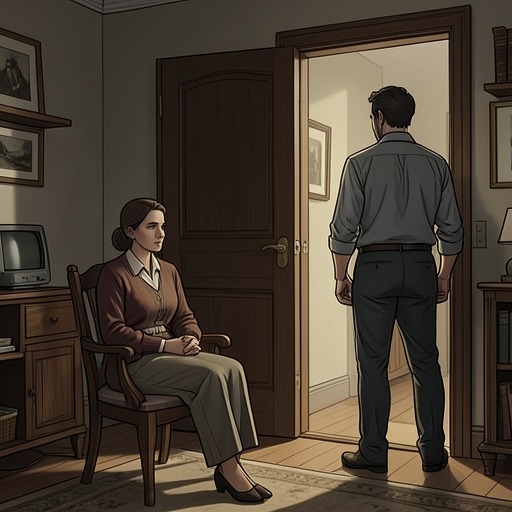
My PolicemanSilence is not merely an absence of conversation between Marion Burgess and Tom Burgess; it is the fragile arrangement by which they continue living together after the consequences of Marion’s letter become impossible to ignore. It protects them from immediate confrontation, but leaves remorse, grief, and the history of Tom Burgess’s relationship with Patrick Hazlewood active beneath their daily routines. When Marion finally demands that the silence end, she calls what she has written a confession rather than revenge.
A silence made of omissions
The pattern is visible even before Marion names it. At four thirty on a Sunday morning, with Tom away and the house quiet, she writes and posts a letter. She does not pause to think through its consequences; she remembers imagining that Patrick might receive a warning from his employer, lose his job, or be prevented from seeing children. Yet she knows that sex cases appear in the papers and that local police are trying to repair their reputation after a corruption scandal. Her weariness narrows the moment to the letter’s soft landing in the postbox and the prospect of hot tea and bed. The act that will have grave consequences is thus recalled alongside the ordinary needs of an exhausted person, not as a fully considered declaration of intent.
Silence also takes the form of information Marion withholds. During Patrick’s care, she does not tell Nurse Pamela how little Tom helps, because she fears that disclosure could lead Pamela to question whether their home is suitable as a care base. Marion is frank with herself about the labor involved: changing Patrick’s incontinence pad, washing and turning him, changing the sheets, and feeding him. Her account makes the household’s quiet seem less like peace than a structure held together by unspoken difficulties and work that cannot be delegated. She believes she can manage the task in some ways, while admitting that she cannot safely lift him.
After the trial
The trial makes private history public in a way that does not resolve it. Before Patrick’s case reaches court, Tom resigns from the police force, as Marion had suggested. At the trial, passages from Patrick’s journal about his relationship with Tom are read aloud, including the reference to “my policeman.” Marion remembers those words as a low, constant ringing. Their public reading exposes what the marriage had left unspoken, but exposure is not the same as conversation between the people who must live with what has been revealed.
Tom’s resignation does not bring the couple closer. By the time Patrick’s trial takes place, Tom is near the end of his notice, and he escapes investigation despite the journal. Marion suspects the force is content to let him leave quietly, unwilling to risk another scandal after the attention given to corruption among its senior ranks. About a month later, Tom finds work as a factory security guard on night shifts. He and Marion can barely look at each other, and she can think of nothing to say. She visits Patrick in prison once, partly from remorse and partly because she wants to see the misery he is experiencing; she keeps the visit from Tom and never suggests he make one himself. The silence is therefore not simply imposed on her. She also maintains it, fearing that even Patrick’s name could make Tom walk out and not return.
Their continued domestic life is shaped by that fear. Marion goes to work, prepares meals, and sleeps at the edge of the bed, away from Tom’s body. She begins to attend to his belongings—pressing his shirts to her face to smell his skin, arranging his shoes, ordering his ties, and pairing his socks. These actions register how restricted her access to him has become: his clothes remain available where speech and closeness do not. Her attention to such traces does not undo the distance; it gives that distance a physical form.
The demand to speak
Eventually Marion refuses to let the arrangement stand. She tells Tom she cannot live with the silence any longer and explains that she wants something said. Tom turns her demand back on her: he asks whether she is forcing him to break his silence and subjecting both him and Patrick to her outburst. He interprets her effort to bring Patrick into the household as an occasion for another reprimand, a catalogue of wrongs. His response reveals that the silence has not been empty for him either. He names his own loss, saying that he has already lost Patrick once.
That admission changes the argument’s terms. Marion does not answer Tom’s accusation by denying the harm she caused or claiming that she has the right to judge him. She calls her writing a confession, insists that it concerns her own wrongs, and asks Tom to read it to Patrick. The distinction matters: speech is no longer presented as a demand that Tom account for himself, but as Marion’s attempt to take responsibility and to connect two people whose bond has been shaped by concealment and separation. She says Patrick needs Tom now, as he needed him years earlier, and asks Tom to act on that need.
Narrative significance
Silence connects the letter’s unconsidered dispatch to the later effort to speak deliberately. At first, Marion’s action enters the postal system with a clean, almost comforting finality; she does not think through what she has set in motion. Later, she cannot make herself speak to Tom without first confronting the consequences that have accumulated around the secret. The intervening years are marked by a public trial, Tom’s departure from the police, a prison visit Marion hides, and a marriage maintained through routine rather than mutual disclosure.
The narrative gives silence both protective and destructive force. It helps Marion avoid a conversation she fears could end her marriage, and it allows the couple to continue through work, meals, and sleep. But the same quiet confines them to distance, leaving Tom’s grief unspoken and Marion’s remorse unresolved. The final appeal does not erase what has happened or guarantee reconciliation. Its significance lies in the change Marion makes to her own account: instead of treating speech as a weapon for exposing someone else’s faults, she presents it as an acknowledgment of her part in the harm and asks Tom to carry that account to Patrick.