Social stigma and legal oppression of same-sex love
My PolicemanSocial stigma and legal oppression of same-sex love shape the choices available to Patrick and Tom, turning private affection into a public risk. The pressure is not merely an obstacle to their relationship: it makes silence and concealment seem necessary, and helps make Tom’s marriage to Marion appear safer than openly living with the man he loves.
Social condemnation and concealment
The novel’s introductory account describes same-sex lovers as members of a condemned minority, exposed to judgment from both society and the law. Under those conditions, Tom’s marriage to Marion, a teacher, becomes a form of protection as well as a concealment. The arrangement does not resolve the conflict between his relationships: Patrick and Marion must share a life with Tom until one of them breaks, with devastating consequences for all three.
Patrick’s journal makes the pressure of surveillance more immediate. On 29 September 1957, at thirty-four, he asks himself why he should write when committing his desires to paper feels like madness. He decides not to identify the person he has met, even as he records that the encounter has changed things. His caution shows how the threat reaches beyond public disclosure: even a private record of desire feels dangerous, and the journal’s careful anonymity becomes part of the story’s larger pattern of secrecy.
Hostility and the police
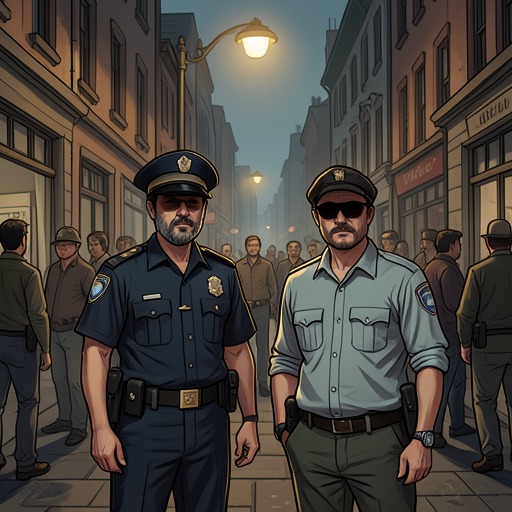
Patrick’s distrust of the police is grounded in an account of casual brutality. Recalling an incident at the Napoleon, he remembers an officer responding to the severe mutilation of a young man with a contemptuous remark about the victim being a “pansy.” The comment makes prejudice more than an abstract social attitude: it is voiced by someone with institutional authority, in response to violence against a vulnerable person.
When Patrick approaches a police box to summon help, he expects a policeman to assess him, react to his voice with raised eyebrows, and meet his smile with clenched fists. The young officer who appears, however, does not respond as Patrick anticipates. Patrick is struck by his openness and unquestioning trust. This encounter offers a personal counterpoint to the hostility Patrick has learned to expect, but it does not erase the broader danger established by the officer’s earlier remark or by the novel’s account of legal condemnation.
Marriage and narrative consequence
The stigma surrounding same-sex love shapes the novel’s central triangle. Tom’s relationship with Patrick is described as an equally powerful claim on his affections, yet the law and society make marriage to Marion the safer course. The apparent respectability of that marriage therefore conceals rather than settles the conflict; the lovers’ need to share Tom prolongs the strain instead of offering a stable resolution.
The story is told through the parallel accounts of Marion and Patrick, each writing about Tom from a different position within the same concealed history. That structure brings the costs of oppression into view across the three lives: Patrick’s caution about writing, Tom’s safer public identity as a married policeman, and Marion’s place in a marriage shaped by a love she cannot simply replace. The tragedy arises not from affection alone, but from the conditions that make its honest expression perilous.