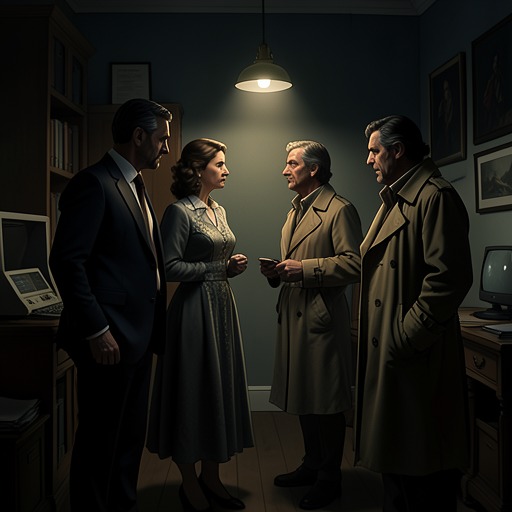
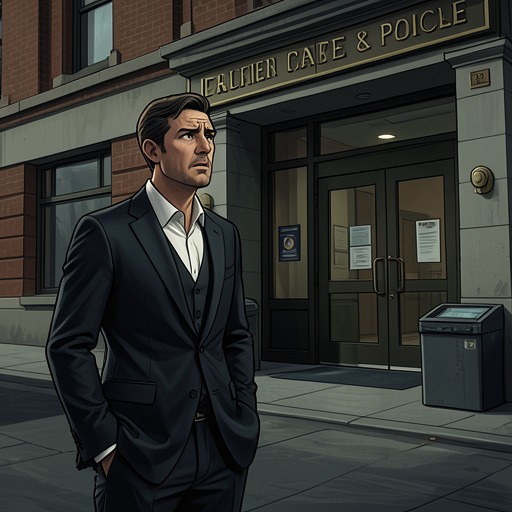
The Brighton police leadership scandal breaks
My PolicemanThe Brighton police leadership scandal breaks when newspapers report conspiracy charges against senior officers, turning the prospect of disgrace from a danger Patrick Hazlewood associates with the police into a public crisis for the force itself. In Patrick’s diary, his first satisfaction at the news gives way to concern for Tom Burgess and other ordinary officers who may bear the consequences of their superiors’ alleged misconduct.
The scandal and its report
On 25 October 1957, Patrick writes that a major scandal involving Brighton’s Criminal Investigation Department has appeared in the papers and may even have reached The Times. The Chief Constable and a detective inspector are in the dock, charged with conspiracy. Patrick says the details remain unclear, while suspecting that the case involves officers making mutually agreeable deals with criminals of the sort associated with the Bucket of Blood. That suspicion is his own; the diary does not establish the full nature of the alleged arrangements.
The Argus headline reports that the Chief Constable and two others are accused. The story makes the force’s senior leadership, rather than the men it polices, the subject of public accusation. Patrick emphasizes that the charges may bring both social disgrace and imprisonment, consequences he has previously understood as risks faced by people on the margins of respectable society.
Patrick’s divided response
Patrick’s initial reaction is relief: he takes satisfaction in seeing officers in positions of authority face the very kinds of disgrace and possible punishment associated with policing. The reversal is brief. Once he considers what the scandal may mean for Tom, his response changes from vindication to apprehension. He expects honest, ordinary members of the force to face pressure because of their superiors’ actions, although he cannot yet know what form that pressure will take.
The entry follows an earlier account of Patrick’s patient hopes of becoming friends with the policeman he has encountered at a police box. He has described himself as willing to take the long view rather than rush or frighten him away. Against that developing personal attachment, the scandal is not simply news about police leadership: it introduces institutional uncertainty into Patrick’s hopes for Tom. The diary does not claim that Tom is implicated in the charges.
Waiting and narrative significance
Patrick concludes that he can do nothing about the scandal and must wait for Tom to return. The immediate consequence recorded is therefore uncertainty rather than a specific change in Tom’s circumstances: Patrick watches the news become a possible threat to the ordinary officers he hopes will not be caught up in their superiors’ troubles, while having no means to protect or reassure the man he cares about.
The event also establishes a contrast between official authority and individual vulnerability. Senior officers face public accusation, but Patrick’s attention turns quickly to the less powerful people within the same institution and to the private relationship exposed to risks surrounding police work. A later courtroom scene makes that vulnerability concrete in a different way: during Patrick’s trial, the prosecution puts to Marion Burgess the allegation that Patrick was having an indecent relationship with her husband, and she denies it. The trial evidence does not establish that the leadership scandal caused this prosecution; rather, the juxtaposition shows how public institutions and private attachments occupy the same narrative world of scrutiny and potential disgrace.